


USB Mini Keyboard Buying guide
Usb Mini Keyboard: A Complete Buyer's Guide
Choosing a USB mini keyboard means knowing which specs matter and which are marketing hype. Discover what separates a smart buy from a regrettable one.
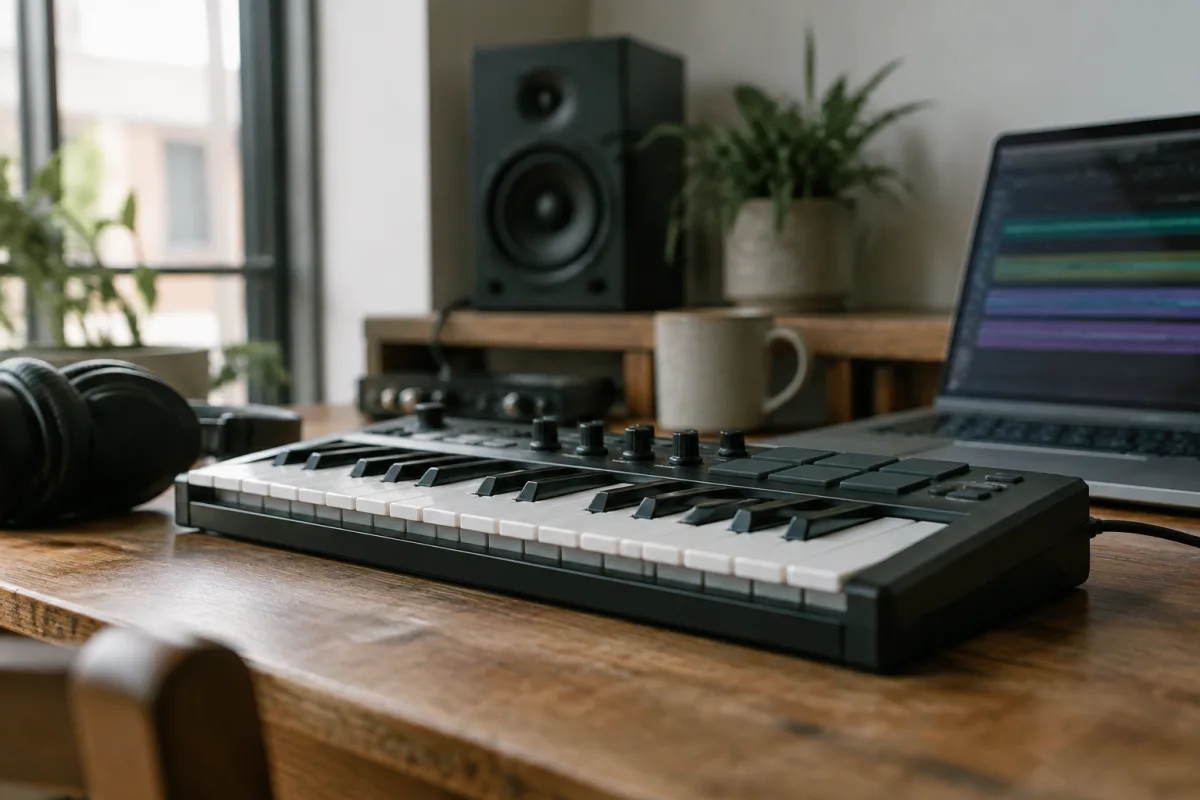
How to Choose the Right USB Mini Keyboard for Your Setup
A USB mini keyboard can be a brilliant workhorse—compact, affordable, and ready to plug into any computer or tablet. But the vast range means you need to know exactly what specs matter and which are cosmetic. Here's what separates a sensible buy from a regrettable one.
Key Specs That Actually Matter
Key count: This is your first decision fork. Mini keyboards come in 24, 32, 49, 61, and 88 keys. A 25-key is pocket-sized and ideal if space is critical; 49-key gives you two-and-a-bit octaves and suits most bedroom producers; 61-key is the "just right" size for most people; 88 keys matches a full piano and costs more. Think about what music you'll actually write. If you're layering synth pads, 25 keys might be enough. If you're recording piano parts, 61 or 88 is the honest answer.
Keybed action: This is where cheap keyboards falter. A mini keyboard's keys should have:
- Tactile response: Pressing a key should feel like you're touching an instrument, not a toy button. Cheap keys feel plasticky and give no feedback.
- Velocity sensitivity: The keyboard should respond to how hard you hit each key—a requirement for expressive playing. Check the spec sheet; it should say "velocity-sensitive" or list a velocity curve. If it doesn't mention velocity, walk past it.
- Aftertouch (optional but useful): Higher-end mini keyboards detect how hard you hold a key *after* pressing it, allowing real-time expressive control. It's not essential, but it's a sign of quality.
Connectivity: USB is standard. Confirm it's USB-C or USB-B (industry standard)—avoid proprietary connectors. Some keyboards also offer:
- MIDI over 5-pin DIN (older studios and gear prefer this).
- Bluetooth (wireless convenience, but watch out for latency—some cheaper ones lag noticably).
- Audio inputs/outputs (rare on mini boards, skip it unless you need it).
Built-in sounds and drum pads: Many mini keyboards have onboard synth voices and drum pads. These are fun for noodling but rarely sound professional. They add bulk and battery drain. If you work in a DAW (Digital Audio Workstation) like Ableton or Logic, you won't use them—your software has far better sounds. Buy a keyboard with good pads and decent sounds *only if* you plan to use them standalone.
The Price-to-Value Ladder
Budget bracket (£60–120): Entry-level USB keyboards like the Alesis Recital Pro. You get:
- Basic velocity-sensitive keys.
- Plug-and-play USB—no drivers needed.
- Built-in voices (rarely useful, take them or leave them).
- Drawback: keys often feel slightly plasticky; aftertouch rarely available.
This tier is honest for bedroom producers on a budget. It works with every DAW. It's reliable. But the keybed won't inspire you.
Mid-range (£120–300): Keyboards like the Korg Microkey Air, Native Instruments M32, or Roland A-25. You get:
- Noticeably better keybed feel—slightly weighted, proper velocity response.
- Aftertouch on some models (very useful for expression).
- Compact but not cramped—49 or 61 keys fit nicely on a desk.
- Optional Bluetooth on pricier models (watch latency).
- Better knobs and faders for controlling your DAW.
This is where most producers find their sweet spot. You get a genuinely *playable* keyboard that won't frustrate you on day 200.
Premium bracket (£300+): Keyboards like the Nektar Panorama, Arturia KeyLab, or Korg Kross 2 mini. These are semi-professional controllers with:
- Weighted or hammer-action keys (mimics a real piano).
- Extensive connectivity (MIDI DIN, multiple USB, CV outputs for modular gear).
- Touch-sensitive knobs, faders, and pads.
- Built-in sounds that are actually usable (though still better in software).
- Better build quality; they'll still work in 10 years.
Buy here only if you're serious about hardware synths or live performance.
Pitfalls to Avoid
Assuming smaller = better. A 25-key keyboard is genuinely pocket-sized, but it's cramped for writing real music. Unless your use-case is *very* specific (iPad sketching, live looping with just bass/chords), you'll outgrow it within months. A 49-key is barely larger, far more musically useful.
Ignoring keybed feel in reviews. Watch video reviews where someone actually plays the keyboard. Read whether reviewers mention the keys feeling responsive or mushy. A keyboard with cheap, unresponsive keys is a source of daily frustration, no matter the price.
Chasing "all the sounds." Mini keyboards sometimes tout 5,000 voices and 300 rhythm patterns. These are marketing numbers. If you use a DAW, you'll never touch them. If you go standalone, they're tinny and dated compared to modern soft synths. Ignore the sound count.
Overlooking driver stability on Windows. Some cheaper keyboards require drivers that are flaky on newer Windows versions. Check user forums *before* buying. Macs are generally safer—most keyboards work plug-and-play on macOS. If you're on Windows, confirm other users report it works reliably.
Choosing Bluetooth without testing latency first. Wireless is tempting, but many cheap Bluetooth keyboards have noticeable lag (50–100ms delay between pressing a key and hearing the sound). This is genuinely unplayable for any expressive work. Only Bluetooth keyboards from established brands (Korg, Roland, Native Instruments) tend to handle latency well. Try before you buy, if possible.
Buying 88 keys "just in case." An 88-key USB keyboard is large, expensive, and most mini models don't feel like a real piano anyway. If you actually need 88 keys, invest in a weighted or hammer-action keyboard from a specialist brand—it'll feel authentic. A cheap 88-key won't.
What to Check Before Checkout
Request a video or hands-on demo if you're buying online. Press a key and listen. Play a simple scale. Does it feel responsive? Listen for latency—there should be no perceptible delay between pressing a key and hearing the sound. Check reviews on music-focused forums (Gearslutz, r/makinghiphop) for real user experiences, not just Amazon stars.
Verify your DAW compatibility. All modern DAW's support standard USB MIDI, but some older software on older machines can be finicky. If you're using something unusual, confirm compatibility before paying.
Confirm the return policy. If the keyboard arrives and feels wrong, you'll want to send it back. At least 14 days is standard; some retailers offer 30.
The Bottom Line
Buy a keyboard with a playable keybed, not the most buttons. A 49 or 61-key from a reputable brand (Alesis, Korg, Native Instruments, Roland) in the £150–250 range gives you *years* of daily music-making without compromise. Avoid the cheapest no-name brands, and ignore the sound count. If you're a bedroom producer, you don't need Premium pricing—you need responsive keys and solid drivers. Spend on keybed quality; it's the only part you'll actually touch thousands of times.


Comments