
Music Keyboard Weighted Keys article
The Complete Guide to Music Keyboard Weighted Keys
Weighted keys on music keyboards simulate the resistance and feel of an acoustic piano, enabling better technique development and more authentic musical expression.
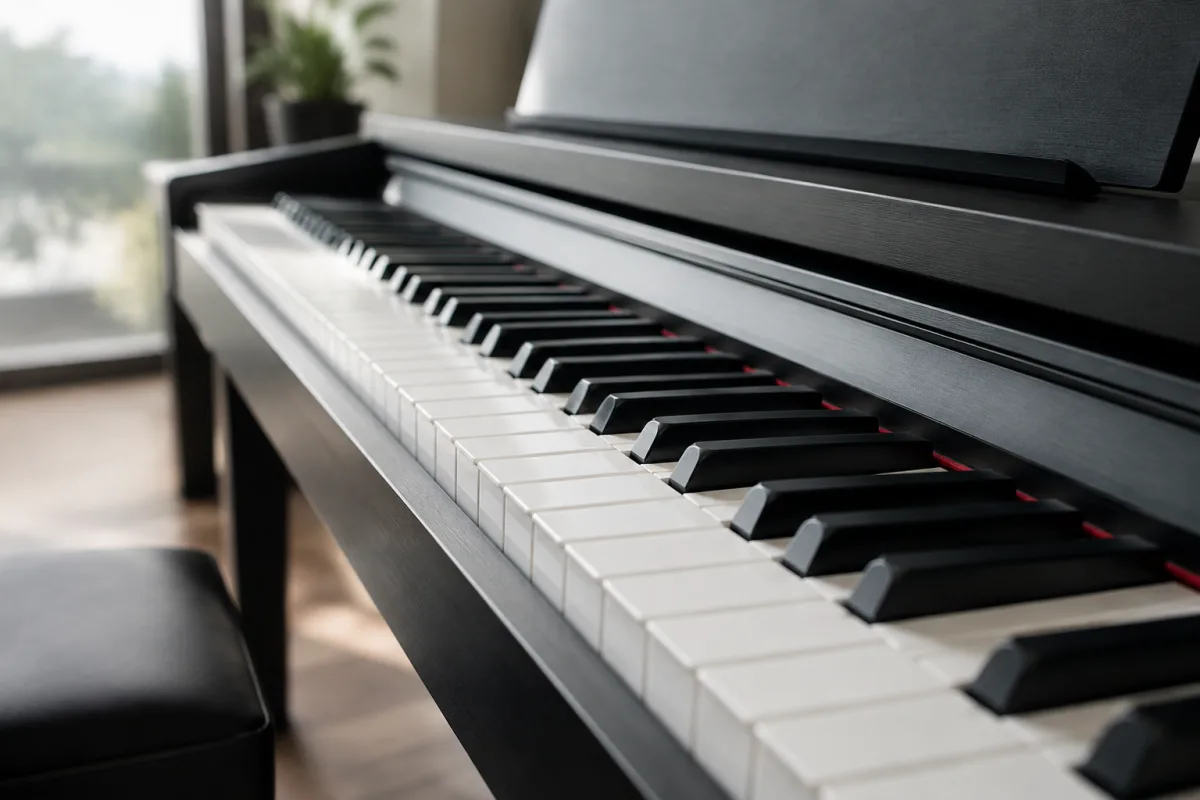
Weighted keys on modern music keyboards represent one of the most significant innovations in digital piano technology. They transform the playing experience by mimicking the natural resistance and feel of an acoustic piano, allowing pianists to develop proper technique and achieve authentic expression. Understanding how weighted keys work, and whether they're right for your musical needs, is essential when choosing your next keyboard instrument.
Understanding Weighted Keys on Music Keyboards
Weighted keys on music keyboards simulate the hammer-action mechanism found inside a traditional acoustic piano. When you press a key on an acoustic piano, you're not just triggering a sound — you're moving a complex mechanical hammer system that creates resistance and momentum. Professional music keyboard manufacturers have reverse-engineered this sensation, building springs and weighted mechanisms beneath the keyboard surface to replicate that authentic feel.
A music keyboard with weighted keys will have noticeably more resistance under your fingers compared to an unweighted keyboard. This resistance provides physical feedback and requires more finger strength to play. For pianists transitioning from acoustic instruments, weighted keys on a music keyboard create a familiar, natural playing experience that makes the switch feel effortless.
Why Weighted Keys Matter
Technique Development
Playing on unweighted keys allows beginners to develop sloppy technique because the keyboard requires minimal effort. Weighted keys on a music keyboard demand proper finger positioning, hand strength and control from day one. This builds better fundamentals that transfer seamlessly to acoustic pianos. A student trained on a music keyboard with weighted keys will struggle less when moving to a traditional acoustic piano than one who learned on a lightweight, unweighted keyboard.
Dynamic Expression
Weighted keys on music keyboards enable velocity sensitivity to work more intuitively. Your natural finger technique — how hard you press the key — directly translates to the volume and character of the sound. On an unweighted keyboard, achieving dynamic variation requires conscious attention to finger velocity. With weighted keys on a music keyboard, dynamics flow naturally from your playing style, just as they would on an acoustic piano.
Muscle Memory and Performance
If you perform regularly on acoustic pianos but practice at home on an unweighted keyboard, you're building different muscle memory than what you'll use in performance. Weighted keys on a music keyboard eliminate that disconnect. Your practice time directly reinforces the exact technique and muscle memory you'll need when playing grand pianos on stage.
Types of Keyboard Weighting Systems
Hammer Action
Hammer action weighted keys represent the most authentic simulation. A music keyboard with hammer action features individual springs and mechanisms that simulate the specific resistance curve of an acoustic piano. Each key on a music keyboard with hammer action recreates the "let-off" sensation experienced when a piano's hammer releases partway through the keystroke. This is the gold standard for weighted keys on music keyboards, found in high-end stage pianos and professional digital pianos.
Graded Hammer Action
Graded hammer action on a music keyboard features progressively heavier weighted keys across the range. The lower notes feel heavier, whilst upper notes feel lighter, exactly like an acoustic piano. This sophisticated weighting system on music keyboards costs more than simple hammer action but provides more accurate piano feel across the entire keyboard range.
Spring-Weighted Action
Basic spring-weighted keys on a music keyboard offer resistance without the sophisticated hammer simulation. These weighted keys are lightweight, affordable and suitable for learners or casual players. A music keyboard with spring-weighted keys won't feel as authentic as hammer action, but it still provides resistance that develops better technique than unweighted keyboards.
Semi-Weighted Keys
Semi-weighted keys on a music keyboard split the difference between weighted and unweighted designs. A music keyboard with semi-weighted keys offers moderate resistance — more than unweighted keyboards but less than full weighted action. These work reasonably well for keyboardists who play both piano and synth styles, as they're lighter when needed for expressive synthesiser playing but still provide some weighted feedback.
Weighted Keys vs. Unweighted — The Trade-Off
Choosing between weighted and unweighted keys on a music keyboard depends on your goals. Unweighted keyboards are lighter, more portable and less expensive, making them popular with stage keyboardists and electronic musicians who value responsiveness and ease of play. However, unweighted keyboards can lead to poor piano technique development.
A music keyboard with weighted keys suits pianists, serious students, and anyone who prioritises acoustic piano feel. The trade-off is weight, cost and a different response characteristic that synthesiser players sometimes find restrictive.
Many professional keyboardists own both — a weighted music keyboard for piano work and an unweighted keyboard for synth-focused compositions and performances.
Technology Behind Weighted Keys
Modern music keyboards achieve weighted key action through several technological approaches. Some use individual springs beneath each key; others employ sophisticated escapement mechanisms that precisely recreate the piano hammer's resistance curve. Premium music keyboards incorporate wooden keys topped with synthetic ivory or genuine ebony, materials that provide realistic texture and support the weighted action system.
Advanced music keyboards now employ sensor technology that tracks finger velocity across multiple points during a keystroke, allowing more nuanced dynamic response. This technology enhances the realism of weighted keys on a music keyboard, making the playback sound more expressive and natural.
Finding the Right Weighted Music Keyboard for You
When shopping for a music keyboard with weighted keys, test several options at a music shop if possible. Sit down and play scales, chords and passages you know well. Notice how each music keyboard's weighted keys respond to your touch. The best weighted music keyboard is one that feels natural and unobtrusive under your fingers — you shouldn't think about the weighted keys themselves, just your music.
Budget varies widely. Entry-level music keyboards with weighted keys cost £300–600. Mid-range options with genuine hammer action range from £800–2000. Professional-grade music keyboards with graded hammer action and high-quality construction can exceed £3000. Your investment should reflect your commitment level and musical goals.
The Bottom Line
Weighted keys on a music keyboard transform digital playing into something that feels authentic and rewarding for pianists. Whether you're a student building technique, a teacher seeking classroom instruments, or a professional seeking affordable acoustic piano feel, a music keyboard with quality weighted keys will serve you far better than an unweighted alternative. The feel under your fingers matters more than you might expect — invest in weighted keys, and your playing — and your future acoustic piano transition — will benefit immeasurably.


Comments