
Keyboard with Cover article
The Complete Guide to Keyboard With Cover
A quality keyboard cover protects your instrument from dust, moisture and damage. Discover what types of covers exist, how to choose the right one and why they're essential for keyboard longevity.
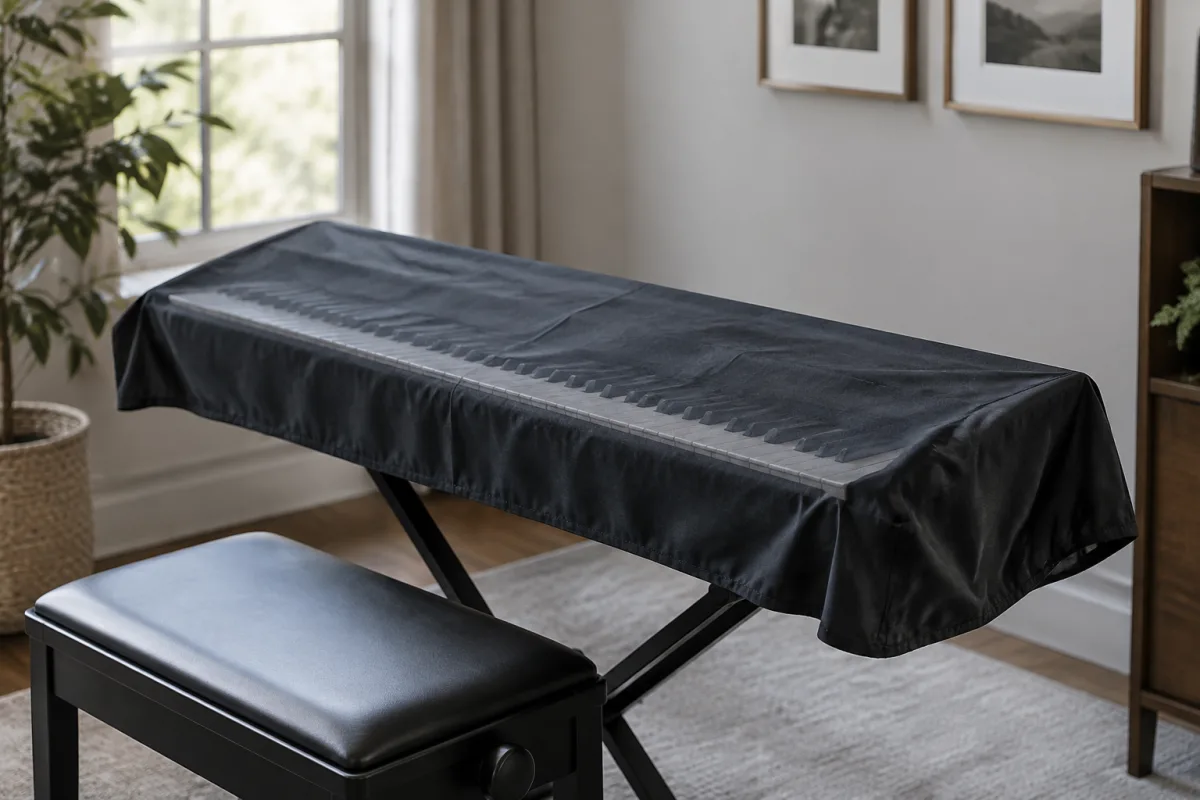
A keyboard with a quality cover is one of the most practical investments you can make, protecting your instrument from dust, spills, accidental damage and environmental wear that accumulates through months of use and transport. Whether your keyboard sits in a home studio, travels regularly for gigging or resides in a rehearsal space, a protective cover extends the instrument's lifespan and maintains its appearance and functionality. This guide explores keyboard covers, why they matter and how to choose the right protection for your instrument.
Why Keyboard Covers Matter
Keyboards are sophisticated electronic instruments with exposed keys, a vulnerable keyboard bed and circuitry sensitive to moisture and dust. A cover provides essential protection that costs just a fraction of professional cleaning or component replacement. Dust accumulation inside the keyboard can eventually clog cooling vents, stress electronics and compromise reliability. Accidental spills are mitigated if a cover prevents liquid from reaching the instrument. Temperature fluctuations are moderated by a cover, reducing stress on components.
For touring musicians, a cover protects against the accumulated damage of transport—cigarette smoke, venue dust, road grime and careless handling all take their toll. A keyboard with a good cover arrives at each venue cleaner and in better condition than one exposed to the road. This alone justifies the modest cost.
Types of Keyboard Covers
Keyboard covers come in several styles, each suited to different needs:
- Dust Covers — Simple fabric covers providing basic protection against dust and light debris. Affordable and straightforward, suitable for studio or home use.
- Hard-Shell Covers — Rigid plastic or fibreglass covers offering impact protection similar to instrument cases. Heavier and more expensive but comprehensive protection for touring.
- Semi-Rigid Covers — A middle ground offering more protection than fabric whilst remaining reasonably portable. Growing in popularity for gigging musicians.
- Custom-Fitted Covers — Designed for specific keyboard models, providing perfect fit and aesthetic appeal. More expensive than generic alternatives.
- Integrated Keyboard Stands with Covers — Some stands feature built-in covers, combining support and protection in a single package.
Material Quality and Durability
Dust covers typically feature microfiber or dense cotton fabric, soft enough not to scratch the keyboard finish but durable enough to withstand regular use. Higher quality versions add water-resistance through coating or lamination, protecting against spills. Heavy-duty construction ensures the cover itself doesn't degrade with age and repeated removal.
Hard-shell covers use ABS plastic or fibreglass construction similar to equipment cases. These are more expensive but provide comprehensive protection against impacts and environmental damage. Hard covers remain useful after years of use, whereas fabric covers gradually thin and wear.
Choosing Your Keyboard Cover
Several considerations guide selection:
| Factor | Guidance |
|---|---|
| Primary Use | Studio instruments benefit from affordable dust covers. Touring keyboards warrant semi-rigid or hard covers. Occasional gigging suits mid-range protection. |
| Keyboard Size | Ensure the cover fits your specific keyboard model. 49-key, 61-key and 88-key keyboards need appropriately sized covers. Check dimensions before purchasing. |
| Storage Environment | If your keyboard lives in a clean studio, a simple dust cover suffices. Humid or dusty environments benefit from water-resistant or hard covers. |
| Transport Frequency | Regular touring demands hard or semi-rigid covers. Occasional gigs suit lighter alternatives. Regular transport is hard on covers and keyboards alike. |
| Aesthetic Preference | Covers come in colours and materials. Choose one that complements your setup and won't show dirt excessively if it's visible in your performance space. |
Keyboards Sold with Included Covers
Many keyboards come with covers included, particularly premium models. These included covers are typically basic dust covers, adequate for home studio use but often inadequate for touring applications. Upgrading to a better cover is worthwhile for gigging musicians. Conversely, budget keyboards often ship without covers, making an aftermarket purchase necessary if protection is desired.
Check your keyboard's original documentation or contact the manufacturer if you're unsure whether your model includes a cover or if replacements are available. Some manufacturers offer premium cover options separate from the standard keyboard package.
Caring for Your Keyboard with a Cover
A cover maintains its protective function better with proper care. Dust covers should be washed occasionally—check the manufacturer's recommendations for water temperature and detergent. Hard covers benefit from periodic wiping with a dry cloth. Never store a cover with a damp keyboard inside; moisture can accumulate and damage components.
Store covers in dry conditions. Don't leave a cover bundled tightly for months; loosely roll or hang it to prevent permanent creasing. Inspect covers periodically for tears or damage; small holes can be patched with fabric tape to prevent further damage.
Additional Keyboard Protection Measures
A cover is just one part of comprehensive keyboard protection. A keyboard stand elevates the instrument off the ground, reducing dust exposure and impact risk. Protective furniture pads under stand legs prevent surface damage. A surge-protected power strip protects electronics from voltage spikes. Together, these measures create a protective environment that extends your keyboard's lifespan significantly.
Keyboard with Cover as a Product Bundle
Some manufacturers and retailers sell keyboards with matching covers as bundle packages. These bundles often offer value—the cover costs less when bundled than purchased separately. Check bundle contents carefully; included covers are sometimes basic versions rather than premium options. If the bundle saves money and the cover quality is adequate for your use case, it's a sensible choice.
Conclusion
A quality keyboard cover is one of the most practical investments protecting your instrument. Whether you choose a simple dust cover for studio use or a robust hard cover for touring, the protection pays dividends through extended instrument lifespan and reduced maintenance needs. The modest cost of a good cover is inconsequential compared to component replacement or professional cleaning if your keyboard suffers damage from dust, moisture or impact. Treat a keyboard cover not as an optional accessory but as essential protection for a valuable instrument.


Comments