
Keyboard with Bluetooth article
The Complete Guide to Keyboard With Bluetooth
Keyboards with Bluetooth offer wireless freedom essential to contemporary music production, combining professional features with convenient wireless connectivity for flexible creative workflows.
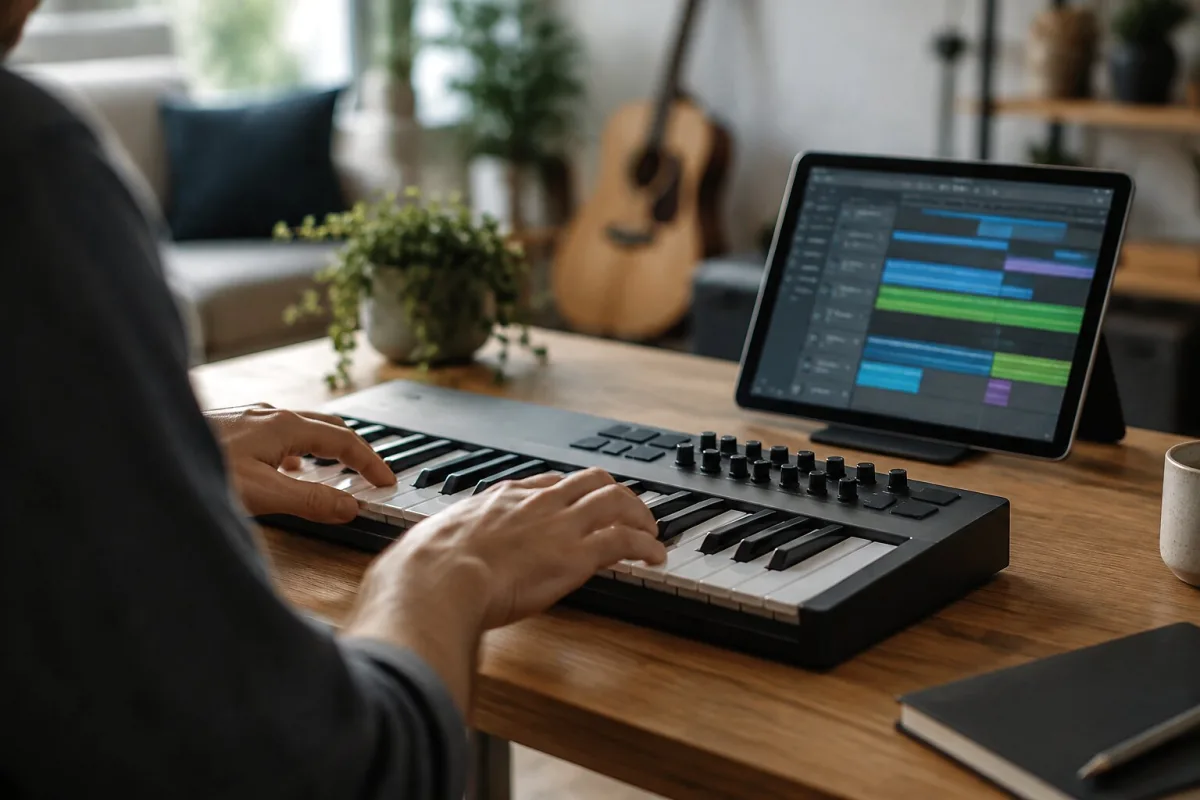
The keyboard with Bluetooth represents a significant advancement in modern music production and performance, liberating musicians from cable constraints whilst maintaining professional-grade responsiveness and sound quality. These wireless instruments seamlessly connect to computers, tablets, and mobile devices, enabling flexible creative workflows suited to contemporary music making. Whether you're producing in a compact home studio, performing live, or exploring musical ideas across multiple locations, the keyboard with Bluetooth offers the wireless convenience modern musicians expect without sacrificing the reliable, low-latency performance that serious music production demands. For decades, musicians have relied on physical cable connections; today's keyboard with Bluetooth technology delivers wireless freedom that expands creative possibilities and simplifies complex studio setups.
Understanding Keyboards With Bluetooth
A keyboard with Bluetooth is an electronic musical instrument featuring wireless connectivity via the Bluetooth wireless standard, allowing communication with compatible computers, tablets, smartphones, and other devices. The keyboard with Bluetooth combines traditional weighted or semi-weighted keys with modern wireless technology, enabling seamless MIDI transmission without physical USB or MIDI cable connections. Unlike generic computer Bluetooth keyboards, a keyboard with Bluetooth designed for music maintains low-latency transmission essential for real-time performance and recording. The keyboard with Bluetooth typically incorporates professional features like velocity-sensitive keys, assignable controls, pitch bend and modulation wheels, and comprehensive MIDI mapping capabilities. This integration of wireless technology with professional music production requirements makes keyboards with Bluetooth increasingly popular across home studios, mobile performers, and educational contexts.
Wireless Technology and Latency
The keyboard with Bluetooth must overcome fundamental latency challenges inherent to wireless transmission. Bluetooth's standard transmission protocol introduces roughly 20-100ms latency depending on connection stability and device load—a noticeable delay for sensitive musicians but acceptable for many musical applications. Premium keyboards with Bluetooth employ optimised codecs and connection protocols minimising latency to imperceptible levels, often achieving 5-15ms delay through proprietary transmission methods. The keyboard with Bluetooth's latency performance depends heavily on your connected device—newer smartphones and tablets typically handle Bluetooth MIDI more efficiently than older computers. Quality keyboards with Bluetooth prioritise connection stability, automatically reconnecting when interrupted and maintaining consistent performance across typical home or studio environments. Understanding your keyboard with Bluetooth's latency characteristics helps you determine whether it suits your specific musical applications.
Key Features and Connectivity Options
Professional keyboards with Bluetooth typically include hybrid connectivity, offering both wireless and wired options for maximum flexibility. The keyboard with Bluetooth usually features USB-C or USB 3.0 connections enabling direct computer links when wireless connectivity isn't available or when lowest possible latency is critical. Many keyboards with Bluetooth include MIDI I/O for connection to other synthesizers or controllers, providing flexibility beyond simple point-to-point Bluetooth links. The keyboard with Bluetooth often incorporates comprehensive assignable controls—knobs, sliders, and buttons allowing deep integration with music production software. Built-in sounds and drum kits vary by model; entry-level keyboards with Bluetooth offer basic soundsets, whilst premium instruments include thousands of professional-quality synthesiser voices and drum programs. Quality keyboards with Bluetooth maintain battery life exceeding 20-40 hours on single charge, practical for home studios but potentially problematic for touring musicians.
Keyboard Weight and Action Types
| Action Type | Feel and Response | Best For | Keyboard with Bluetooth Suitability |
|---|---|---|---|
| Unweighted Keys | Light, springy response; fast action | Electronic music, synthesisers | Excellent; portable, responsive |
| Semi-Weighted Keys | Moderate resistance; piano-like feel | General music production | Very good; balance of playability and portability |
| Weighted Keys | Heavy, realistic piano action | Piano, classical music | Limited; adds weight and complexity; not ideal for wireless |
| Hammer Action | Realistic with physical hammer mechanism | Digital pianos, classical training | Poor; incompatible with portable wireless keyboards |
Integration With DAWs and Music Software
The keyboard with Bluetooth integrates with Digital Audio Workstations (DAWs) via standard MIDI protocol, making it compatible with professional music production software like Ableton Live, Logic Pro, Cubase, and countless others. Most keyboards with Bluetooth arrive pre-configured for zero-setup MIDI functionality—simply pair via Bluetooth and begin playing virtual instruments immediately. The keyboard with Bluetooth's assignable controls typically map to common DAW functions like volume, pan, transport control, and software plugin parameters. Quality keyboards with Bluetooth include comprehensive software allowing custom MIDI mapping, keyboard splits, and scene switching for complex performance setups. Online communities have developed open-source software extending the keyboard with Bluetooth's functionality far beyond factory capabilities, enabling creative musicians to tailor their instruments precisely to individual workflows.
Portability and Travel Considerations
The keyboard with Bluetooth's wireless connectivity makes it exceptionally appealing for touring musicians, remote sessions, and mobile production workflows. Unlike traditional keyboards requiring cable management, instrument amps, and fixed positioning, the keyboard with Bluetooth enables spontaneous music making anywhere a compatible device is available. Lightweight keyboards with Bluetooth typically weigh 2-4kg, fitting easily into travel bags and backpacks. Battery-powered keyboards with Bluetooth suit situations without reliable power access—street performers, outdoor jam sessions, and spontaneous recording scenarios. However, relying on battery power requires carrying backup batteries and accepting potential mid-performance battery depletion if capacity planning is neglected. The keyboard with Bluetooth's portability advantage over traditional instruments makes it increasingly popular with session musicians juggling multiple gigs and locations throughout their week.
Sound Quality and Synthesis Capabilities
Premium keyboards with Bluetooth incorporate sophisticated sound engines providing professional-quality synthesis, sampling, and sound design capabilities. The keyboard with Bluetooth's onboard sounds range from emulated classic synthesiser models (Moog, Prophet, Minimoog recreations) to contemporary virtual analogue synthesis and wavetable synthesis. Many keyboards with Bluetooth include built-in effects like reverb, delay, chorus, and distortion, allowing immediate sonic shaping without external processing. The keyboard with Bluetooth's MIDI capability means you're never limited to built-in sounds—triggering any virtual instrument in your DAW vastly expands tonal possibilities. Entry-level keyboards with Bluetooth offer adequate sounds for learning and casual production, whilst professional instruments include thousands of meticulously designed presets plus comprehensive synthesis capabilities for sound designers pursuing ultimate sonic customisation.
Maintenance and Reliability
Maintaining your keyboard with Bluetooth ensures consistent, reliable performance across years of use. Protect the keyboard with Bluetooth from excessive moisture and dust—common issues particularly for portable instruments used in varied environments. Check Bluetooth connectivity monthly and re-pair if connection becomes unstable or sluggish. Clean the keys regularly with a soft, damp cloth and mild soap to remove dust and finger oils that accumulate during normal playing. Store your keyboard with Bluetooth in a protective case or bag when not actively in use, particularly if transported frequently. Battery-powered keyboards with Bluetooth benefit from occasionally running through complete charge/discharge cycles to maintain battery health. These straightforward maintenance tasks preserve your keyboard with Bluetooth's reliability and consistent performance throughout its lifespan.
Choosing the Right Keyboard With Bluetooth
Selection considerations include your intended applications, budget constraints, and portability requirements. Entry-level keyboards with Bluetooth (£100-300) suit hobbyists, learners, and casual music makers exploring production basics. Mid-range keyboards with Bluetooth (£300-1000) offer professional-grade build quality, comprehensive sound libraries, and sophisticated MIDI mapping suitable for serious home studios and touring musicians. Premium keyboards with Bluetooth (£1000+) feature pristine build quality, premium sound engines, sophisticated synthesis capabilities, and flawless wireless performance. Your choice depends on whether portability or sound quality takes priority, whether built-in sounds suffice or you prefer using external virtual instruments, and whether your budget allows premium investment or requires budget-conscious selection. Many musicians find mid-range keyboards with Bluetooth represent optimal balance between cost and capability.
Conclusion
The keyboard with Bluetooth has fundamentally transformed music production accessibility and creative flexibility. By combining wireless convenience with professional-grade musical performance, keyboards with Bluetooth enable contemporary musicians to produce, perform, and explore music wherever inspiration strikes. Whether you're building a home studio, performing live, or simply experimenting with sound, the keyboard with Bluetooth offers the wireless freedom and musical capability modern musicians expect. Quality keyboards with Bluetooth deliver reliable, low-latency performance that satisfies demanding musicians whilst remaining accessible to learners and hobbyists alike, making wireless keyboard technology an increasingly important tool across all musical contexts.


Comments