
Keyboard Piano Weighted Keys article
The Complete Guide to Keyboard Piano Weighted Keys
Weighted keys simulate acoustic piano hammer action, requiring more force and providing resistance that supports proper technique and expressive musical control.
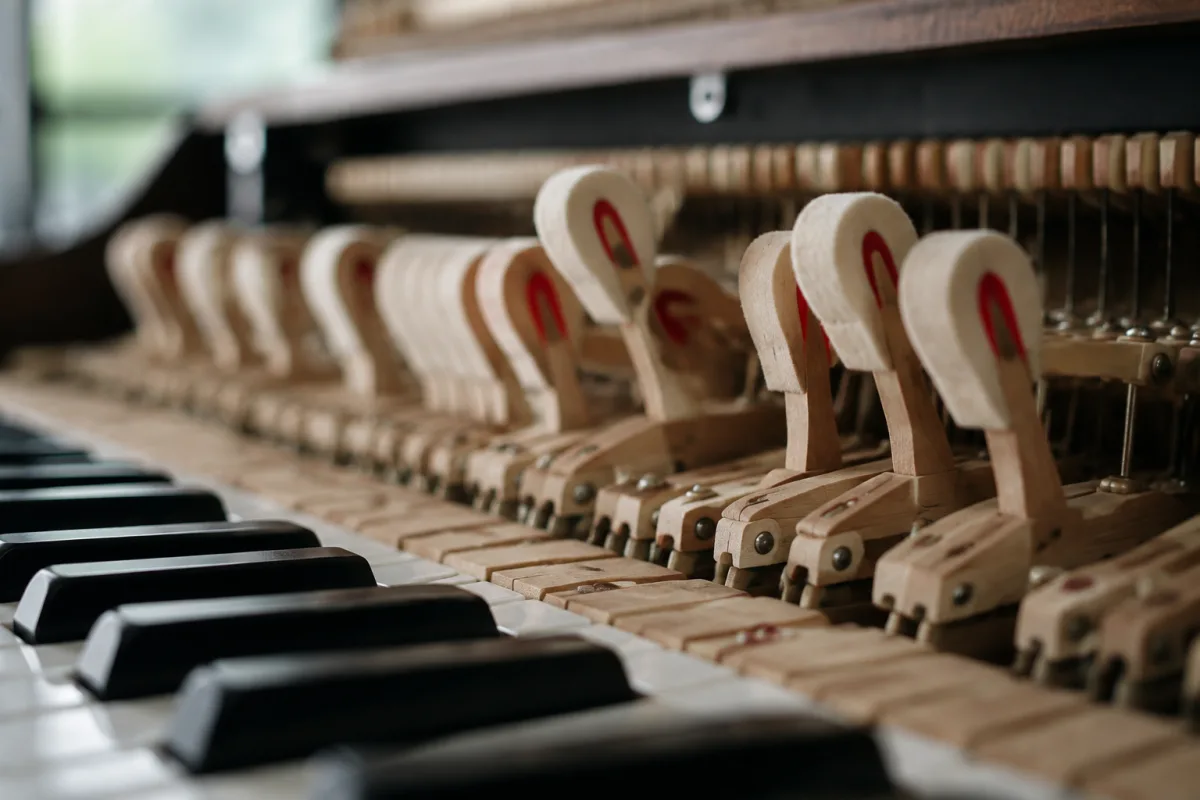
Weighted keys represent a fundamental design consideration for pianists transitioning to electronic keyboards. These pressure-sensitive mechanisms simulate the hammer action found in acoustic pianos, requiring more force to press and releasing gradually after key release. Understanding weighted action and their benefits helps musicians choose keyboards that genuinely support classical technique and expressive piano playing.
The Importance of Hammer Action
Acoustic pianos employ complex mechanical systems where hammers strike strings and bounce back, creating inherent resistance to keystrokes. This physical feedback shapes how pianists develop technique, control dynamics and express musicality. Electronic keyboards must emulate this resistance to feel authentic beneath the fingers and support the playing techniques developed at traditional pianos.
Entry-level keyboards featuring unweighted keys—simple switches offering minimal resistance—feel insubstantial to trained pianists. Keys respond instantly to any touch, lacking the deliberate, controlled action that piano technique demands. This causes pianists to develop poor habits: finger articulation deteriorates, dynamic control becomes imprecise, and the transition back to acoustic pianos feels jarring and foreign.
How Weighted Action Works
Weighted keyboard action employs mechanical springs, magnetic sensors and progressive resistance that increases toward the bottom of the key travel. When you press a key, sensors detect the velocity—how quickly you depress it—and trigger the corresponding sound with appropriate loudness. The resistance gradually increases throughout the downward motion, mimicking the piano hammer's gathering momentum.
Premium implementations include hammer action mechanisms featuring actual moving hammers beneath each key. These hammers accelerate and decelerate realistically, providing haptic feedback that mirrors acoustic piano response. Advanced systems add let-off simulation—the subtle point in piano key depression where the hammer disengages from the string—adding realism for experienced classical pianists.
Types of Action Systems
Keyboard manufacturers implement several distinct weighted action approaches, each offering different levels of authenticity and cost:
- Basic weighted springs: Simple mechanical springs beneath keys provide constant resistance throughout the downward motion. Budget-friendly but less authentic than graded action systems.
- Graded weighted action: Springs increase in weight from treble to bass keys, mimicking the piano's natural progression where lower strings require more force. Significantly improves feel and control.
- Hammer action: Mechanical hammers beneath keys accelerate and decelerate realistically. Premium models feature true let-off simulation for maximum piano authenticity.
- Escapement: Advanced feature where keys disengage from triggering samples during depression, just as piano hammers disengage from strings. Only found on professional instruments.
Velocity Sensitivity and Dynamic Control
Weighted keys work in conjunction with velocity sensors to translate striking force into expressive sound control. A soft, gentle touch triggers quiet notes; forceful strikes produce louder sound. This velocity sensitivity allows pianists to perform the expressive dynamics central to classical music and jazz improvisation. Professional musicians insist on accurate velocity curves that respond naturally to their technique without requiring excessive adjustment or curve customisation.
| Action Type | Feel and Response | Best For |
|---|---|---|
| Unweighted | Light, immediate; no resistance | Electronic music, synth programming |
| Basic weighted | Moderate resistance; constant weight | Hobbyists, casual playing |
| Graded weighted | Progressive resistance; bass heavier than treble | Pianists, classical music |
| Hammer action | Realistic hammer feel; authentic let-off | Professional touring, studio work |
Impact on Playing Technique
The choice between weighted and unweighted action significantly influences playing development. Pianists studying classical technique benefit from weighted action because it encourages proper finger articulation, hand positioning and dynamic control. Without this resistance, developing pianists often press keys downward rather than striking them with purpose, creating poor technique that transfers poorly to acoustic pianos.
For jazz and popular music, many performers prioritise lighter touch and rapid passage work, sometimes preferring semi-weighted or light-weighted action that allows quick note repetition and comfortable rapid passages. Professional performers typically evaluate this personally rather than adhering to strict genre conventions.
Entry-Level vs. Professional Systems
Budget keyboards in the £300–500 range typically feature basic weighted springs offering moderate resistance improvement over unweighted keys. Mid-range instruments (£700–1,500) incorporate graded weighted action providing piano-authentic feel suitable for classical study and performance. Professional touring keyboards (£2,000+) feature sophisticated hammer action with escapement and let-off simulation, delivering museum-quality piano authenticity alongside modern synthesiser capabilities.
The best choice depends on your musical aspirations and how frequently you transition between electronic and acoustic instruments. Serious piano students absolutely benefit from graded weighted or hammer action systems, whilst casual players prioritising portability and cost-effectiveness can adapt to basic weighted systems or accept unweighted action.
Maintenance and Durability
Weighted action mechanisms, especially hammer systems, involve more moving parts than unweighted alternatives. Quality construction proves essential; premium brands engineer action systems for hundreds of thousands of keystrokes without degradation. Conversely, budget implementations sometimes develop sticking keys or inconsistent response after extended use. This durability disparity justifies the price premium of professional instruments.
Conclusion
Weighted action fundamentally transforms the playing experience on electronic keyboards, enabling pianists to develop proper technique, express musical nuance and transition seamlessly between acoustic and electronic instruments. Whether selecting your first keyboard or upgrading to a professional touring instrument, understanding the differences between action systems ensures you invest in technology supporting your musical development and performance goals.


Comments