


Folding Keyboard article
Folding Keyboard for Beginners: A Complete Guide
Learning keyboard? A folding keyboard is perfect for beginners. Our guide covers setup, practice routines, common mistakes, and how to progress beyond your first instrument.
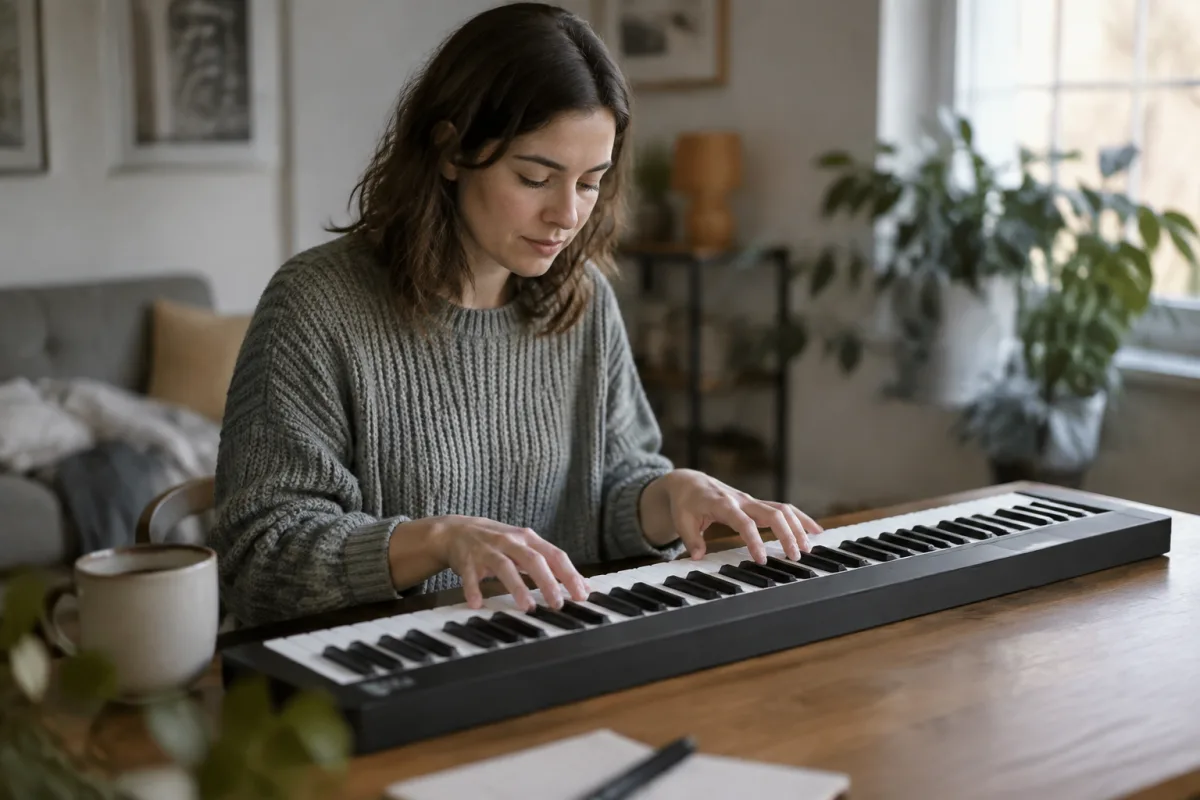
You've decided to learn keyboard, and a folding keyboard caught your eye. Perfect. A folding keyboard might be the smartest choice you make as a beginner musician. These portable, affordable instruments remove barriers to starting—no need for a dedicated studio space, no massive investment upfront, no guilt about dropping an expensive instrument. Yet many beginners worry that a folding keyboard won't "feel right" or deliver serious results. Here's the truth: countless professional musicians started on modest folding keyboards, and your first weeks of learning matter far more than the brand or price. This guide walks you through choosing your folding keyboard, setting it up properly, and avoiding the common mistakes that leave beginners frustrated.
Why a Folding Keyboard Is Perfect for Beginners
A folding keyboard removes the psychological burden of commitment. You're not investing hundreds in a full-size weighted keyboard before knowing whether keyboard music appeals to you. A decent folding keyboard costs £40-150, so you can experiment freely. More importantly, the portability means you'll actually use it. Want to practise in the living room? Fold it up and move it. Visit a friend? Your folding keyboard fits in a backpack. This ease of access—the ability to play spontaneously without setup hassle—is why beginners often progress faster with folding keyboards than with more "serious" instruments gathering dust in a bedroom corner. You learn more by playing 20 minutes daily than 2 hours weekly, and a folding keyboard makes daily practice effortless.
What Makes a Good Folding Keyboard for Learning
Not all folding keyboards are equal. As a beginner, prioritise these characteristics:
- Key Count: A 61-key folding keyboard is the learning standard—enough range to learn melodies and basic progressions. 88-key full-size keyboards are heavier and less portable; 49-key models feel cramped. Start with 61 keys.
- Key Type: Weighted keys simulate piano resistance; unweighted keys are lighter. Beginners benefit from weighted keys because they develop proper finger strength and technique. Look for "semi-weighted" if budget is tight—it's a compromise between authenticity and portability.
- Sound Quality: A folding keyboard with authentic piano sounds, electric organ, and synth voices covers the basics. Avoid models with only tinny, obviously synthetic sounds—they demotivate learners. Listen to demos before buying.
- Touch Sensitivity: This feature changes volume based on how hard you strike each key, mimicking real pianos. Essential for expressive playing. Don't skip this.
- Built-In Speaker Quality: A folding keyboard with tinny speakers makes learning unpleasant. Test the speaker quality before committing, or budget for headphones (which are excellent for practise anyway).
- Battery vs. USB Power: Battery-powered folding keyboards offer ultimate portability; USB/AC power is more reliable for home practise. Many models offer both options.
Your First Folding Keyboard: The Easiest Setup Path
Unbox your folding keyboard and resist the temptation to tinker with settings. Start with the default sounds and presets. Fold out the keyboard gently—modern folding keyboards use sturdy hinges, but treat them with respect. Connect a power supply or insert batteries. Wear headphones (quieter practise, better learning). Open your first tutorial and play middle C. That's it. Within five minutes, you're playing. This simplicity is the beauty of a folding keyboard: there's nothing to configure, no complicated setup, nothing stopping you from starting immediately. Your confidence builds with the first successful chord.
Five Essential Tips for First-Time Folding Keyboard Learners
- Sit properly at your folding keyboard: Posture matters. Your wrists should be level with the keys—not angled up or down. If your folding keyboard sits too low, use a cushion or keyboard stand to elevate it. Poor posture leads to injury and frustration.
- Use headphones, especially if you live with others: A tinny folding keyboard speaker loses charm after five minutes of repeated practise. Headphones isolate your sound, make mistakes less embarrassing, and actually improve your ear training because you hear every note clearly.
- Don't skip the basics because you're learning "just for fun": Proper finger placement and technique matter even if you're playing casually. Shortcuts now become bad habits later. Invest in a beginner's course or app; your folding keyboard deserves proper technique.
- Practice scales before diving into songs: Scales feel boring, but they build the muscle memory and finger independence that make songs possible. Spend 5 minutes daily on scales; songs will feel dramatically easier.
- Expect a learning plateau, and push through: Around week 3-4, playing feels difficult and unmusical. This is normal—you're building new neural pathways. Thousands of pianists have passed through this wall. You will too.
Common Beginner Mistakes With Folding Keyboards
- Assuming a folding keyboard can't teach "serious" technique: Nonsense. Technique is technique. A folding keyboard teaches hand position, finger independence, and rhythm just as effectively as an expensive weighted keyboard. Your budget instrument isn't holding you back; your practise hours are what matter.
- Neglecting headphones because "I'll just play quietly": A folding keyboard's built-in speaker, even played quietly, becomes annoying background noise. Headphones transform practise from a burden on your household to a personal, focused learning experience.
- Buying the cheapest folding keyboard available: Ultra-budget models (under £40) often have stiff keys, poor sound quality, and unreliable touch sensitivity. Spend £70-120 on a folding keyboard. It still costs less than professional lessons and actually encourages daily practise.
- Playing only songs you love, ignoring foundational exercises: Learning keyboard is sequential. Skipping scales, finger exercises, and music theory to jump straight to songs leaves you with wobbly technique. Balance fun songs with essential foundations.
- Giving up because your folding keyboard "doesn't sound like a real piano": It doesn't need to. Your folding keyboard sounds like a folding keyboard—and that's fine. Professional musicians don't expect every instrument to sound identical. Your ears adapt quickly, and within weeks, the sound becomes normal to you.
- Storing your folding keyboard improperly: Keep your folding keyboard in a dry environment and protect the keys from dust. Don't fold and unfold it hundreds of times daily—the hinges will eventually loosen. Treat it with basic care and it'll last for years.
Choosing a Learning Path
Your folding keyboard is ready. Now choose a learning method. Online tutorials (YouTube channels and apps like Simply Piano or Flowkey) offer structured lessons. Books like "Adult All-in-One Course" provide traditional foundations. In-person lessons from a teacher give you feedback and accountability. Mix approaches: app for daily practise, YouTube for technique clarification, occasional lessons for goal-setting. Most beginners progress fastest when they combine methods rather than relying on a single resource.
Graduation: When to Upgrade Beyond Folding Keyboard
A folding keyboard is an excellent learning instrument, but eventually—typically after 6-12 months of consistent practise—you'll want to graduate to a larger instrument. If you've committed to playing, consider an 88-key weighted keyboard. If you're continuing with portability as priority, explore premium folding keyboards with better keys and connectivity. For now, recognise your folding keyboard for what it is: a perfect entry point, not your final destination. It's teaching you foundations that apply to every keyboard you'll ever play.
Building Your Folding Keyboard Practice Routine
Success comes from consistent, structured practise. Aim for 20-30 minutes daily rather than sporadic hour-long sessions. Start with scales and finger exercises (10 minutes), move to a song you're learning (10 minutes), and close with free improvisation or playing something you already know well (5-10 minutes). This structure works on any folding keyboard. Boring? Absolutely. Effective? Absolutely. Every pianist who's ever performed professionally did exactly this—scales, deliberate practise, and play-for-pleasure—to get there.
Your First Steps Start Now
You don't need a £2000 keyboard to learn music. You don't need a professional recording studio in your bedroom. You need a folding keyboard, a quiet corner, headphones, and commitment. For comprehensive guidance on the full range of folding keyboards and learning resources, explore our complete guide to folding keyboards, which covers specific models, advanced features, and how to eventually graduate beyond a beginner folding keyboard. But for now, your first step is simple: choose a folding keyboard that excites you, unfold it, and start learning. You've got this.


Comments