
Digital Keyboard article
The Complete Guide to Digital Keyboard
A digital keyboard brings the piano within reach — accessible, affordable, and now genuinely beautiful. Discover what separates a serious instrument from a toy, and find the keyboard that's right for you.
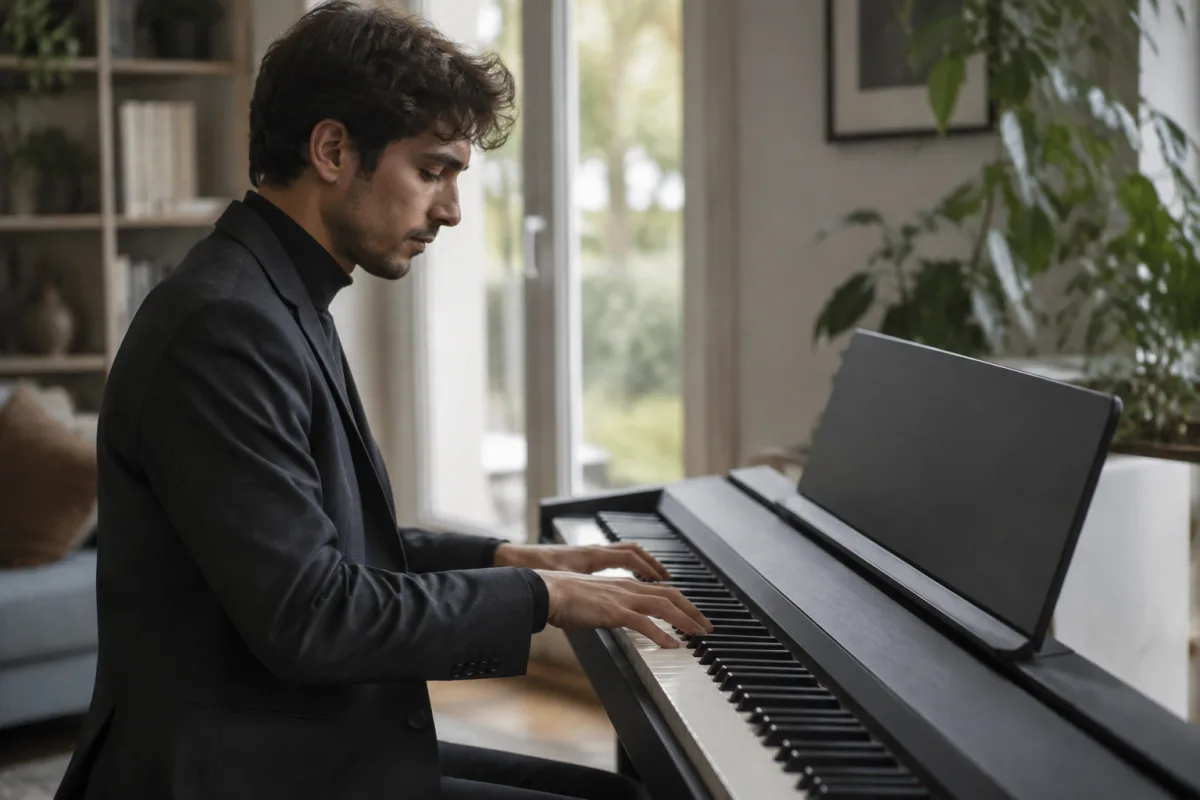
The digital keyboard occupies a curious position in modern music: neither acoustic piano nor synthesiser, yet sharing the expressive potential of both. Whether you're exploring keyboard music for the first time, learning classical pieces, or exploring contemporary composition, such instruments offer an accessible entry point into the repertoire. They capture the essential touch and responsiveness of a traditional piano, whilst removing the spatial and financial barriers that keep many from ever learning at all.
Understanding Digital Keyboard Fundamentals
A digital keyboard is an electronic instrument that recreates piano sound through sampled or synthesised audio. Unlike an acoustic piano, which produces sound through strings and a hammer mechanism, these devices process your finger motion through velocity-sensitive sensors and output the result through amplifiers and speakers. The similarity ends at the keyboard layout — everything else is fundamentally different.
The core appeal of any keyboard lies in its accessibility. You need no tuning technician, no climate-controlled room, and no space for a concert grand. Plug in, play, and you're ready. The sound quality has become so refined that even professional recording studios now use electronic keyboards as their primary instrument for composition and performance.
What distinguishes a serious instrument from a toy or amateur version is the quality of three things: the key action (how the keys feel and respond), the sound engine (the instrument samples and synthesisers), and the overall build quality. Invest in these three areas and you'll have an instrument that grows with you.
Key Action and Touch Response
The most crucial aspect of any digital keyboard is its key action — the mechanical feel and velocity response of the keys. Amateur models use unweighted plastic keys that require minimal force; they feel more like toy piano keys than serious instruments. Professional-grade digital keyboards employ weighted hammer action, which simulates the resistance of an acoustic piano, requiring your fingers to work harder and building genuine technique.
Touch sensitivity matters enormously. A responsive instrument allows subtle variations in volume and tone based on how gently or forcefully you strike each key, just as an acoustic piano does. This dynamic control is what separates expressive playing from mechanical note-playing. Look for 88-key models with weighted action if you're serious about classical repertoire or developing proper technique.
Some intermediate models use semi-weighted keys — a compromise that offers some resistance without the full weight of full hammer action. These sit between budget models and professional instruments, and they're appropriate for developing players who aren't yet ready to invest significantly.
Sound Quality and Sample Selection
The voice engine of a digital keyboard determines its personality. Budget models use low-quality sampled or synthesised piano sounds; they sound thin, tinny, and quickly tiresome. Professional instruments sample piano recordings from world-class concert pianos — Steinway grands, Bösendorfer imperials, and classical chamber pianos — recorded at multiple velocity levels to capture every nuance of touch.
Beyond piano sounds, modern models include orchestral voices: strings, woodwinds, brass sections, harpsichord, organ, and synthesised textures. These layers expand creative possibilities, but they're secondary to the core piano sound. A keyboard with a mediocre piano voice but excellent orchestral voices is still limited; the reverse is far more useful for learning and performing.
Sample quality is often invisible to the ear until you hear the difference. Compare a budget model directly with a professional instrument: play the same classical piece on both. The professional's piano sound will bloom with resonance; the budget version will sound flat, plasticky, and two-dimensional. That richness matters for both learning and enjoyment.
Connectivity and Integration
Modern instruments connect to computers and mobile devices via USB or Bluetooth, allowing you to record performances, use music notation software, or apply external effects processors. MIDI capability — the standard protocol for digital music communication — transforms such keyboards into controllers for entire music production systems.
For learners, this connectivity extends to apps. Many models sync with learning software that displays sheet music, highlights the correct keys, and tracks your progress. This technology turns practice from a solitary, sometimes frustrating activity into something engaging and interactive.
If you're recording or performing live, check that your instrument offers balanced XLR audio outputs (in addition to standard jack connectors) and professional-grade MIDI implementation. These details separate hobbyist models from those built for serious musicians and recording engineers.
Weighted vs. Unweighted Keys: The Choice
This decision shapes your entire playing experience. An instrument with weighted, hammer-action keys demands proper finger technique, builds hand strength, and teaches genuine piano technique. If you ever transition to an acoustic piano, your muscle memory and technique will transfer seamlessly.
Unweighted or semi-weighted models feel lighter, require less effort, and are suitable for children beginning at five or six years old, or for adults exploring electronic music production where traditional piano touch is less important. However, if classical repertoire is your goal, never compromise on this. An unweighted version develops poor technique that's difficult to unlearn.
Stage performers sometimes use lighter-touch instruments for portability, though professional stage pianos still employ weighted action. The compromise exists, but know what you're sacrificing.
Selecting the Right Instrument for Your Needs
Consider these questions honestly: Will you learn classical repertoire or explore contemporary composition? How much space do you have? What's your genuine budget? Are you a beginner or returning to music?
Beginners serious about learning classical music should invest in an 88-key digital keyboard with weighted hammer action and quality piano voices — expect to spend £800–1500. Intermediate players benefit from additional voices, better connectivity, and more sophisticated sound engines — £1500–3000. Professional musicians and recording engineers demand concert-grade piano sounds, extensive synthesis capabilities, and recording tools — £3000+.
Reputable brands include Yamaha (robust, reliable, excellent value), Roland (innovative sounds and touch), Kawai (superb key action, traditionally-minded design), and Nord (lightweight stage performance models). Each brand reflects different priorities; Yamaha suits learners, Roland suits experimenters, Kawai suits classicists, and Nord suits working musicians who need portability.
Creating Space and Environment
Unlike an acoustic piano, such an instrument makes minimal demands on your home. You need only a sturdy stand, a comfortable bench at the correct height, and a power outlet. Place it in a quiet room if possible, though the instrument itself makes no acoustic noise — only your amplified sound comes from the speakers.
Good practice posture matters. Adjust your bench so that your elbows are slightly below your wrists, and your shoulders sit relaxed. A poorly-adjusted workspace leads to tension and injury. Many stands adjust to your exact height; invest in a good one.
The Broader Picture
A digital keyboard is a serious musical instrument in every sense that matters. It democratises access to the piano repertoire. It requires the same discipline, study and practice as an acoustic instrument. The only difference is that you begin with sound of world-class quality, rather than needing to wait years and spend thousands before you experience what a beautiful piano can do.
Choose wisely. Invest in weighted action, quality samples, and solid construction. Your fingers and ears will thank you, and you'll have an instrument that sustains a lifetime of musical discovery.


Comments