


Synth Keyboard Stand Buying guide
Synth Keyboard Stand: A Complete Buyer's Guide
Choosing a synth keyboard stand requires knowing weight capacity, stability specs, and what features truly matter. This buyer's guide covers the essentials.
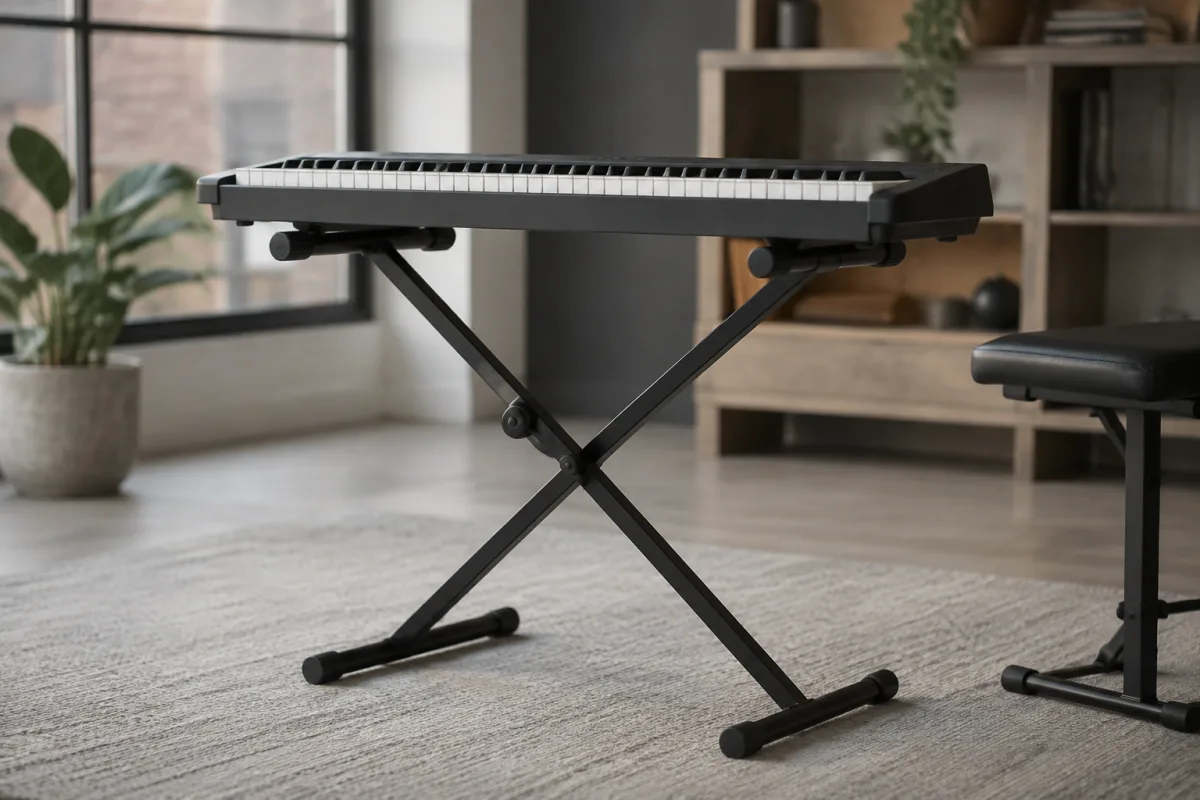
You've bought your synthesizer, and now you need a synth keyboard stand. Choosing one should be straightforward, but the market offers enough variety to create genuine confusion. Some stands are flimsy and unreliable; others are overbuilt and expensive. This guide cuts through the noise and focuses on what actually matters when buying a synth keyboard stand. Spend time here, and you'll get exactly what you need—no more, no less.
Weight Capacity: The First Critical Spec
Every synth keyboard stand has a weight limit, and this is non-negotiable. Your synth will have a weight specification. A quality synth keyboard stand should handle your instrument with at least 10 kilograms of overhead capacity. If your keyboard weighs 15 kilograms, buy a synth keyboard stand rated for at least 25 kilograms. This margin prevents wobble, flex, or eventual failure.
Don't guess. Weigh your keyboard or check the manual. Then look at synth keyboard stand specs carefully—often listed in the product sheet. Generic keyboard stands sometimes claim huge weight capacities but deliver wobbly, unreliable support. Stick to stands explicitly designed for synthesizers or keyboards, which account for the specific balance and pressure patterns keyboards apply.
Height Adjustment and Playing Position
A synth keyboard stand must adjust to your height and sitting preference. Standing heights vary, and ergonomics matter. The best synth keyboard stand allows smooth height adjustment without tools, from roughly 70 centimetres (seated playing) to 110 centimetres (standing performance). Test this range before buying if possible.
Check the adjustment mechanism. Some synth keyboard stand models use clamps—quick but potentially unreliable. Others use threaded columns or lever-locks, which take slightly longer but stay put. For professional use, a synth keyboard stand with secure locking is worth the small inconvenience. For casual home playing, a quality clamp works fine.
Stability and Base Design
A wobbly synth keyboard stand ruins playing. Stability comes from base design. Look for stands with a wide, four-legged base. Some synth keyboard stand models use an X-frame design, which is elegant but sometimes unstable. The best synth keyboard stand designs have feet that extend far from the centre column, distributing weight and preventing tipping.
Base material matters too. Rubber feet prevent sliding and protect floors. Metal bases with plastic feet are acceptable; all-plastic bases are cheap and often unstable. If buying online without seeing the stand, read reviews specifically mentioning stability. Professional musicians prioritize this feature heavily—listen to their feedback.
Material: Steel vs. Aluminum vs. Hybrid
Most quality synth keyboard stand options use steel for the main column and aluminum for cross-braces. Steel provides strength and reliability. Aluminum is lighter and won't rust, but it's less forgiving under stress. A synth keyboard stand combining both materials (steel core, aluminum cross-braces) often offers the best balance.
Avoid synth keyboard stands made entirely from plastic or composite materials. These are budget options, and they show. After a year of regular use, plastic stands develop play in the joints. Metal construction adds £20-50 to the price but extends usable life by years.
Price Tiers and Value Assessment
Synth keyboard stands come in three price tiers. Budget stands (£30-60) work if you're light-handed and stationary. They're fine for bedroom producers who rarely move the setup. Professional stands (£60-120) offer real stability, smooth adjustment, and longevity. They're standard for touring musicians. Premium stands (£120+) add features like cable management, mounting hardware for multiple keyboards, or flight-case readiness.
The sweet spot for most buyers is the professional tier. A quality synth keyboard stand at £70-90 will outlast your keyboard and never embarrass you in a performance or recording session. Budget stands save money initially but often cost more long-term in replacements and frustration.
Key Specs to Check Before Buying
When evaluating any synth keyboard stand, check these specific attributes:
- Weight capacity: At least 10kg more than your heaviest keyboard. Non-negotiable.
- Height range: Typically 68-110cm. Verify it suits your playing position.
- Tilt adjustment: Good stands tilt 0-20 degrees, ideal for angled playing.
- Footprint: Measure the base width. Wider is more stable. Confirm it fits your space.
- Adjustment mechanism: Lever-locks or threaded columns are more reliable than simple clamps.
- Cable management: Some stands have clips or channels. Useful but not essential.
- Tool requirements: Good stands adjust without tools. Cheap ones require wrenches.
Common Pitfalls When Buying
Musicians often make predictable mistakes. First: assuming heavier = better. Yes, metal construction matters, but some synth keyboard stands are unnecessarily heavy, making them hard to transport. A quality stand balances weight with stability.
Second mistake: buying a cheap stand thinking you'll upgrade later. You won't. You'll tolerate wobble, flex, and awkward height for years. Start with a decent synth keyboard stand and you'll appreciate the decision every time you play.
Third mistake: ignoring portability if you might gig. If touring is even a possibility, buy a stand that folds compactly. A stand that takes 30 seconds to collapse versus five minutes makes the difference between practical and annoying.
Fourth mistake: not testing before buying in-person if possible. Music shops often have keyboard stands available. Put your keyboard on one and play for five minutes. You'll immediately feel whether it suits you. Online returns exist but involve hassle.
Features That Matter Less Than You Think
Manufacturers add bells and whistles to justify higher prices. Cable management clips are nice but not essential—gaff tape works fine. Wheels for the base look practical but often make stands less stable. Extra mounting points for additional keyboards are overkill unless you're touring with multiple synths.
Don't pay premium prices for features you won't use. Focus on the fundamentals: weight capacity, stability, smooth adjustment, durable materials. A synth keyboard stand succeeding at these basics outperforms a fancy stand that wobbles or collapses.
Brands Worth Considering
Reputable synth keyboard stand manufacturers include Hercules, K&M, Ultimate, and Behringer. These brands consistently deliver durability and reliability. Others exist, but starting here narrows the field to proven options. Read user reviews specifically mentioning long-term reliability—that's the real test.
For detailed specifications, historical context, and advanced setup options, consult our complete guide to synth keyboard stands.
Making Your Final Decision
Buying a synth keyboard stand is straightforward once you know what matters. Check weight capacity, verify height range, assess stability, and confirm materials are metal with rubber feet. Aim for the professional tier (£60-120) rather than budget or premium extremes. Test in-person if possible. Buy from a retailer with reasonable return policies. Do this, and your stand will serve reliably for years, supporting your music without distraction or worry.


Comments