


Keyboard Bench article
Keyboard Bench for Beginners: A Complete Guide
A proper keyboard bench positions you correctly for comfortable, healthy playing. This guide explains why posture matters and how to choose the right bench.
Choosing the Right Keyboard Bench: A Beginner's Guide
A keyboard bench might seem like a minor detail, but sitting comfortably and at the right height is crucial for learning properly and avoiding strain. Bad posture and poor seating lead to hand fatigue, wrist pain, and frustration. This guide walks beginners through why a keyboard bench matters and how to choose one that fits your needs without overthinking it.
Why a Proper Bench Matters
Your wrists should be level with your keyboard. Your shoulders should be relaxed, not hunched. Your back should be straight. A proper keyboard bench positions you correctly, reducing strain and letting you focus on playing rather than comfort. Sitting on a regular chair, a bed, or a couch forces awkward posture—and awkward posture creates bad habits that take years to unlearn.
Keyboard Bench vs. Regular Chairs
A regular dining chair might have the right height by accident, but most aren't designed for keyboard playing. A keyboard bench is specifically built to position you correctly: it's typically the right height, offers proper support, and doesn't have distracting armrests or wheels. If you absolutely must use a regular chair while learning, ensure it's the right height and offers decent back support.
Types of Keyboard Benches
Fixed-Height Benches
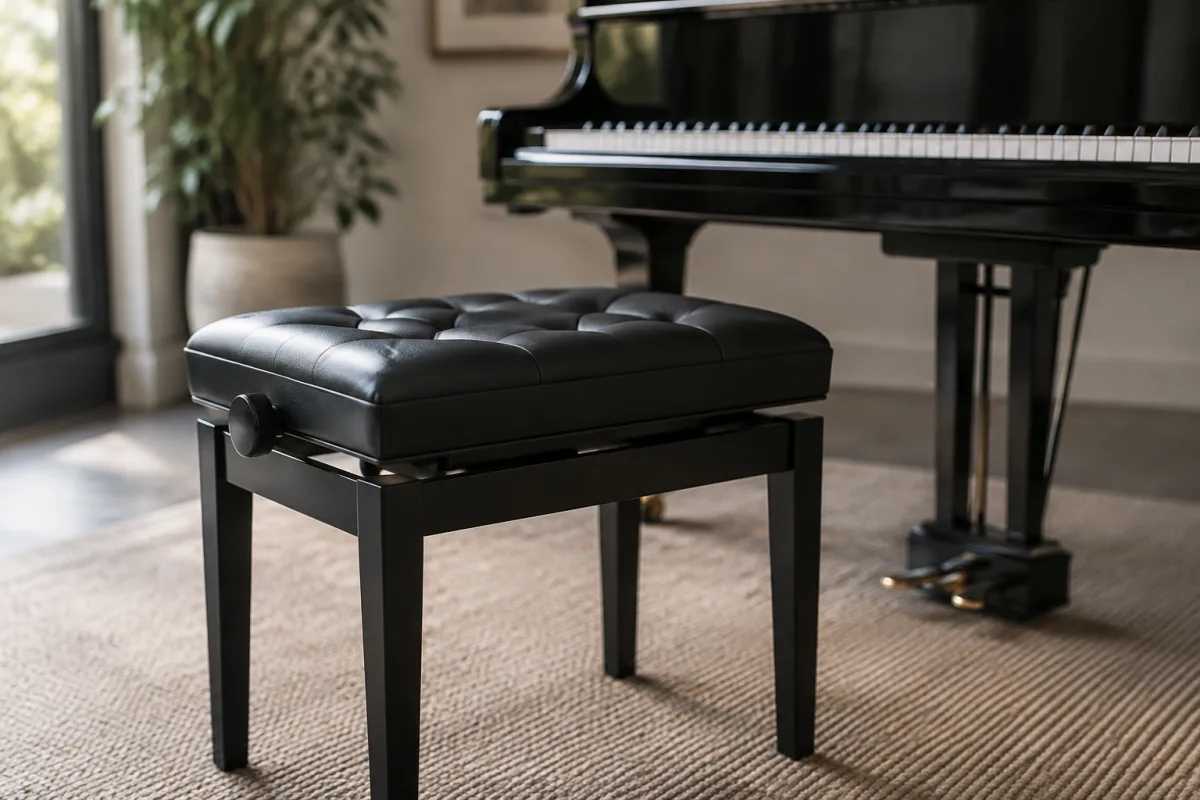
A bench with a fixed height, usually around 18–20 inches (46–51 cm). These are affordable and straightforward. Downside: if the height isn't quite right for your body, you're stuck. Only buy if you're certain the height works for you.
Adjustable-Height Benches
Height adjusts up and down via a screw or lever. This is more flexible—as you grow or if you sit on it with different posture, you can adjust. Most beginners benefit from adjustable benches because height preferences vary widely.
Padded vs. Non-Padded
Padded benches are more comfortable for long practice sessions. Non-padded are cheaper and more minimal. For a beginner practising 30–60 minutes at a time, padding is nice but not essential. A thin foam pad helps if you're sitting for extended periods.
Bench Seats with Storage
Some benches lift open to store sheet music, cables, or accessories. This is convenient if you're tight on space. The seat quality matters more than storage—don't sacrifice comfort for a hidden compartment.
Getting the Height Right
When you sit at the bench with your hands on the keyboard, your wrists should be level—not bent up or down. Your elbows should be at roughly a 90-degree angle. Your feet should rest on the floor or a footrest. Most standard benches are 18–20 inches high; if you're particularly tall or short, you might need adjustable height or a footrest to get positioned correctly.
Stability and Safety
A good keyboard bench should be sturdy—it shouldn't wobble or tip when you sit. Check the base: wider bases are more stable. Avoid benches with wheels or that feel flimsy. Your bench should feel like it's going to last years of regular use.
Budget and Value
Basic benches cost £20–50. Mid-range adjustable benches are £50–120. Professional concert benches exceed £200. For a beginner, spending £40–80 on a decent adjustable padded bench is good investment. A cheap bench might save money short-term but often feels unstable and uncomfortable. A professional concert bench is overkill unless you're a touring musician.
Common Beginner Mistakes
Buying a Cheap Bench Without Testing Height
Buy online and receive a bench that's too high or low? You're stuck with poor posture or wasted money. If possible, test before buying. If ordering online, check return policies and measure carefully.
Ignoring Posture While Practising
Even with a perfect bench, you can slouch or hunch. Regularly check your posture: back straight, shoulders relaxed, wrists level. Good habits now prevent problems later.
Expecting Luxury Comfort
A keyboard bench should be comfortable, but it's not a lounge chair. It's a functional seat designed for optimal posture, not maximum relaxation. If you're looking for comfort over positioning, you're missing the point.
Putting the Bench Away Between Sessions
Consistency matters more than anything. If your bench is awkward to access or store, you'll avoid practising. Keep it set up and ready—having the bench visible reminds you to play.
Alternatives to a Keyboard Bench
A Regular Chair at the Right Height
If you have a dining chair at the correct height with decent back support, it can work in a pinch. It's not ideal, but it's better than a couch. Priority is getting the right height and posture.
A Stool Without a Back
A piano stool or drum throne can work if the height is adjustable. Downside: no back support. For short sessions (under an hour), it's acceptable; for longer practice, back support matters.
Final Word
A keyboard bench is a simple but important piece of gear. It positions you correctly, supports good posture, and makes practice comfortable. Don't overthink the choice—a decent adjustable padded bench for £50–80 covers all the bases. Test the height, check stability, ensure it's comfortable, and you're done. Your hands will thank you during years of playing ahead.


Comments