
Electric Piano Upright article
The Complete Guide to Electric Piano Upright
Electric piano uprights deliver authentic piano playing experience with modern convenience. Discover why uprights suit space-conscious musicians, understand key features, and explore top brands from budget to professional models.
Understanding Electric Piano Uprights
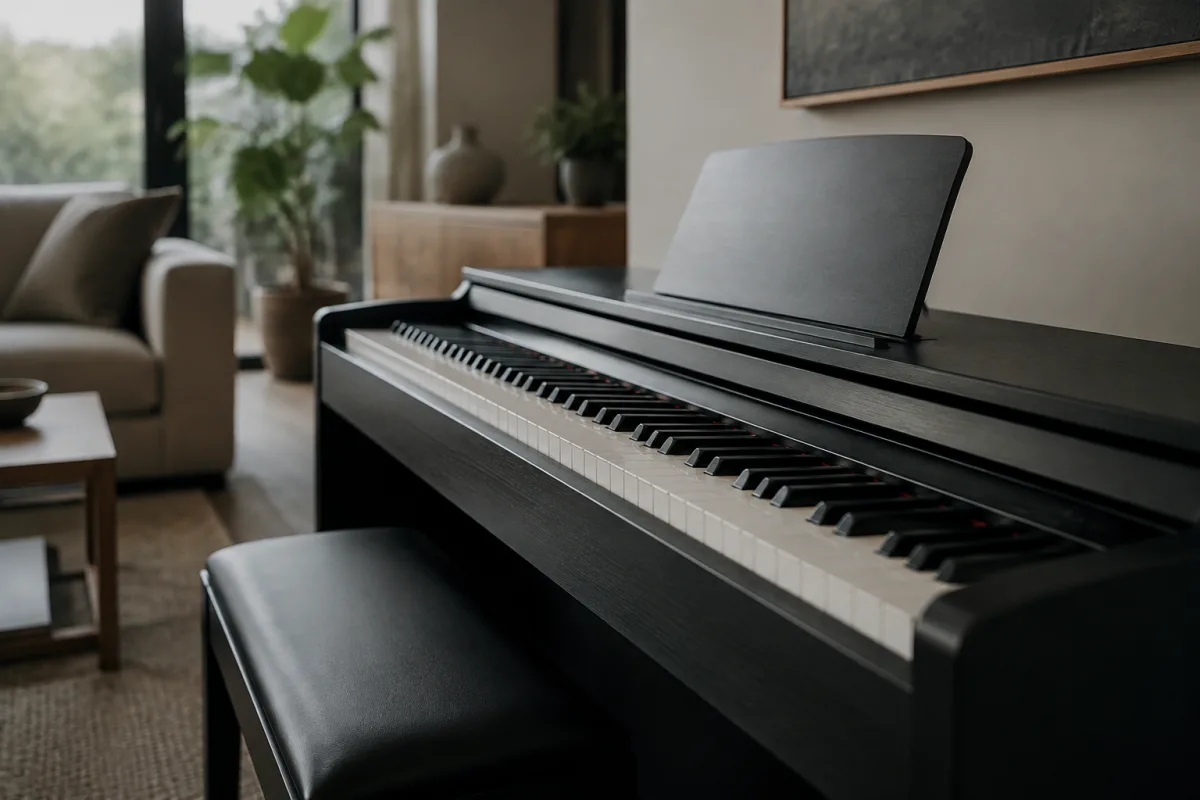
An electric piano upright bridges acoustic piano tradition with modern convenience. If you love acoustic piano touch and tone but lack space for a full grand or baby grand, an upright electric piano offers serious performance at practical dimensions. These instruments deliver genuine piano playing experience without dominating your room or requiring soundproofing.
Electric piano uprights suit musicians transitioning from acoustic pianos, learning players needing quiet practice, and professionals wanting stage-ready portability. The upright format maintains acoustic piano ergonomics—key action, pedal response, and physical playing feel—whilst adding electronic amplification and connectivity modern music demands.
Key Differences from Acoustic Uprights
Acoustic uprights use hammers striking strings; the vibrating strings produce sound. Electric uprights use sensors detecting key strikes and reproducing piano samples or synthesised tones through speakers. This fundamental difference changes several practical aspects.
Electric uprights offer volume control—essential for apartment living and late-night practice. Headphone jacks let you practice silently. This flexibility is impossible with acoustic pianos. For musicians balancing learning with noise-sensitive neighbours or family, this advantage is transformative.
The touch and action of quality electric uprights closely mimic acoustic instruments. Lower-end models feel somewhat plastic; premium electric uprights rival acoustic response. If touch matters to you, budget appropriately and test instruments in person.
Weighted vs. Unweighted Keys
Weighted keys simulate the physical resistance of acoustic piano hammers. Playing requires actual finger strength development. Unweighted keys offer lighter response, suitable for synthesiser-style playing. For serious classical piano students or adults learning piano properly, weighted action is essential.
Quality electric piano uprights use graded weighting—lower keys slightly heavier than higher keys, mimicking acoustic pianos. This detail matters for serious players; compromises become apparent during demanding repertoire.
Sound Quality and Samples
Electric pianos use high-quality samples recorded from prestigious acoustic pianos. Yamaha, Roland, and Korg license premium piano recordings producing authentic tone through their speakers. When amplified properly, quality electric piano uprights sound remarkably close to acoustic instruments.
Sound character depends partly on built-in speaker quality. Larger uprights accommodate larger speakers producing fuller tone. Smaller uprights trade speaker quality for portability. If you play primarily through headphones, speaker size matters less.
Modern models often include additional sounds—electric piano, harpsichord, organ—extending creative possibilities beyond acoustic piano simulation. For composition and experimentation, this tonal variety is appealing.
Pedals and Acoustic Response
Quality electric piano uprights include three pedals mimicking acoustic function. The sustain pedal holds notes after key release. The soft pedal subtly reduces volume and changes tone character. The middle pedal functions as sostenuto or soft shift depending on model.
Advanced models include physical pedal mechanisms responding realistically. Budget models use simple electronic switches. The difference is tangible during expressive playing; budget pedals feel disconnected from the action.
Connectivity and Modern Features
MIDI connectivity enables electric piano uprights to control synthesisers and recording software. Recording directly to computer via USB is standard in modern models. This flexibility suits composers, arrangers, and producers wanting instrument control beyond acoustic piano limits.
Bluetooth audio output lets you play backing tracks from your phone. Some models include metronome features, recording capability, and practice tools. These features appeal to learning players benefiting from structured practice feedback.
Choosing Upright Size
Electric uprights range roughly 130–140 centimetres tall, matching dimensions of acoustic upright pianos. This standardised height makes them practical for small spaces without sacrificing playability.
Width and depth vary less significantly. Any upright piano needs approximately 150 centimetres width and 60 centimetres depth. Measure your space before shopping to ensure fit through doorways and within available room.
Sound and Amplification Considerations
Built-in speakers amplify the instrument internally. Volume is adequate for home practice; larger venues require external amplification. Professional electric pianos include line outputs for stage use through larger sound systems.
Headphone output is a major advantage. Practicing silently whilst hearing full piano tone through headphones is impossible on acoustic pianos. This privacy is invaluable for late-night practice or apartment living.
Popular Electric Piano Upright Brands
Yamaha Clavinova series represents professional-quality electric uprights. The touch, sound, and build quality rival acoustic pianos. Pricing reflects this premium positioning, typically £4,000–7,000.
Roland FP series and Korg Kronos offer more affordable options, typically £2,000–4,000. Quality remains high; the primary trade-off is fewer sounds and simpler interfaces compared to premium Clavinova models.
Casio and Kawai make budget options, typically £1,000–2,000. These instruments serve learning players adequately; discerning pianists notice limitations in touch and sound quality.
Maintenance and Durability
Electric pianos require minimal maintenance. No tuning is needed unlike acoustic instruments. No regulation is required. Occasional software updates and cleaning suffice. This low-maintenance advantage appeals to busy musicians.
Quality electric uprights are durable. Components are reliable; failure is rare with normal use. Unlike acoustic pianos which require expertise to maintain, electric pianos are straightforward to care for.
Learning on Electric Piano Upright
Serious piano students benefit from weighted-key electric uprights. The action develops proper technique transferable to any acoustic piano. Budget models won't properly train finger strength and technique.
Adult beginners specifically benefit from silent practice capability. Reducing self-consciousness about noise encourages longer practice sessions. This advantage often justifies electric upright cost for hobby players.
Price Considerations
Electric piano uprights range from £1,000 for budget models to £7,000+ for professional-grade instruments. Mid-range options—£2,500–4,000—offer solid quality suiting most learners and hobbyists. Premium pricing reflects superior touch, sound, and build quality justifying the investment for serious players.
Conclusion
Choosing an electric piano upright means balancing acoustic piano authenticity with modern convenience. If space is limited, noise is a concern, or silent practice appeals to you, electric uprights offer practical solutions. Budget appropriately for your actual needs—serious students need weighted keys and quality sound; hobbyists can accept modest compromises. An electric piano upright transforms piano learning and playing for musicians requiring quiet, space-efficient instruments without sacrificing genuine piano experience.


Comments