


Electric Piano article
Electric Piano for Beginners: A Complete Guide
A complete beginner's guide to electric piano: what you need, how to sit and position your hands, reading music, building finger independence, and developing a consistent practice routine.
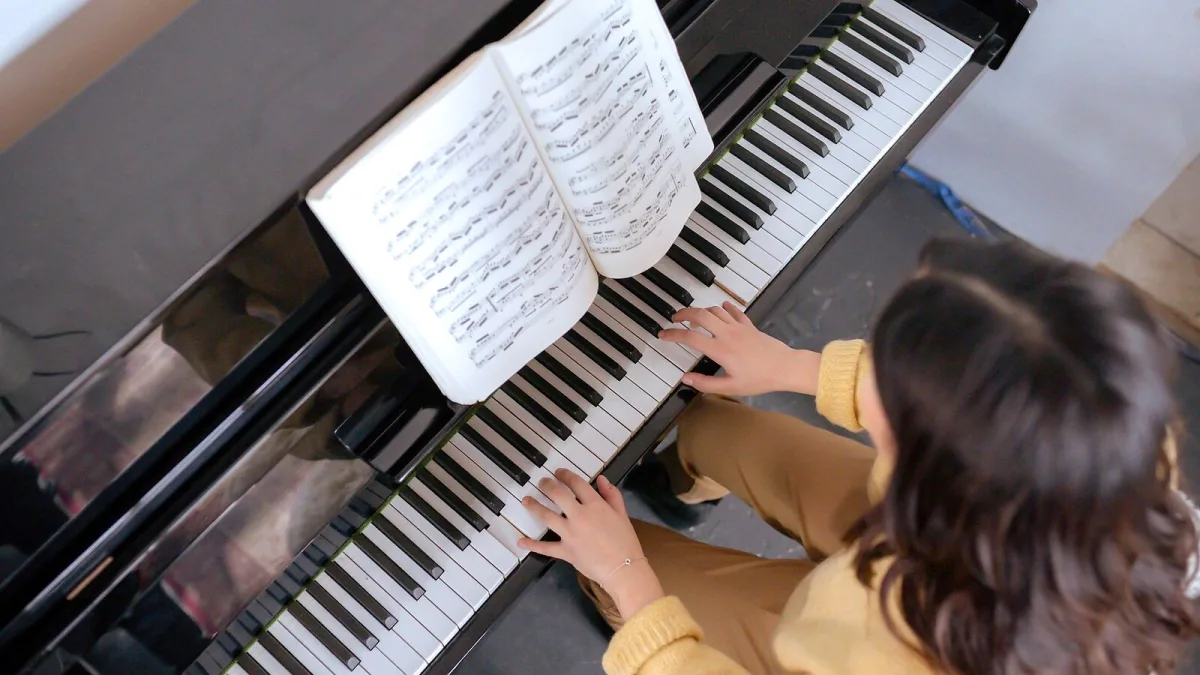
Learning electric piano as a beginner is welcoming and manageable. Unlike acoustic pianos, which require regular tuning and careful environmental control, electric pianos are ready to play immediately and reward practice with instant responsiveness. Whether you're an adult returning to music, a child starting lessons, or someone picking up piano for the first time, an electric piano offers a supportive, encouraging introduction to keyboard playing.
Getting Started: What You Actually Need
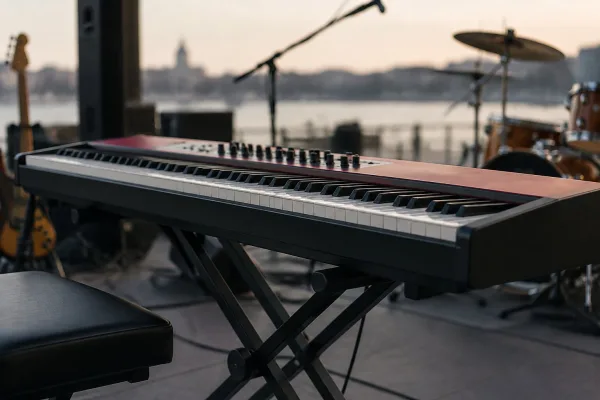
An electric piano setup is refreshingly simple. You need the keyboard itself (ideally with 88 weighted keys), a stand or stable surface to place it on, and a comfortable chair of the right height. Headphones are optional but lovely: they let you practise without bothering others and keep you engaged without external distractions.
You don't need expensive books or software initially. Many reputable websites offer free beginner lessons and tutorials. A good teacher accelerates learning dramatically, but you can start learning by yourself if budget is tight. Online resources from established educators (like those from reputable music schools) offer structured lessons and visual instruction.
Posture and Hand Position
Sit at the piano with your bench positioned so your elbows are at the same height as the keyboard (or just slightly lower). Your back should be straight but not rigid; slouching restricts arm movement and puts strain on your shoulders. Keep your shoulders relaxed and your wrists in a neutral position, neither bent upward nor hanging downward.
Your fingers should curve naturally, as if holding a small ball. This curved position keeps your fingers flexible and allows them to strike the keys from the fingertips rather than flatly. Relaxed posture and curved fingers form the foundation for developing good technique.
The Piano Keyboard and Hand Position
The piano keyboard consists of white and black keys arranged in repeating patterns. Begin by locating middle C: it sits just left of the two black keys in the centre of the keyboard. Place your right thumb on middle C; your fingers naturally fall on D, E, F, G. Your left hand, with thumb on C to the left, mirrors this arrangement.
This hand position, with fingers on the white keys C through G, is the starting point for nearly all beginner exercises. Many early pieces use only these keys, allowing you to focus on hand position, rhythm and listening without worrying about which keys to press.
Reading Music and Piano Notation
Piano music uses two staves (the grand staff): the top staff for the right hand and the bottom staff for the left hand. Each line and space represents a key on the keyboard. Whilst reading notation can seem daunting at first, you'll develop fluency quickly with practice. The visual pattern of notes on the staff directly corresponds to physical patterns on the keyboard, making learning intuitive.
Begin with simplified notation that uses only the white keys and basic rhythms. As these become comfortable, gradually introduce sharps and flats, more complex rhythms, and wider keyboard ranges.
Developing Hand Independence
One of the first challenges beginners face is learning to control both hands independently. Your right hand might be playing a melody whilst your left hand maintains a steady accompaniment pattern. This coordination takes time to develop.
Start by practising the right and left hand separately. Play a simple melody with your right hand until it feels comfortable, then switch to the left-hand part. Only after each hand is secure should you attempt to play them together. Patience in this process prevents frustration and builds the muscle memory necessary for smooth, coordinated playing.
Understanding Rhythm and Meter
Rhythm is the timing of notes—how long you hold each one and when you release it. A time signature (like 4/4 or 3/4) tells you how many beats occur in each measure and which note value receives one beat. Beginner pieces typically use simple time signatures and straightforward rhythms.
Count aloud as you play. This develops your internal sense of timing and keeps you from rushing or dragging. A metronome (most electric pianos include one) helps maintain steady tempo. Set it to a slow speed—perhaps 60 beats per minute—and ensure your playing aligns perfectly with each click. Speed comes naturally once the rhythm is solid.
Building Finger Strength and Dexterity
Your fingers will feel weak initially, particularly the fourth and fifth fingers (ring and pinky). This is normal. Scales and finger exercises, practised slowly and deliberately, build strength gradually. Many beginner methods include these exercises designed specifically to develop finger independence and strength.
Don't jump to complex pieces too quickly. Finger strength develops through consistent, patient practice of foundational exercises and simple pieces. Attempting pieces beyond your current technical level leads to frustration and inaccurate playing.
The Sustain Pedal
The sustain pedal (on the right) extends the duration of notes after your fingers leave the keys. Most beginner pieces don't use the sustain pedal, or use it sparingly. Learn to play without it first, then introduce it gradually. Overuse of sustain creates a muddy sound; skilled use enhances colour and legato phrasing.
Practice Structure and Consistency
Daily practice of 20–30 minutes is far more effective than occasional longer sessions. Set a consistent time each day, if possible; this establishes habit and discipline. Start each session with warm-up exercises (scales, finger exercises) to develop technique, then move to pieces or new material.
Focus on correct playing rather than speed. Precision and accuracy should always take priority over playing fast. A slow, correct performance is far more valuable than a fast, inaccurate one. Speed develops naturally once the basic pattern is solid.
Listening and Musicality
Listen frequently to piano music across genres—classical, jazz, contemporary, pop—and notice how skilled players phrase their music, add expression, and shape phrases. As you develop proficiency, begin adding your own phrasing and dynamics to pieces. This is where playing becomes music rather than just hitting the correct keys in the correct order.
The Joy of Progress
Within weeks of consistent practice, you'll play recognisable melodies. Within months, you'll tackle small pieces that feel satisfying to perform. Within a year of regular practice, you'll have developed genuine competence and be able to play across a wide range of difficulty levels.
Every pianist, regardless of current skill level, was once a complete beginner. Your progress will surprise you. Enjoy the journey; the satisfaction of learning a new skill never fades.





Comments