
88 Weighted Digital Piano article
The Complete Guide to 88 Weighted Digital Piano
An 88 weighted digital piano combines full keyboard range with realistic touch for serious pianists seeking authentic playability and modern convenience.
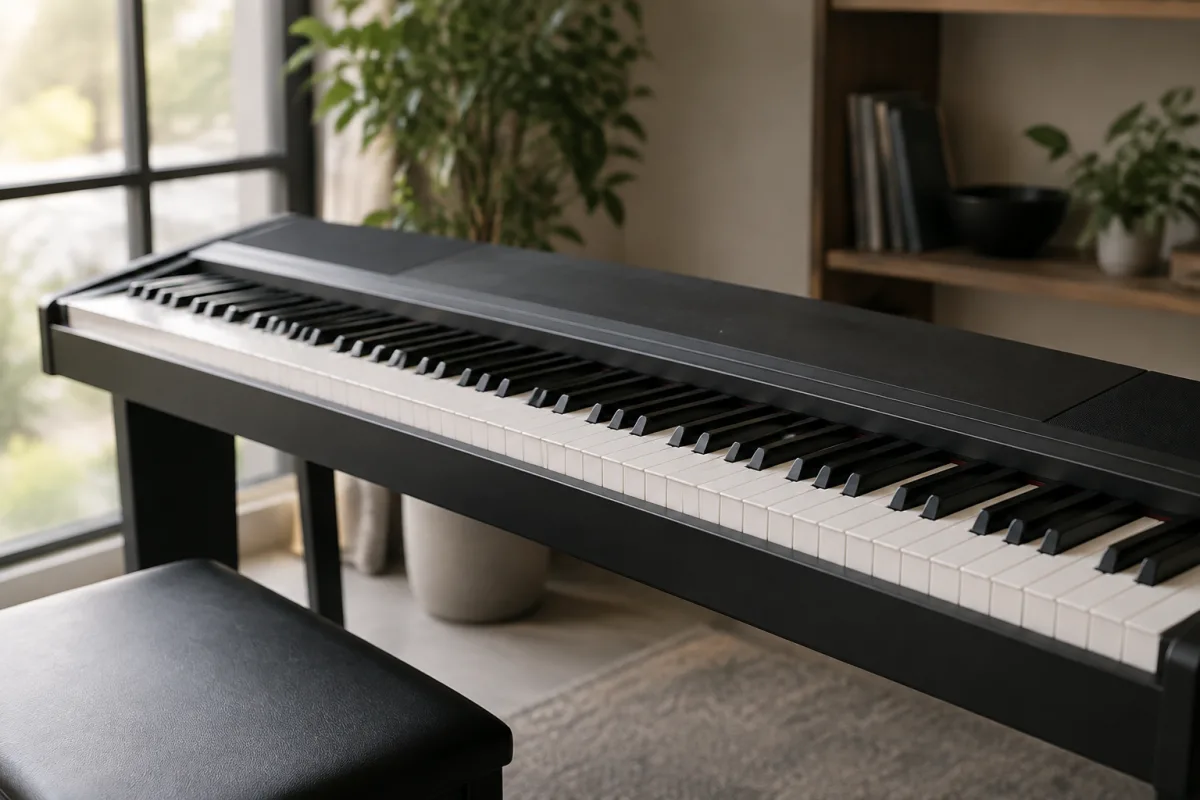
A weighted keyboard brings authentic acoustic piano feel to your fingertips without requiring a dedicated concert grand in your living room. These instruments replicate the touch and resistance of traditional piano hammers, allowing proper technique development whilst offering digital convenience and affordability. Whether you're a student beginning your musical journey or a professional pianist who needs portability alongside authenticity, a weighted keyboard delivers realistic playability that demands respect from serious musicians.
Understanding Weighted Key Action
A weighted keyboard features keys that simulate the hammer resistance of an acoustic grand piano. Each key contains springs and weights that create progressive resistance—lighter at the bottom, heavier at the top—mimicking how acoustic piano action works. This weighted action is crucial for developing proper technique, ensuring your finger strength and control translate between a weighted keyboard and traditional acoustic instruments. Players accustomed to non-weighted keyboards often struggle with acoustic pianos; weighted action builds the muscles and muscle memory needed for authentic piano technique.
The Importance of 88 Keys
A full 88 key keyboard captures the complete range of a concert grand piano. This full range is essential for classical repertoire, jazz improvisation and professional recording work. a weighted keyboard with all keys accessible means you'll never encounter a song requiring a note your instrument cannot produce. The 88 keys span from A0 to C8, covering every note used in standard Western music composition and performance.
Sound Quality and Sampling
Modern 88 weighted digital pianos feature high-quality sound samples captured from concert grand pianos. Premium models offer multiple piano voices—typically a bright concert grand tone and a warmer classical piano sound. The sampling captures not just the note, but the subtleties of acoustic resonance, string vibration and pedal effects. Some advanced models include hundreds of voices beyond pianos—synthesizers, electric pianos, organs and orchestral instruments—expanding creative possibilities far beyond what an acoustic piano offers.
Pedal Functions on Digital Pianos
A weighted keyboard typically includes three pedals mimicking an acoustic piano's damper (sustain), soft and sostenuto pedals. The pedals control digital effects that simulate acoustic piano pedal behaviour. The sustain pedal sustains notes after releasing keys. The soft pedal applies effects simulating the physical shift of an acoustic piano's action. Modern 88 weighted digital piano pedals offer variable sensitivity, allowing subtle control impossible with basic digital instruments.
Portability and Space Efficiency
Despite full-sized keys and authentic action, a weighted keyboard is vastly more portable than an acoustic instrument. A typical weighted keyboard weighs 30–60 kilograms compared to 300+ kilograms for an acoustic grand. a weighted keyboard fits comfortably in modern flats, recording studios and vehicle trunks. This portability makes a weighted digital piano practical for gigging musicians who perform regularly but need professional-quality instruments.
Touch Sensitivity and Expression
A weighted keyboard responds to how firmly you strike each key, allowing dynamic control essential for expressive playing. Strike a key lightly and the volume decreases; strike firmly and it increases. This velocity sensitivity means a weighted keyboard captures the nuance of your playing, translating touch dynamics into audible differences—exactly like an acoustic piano. Advanced models offer aftertouch sensitivity, allowing pitch and effect changes after a key is struck, enabling vibrato and expression techniques.
Connectivity and Recording Features
A weighted keyboard typically includes USB and MIDI connectivity, enabling integration with computers and music production software. Play your piano whilst recording directly into a digital audio workstation. Use the piano as a MIDI controller to trigger synthesizers, drums and orchestral sample libraries. These creative possibilities transform a weighted keyboard into a complete music production studio.
Price Ranges and Value
Entry-level weighted 88 key pianos cost £400–£800 and serve student needs admirably. Mid-range 88 weighted digital piano models (£1,000–£2,500) offer superior sound quality, better keyboard action and professional-grade features. High-end weighted pianos exceed £3,000, approaching acoustic piano prices but offering portability and digital features acoustic instruments cannot provide. Most serious musicians find excellent value in the £1,000–£2,000 range.
Comparing Weighted vs. Unweighted Keys
Unweighted keyboard keys respond instantly with no resistance, making them feel light and bouncy. a weighted keyboard provides resistance mimicking acoustic action, making them feel and respond like "real" pianos. For students and serious pianists, weighted action is essential. For those playing primarily synthesizer or electronic music, unweighted keys may suffice. For anyone prioritising technique development or acoustic piano transition, a weighted keyboard is non-negotiable.
Popular Brands and Models
Yamaha, Roland and Korg are industry leaders in weighted digital pianos. Yamaha's P-series offers consistent quality across price points. Roland's FP-series emphasises portability without sacrificing feel. Kawai produces instruments with particularly authentic hammer action. Each manufacturer offers multiple tiers, allowing buyers to find a weighted keyboard matching their budget and needs.


Comments