


Pedal Delay Behringer article
Pedal Delay Behringer for Beginners: A Complete Guide
Delay pedals intimidate beginners, but Behringer delay pedals make it simple and affordable. Learn how to use them, understand each control, and create great sounds.
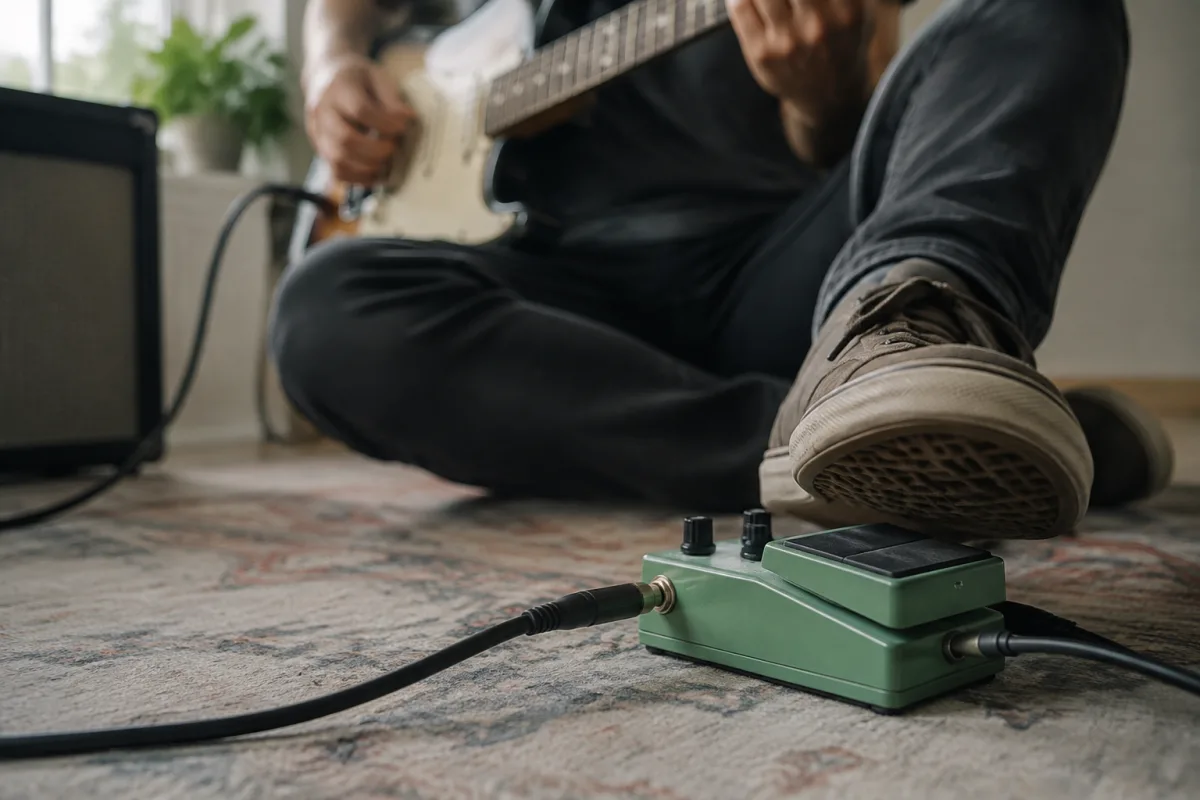
Delay effects sound magical—your notes echo back at you like you're playing in a cave or a concert hall. But when you're a beginner considering your first delay pedal, the options feel overwhelming. Why Behringer? What does all this terminology mean? And most importantly, will it actually make you a better musician or just add noise to your playing? This guide walks nervous beginners through everything you need to know about Behringer delay pedals, without assuming you already understand delay effects.
What Delay Actually Does: The Simple Explanation
Before diving into Behringer specifically, let's demystify delay itself. Delay is an effect that repeats your sound after a short time gap, like an echo. When you play a note, the delay pedal records it, then plays it back slightly later. You can adjust how long the gap is (the delay time), how many times it repeats (feedback), and how loud those repeats are (mix or depth). That's it. Everything sounds complicated because effects have lots of knobs, but they all control these basic concepts.
Why Beginners Feel Overwhelmed
The biggest mistake nervous beginners make is touching every knob without understanding what they do. You'll turn a delay pedal on, tweak settings randomly, and end up with a cacophony of noise that sounds terrible. Then you think delay effects are rubbish and give up. The truth? Every knob has a purpose, and once you understand a few basics, delay becomes intuitive and genuinely inspiring to play with.
Why Choose Behringer for Your First Delay Pedal?
Behringer makes affordable effects pedals that actually work well. For beginners, this is crucial because it removes a major barrier: cost. You can buy a Behringer delay pedal for £30–£80, which means you can experiment with effects without investing hundreds of pounds. If you hate delay effects, you've only lost a small amount. If you love them, you can upgrade to premium brands later. This is exactly the right approach for learning.
- Affordable: Budget-friendly so you're not risking serious money while learning.
- Reliable: Behringer pedals work. They're not fancy, but they get the job done.
- Widely available: Easy to find in shops and online, plus plenty of tutorials online using these specific models.
- Good learning tool: Simple enough for beginners but capable enough to teach you how delay actually works.
- Resale value: You can sell it later if you move on to something else.
Understanding Behringer Delay Models
Behringer makes several delay pedals, and the differences matter for beginners:
- Behringer FD100: Vintage-style delay with simple controls. Ideal first choice for beginners. Easy to understand, warm tone.
- Behringer FD100 Reverb: Adds reverb alongside delay. Good if you want two effects in one pedal.
- Behringer FD200: More advanced, digital delay with more options. Better for intermediate players exploring different delay styles.
For your first Behringer delay pedal, the basic FD100 is the perfect starting point. Don't overthink it.
The Main Controls: What Each One Does
Stop being nervous about the knobs. Here's what they actually do:
- Time or Delay Time: How long it waits before repeating your note. Shorter times sound tight and snappy; longer times sound spacey and atmospheric. Start with medium settings and experiment.
- Feedback or Repeats: How many times the sound echoes. Low feedback means one or two repeats; high feedback means it keeps bouncing forever. Too much is overwhelming—start conservatively.
- Mix or Level: How loud the delay repeats are compared to your original signal. At 50%, the repeats are half as loud as your note. At 100%, they're as loud as your original sound. Start at 50% and adjust from there.
- Wet/Dry: Same as Mix. Some pedals call it one thing, some call it the other.
- Bypass footswitch: The pedal switch that turns the effect on and off. Usually located at the bottom of the pedal.
That's genuinely all you need to know to start. Don't stress about the other controls until you're comfortable.
Your First Delay Pedal Setup
Here's how to use a Behringer delay pedal without feeling lost:
- Set Time to medium (around the middle position).
- Set Feedback to low (about 25% of the way).
- Set Mix to 50% (so repeats are half as loud as your playing).
- Turn on the footswitch and play a simple note or chord.
- Listen. You'll hear your note, then the delayed repeat. That's working correctly.
- Now tweak one knob at a time and listen to how it changes. Spend five minutes with each control.
- Try a longer delay time (spacier sound) and a shorter one (tighter sound).
- Increase feedback slightly to get more repeats.
- Adjust mix to hear how loud the echoes become.
This hands-on exploration teaches you more than any manual ever could.
Common Beginner Mistakes With Delay Pedals
Watch out for these pitfalls:
Setting feedback too high right away. High feedback creates a chaotic wash of repeating sound. Start low and increase gradually. You can always add more later.
Expecting delay to fix poor timing. Delay magnifies sloppy playing. If you rush or drag tempo, the delay echoes will highlight it terribly. Use a metronome alongside your delay pedal.
Using delay on every note. Beginners often think "more effects equals better." Actually, restraint sounds more professional. Use delay selectively—maybe on a lead phrase or a solo, not the entire song.
Cranking the mix so high that delay overpowers your signal. The delay should enhance your playing, not replace it. Keep the dry signal (your original playing) louder than the wet signal (the delay repeats).
Never exploring beyond your first settings. Take time to actually experiment with each knob. This is how you discover what sounds good to you.
Connecting Delay to Other Effects
Once you're comfortable with a Behringer delay pedal, you might wonder about combining it with other effects. Generally, put delay at the end of your effects chain (closest to your amp). Reverb typically comes after delay. Modulation effects like chorus usually come before delay. But honestly, as a beginner, just enjoy your delay pedal by itself for a month before worrying about how it interacts with other gear.
When Delay Sounds Bad vs. Good
Learning to hear the difference is crucial:
- Bad delay sounds: Muddy and indistinct (too much feedback), overpowering (mix too high), or disconnected from your playing (delay time is way too long).
- Good delay sounds: Clear repeats that enhance your note, spacious feel, rhythmic interest, and tight timing that locks with your original playing.
If it sounds bad, don't blame the Behringer pedal—blame the settings. Adjust one knob and listen. You'll find good-sounding combinations.
Storage and Care
Behringer pedals are durable, but treat them right:
- Store in a dry place away from extreme heat or cold.
- Don't drop it or step on it excessively (they're designed for moderate floor use, not abuse).
- Replace batteries when they run low (or use a dedicated power supply, which costs about £10).
- Keep the foot switch clean so it responds reliably.
Moving Beyond Your First Delay Pedal
After three to six months with a Behringer delay, you might crave more options, better sound quality, or advanced features like tap tempo (tapping to set delay time). That's when you consider upgrading to brands like Boss, Electro-Harmonix, or Eventide. But your Behringer will have taught you everything you need to know about how delay works—and that knowledge transfers to any pedal.
Connecting to Comprehensive Knowledge
This guide focuses on getting you comfortable with a Behringer delay pedal practically. For deeper exploration of delay effects, different delay types, and how to integrate them with other gear, check out our complete guide to Behringer delay pedals.
Your First Week With Delay
Don't overcomplicate this. Grab a Behringer delay pedal, set the controls to conservative levels, and play. Spend your first week just listening to how different settings sound. You'll be surprised how quickly delay goes from mysterious to intuitive. Within a month, you'll wonder how you ever played without it.


Comments