


Behringer Amp article
Behringer Amp for Beginners: A Complete Guide
Choosing your first Behringer amp doesn't need to be intimidating. This guide walks you through the essentials and common pitfalls, with confidence.
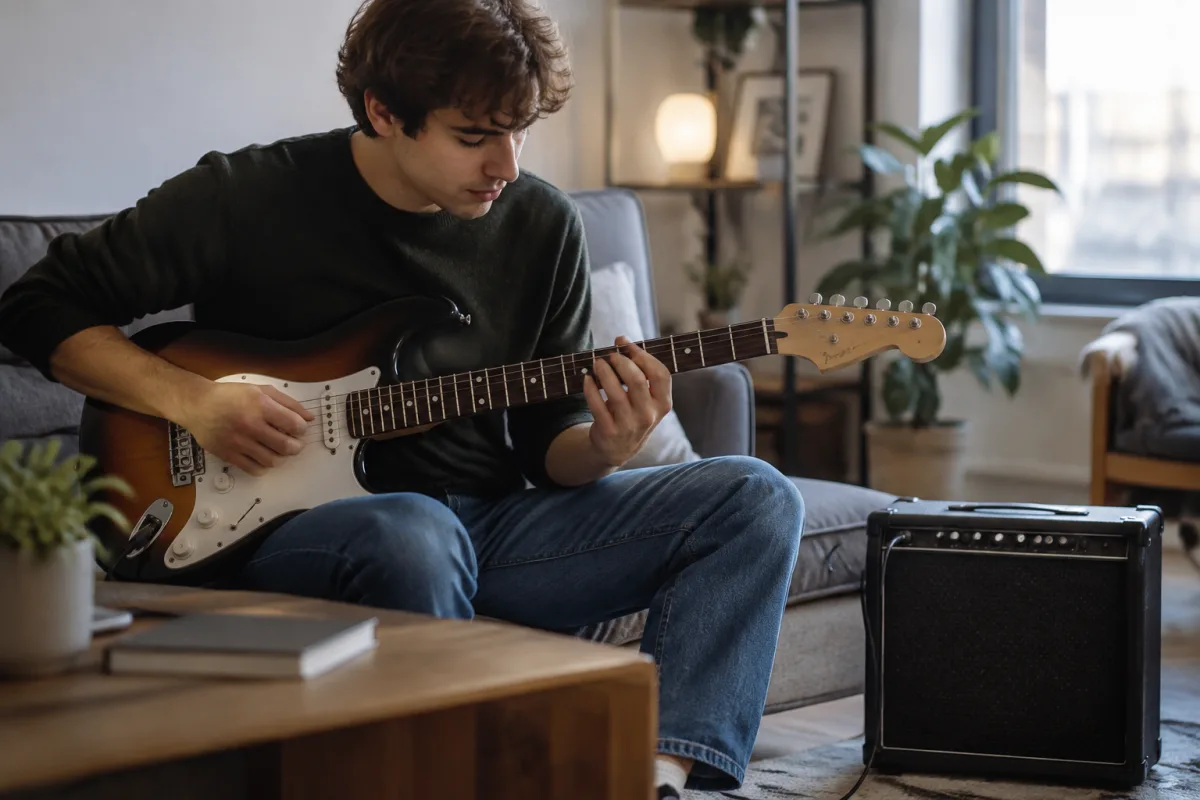
If you're just starting out with electric guitar or keyboard, the prospect of choosing an amplifier can feel overwhelming. Behringer amps are an excellent confidence-builder for beginners—affordable, forgiving, and powerful enough to learn on for years. This guide walks you through your first Behringer amp choice with zero intimidation.
Why Behringer Amps Are Perfect for Beginners
New players often assume more expensive equals better, which can lead to wasteful spending. Behringer breaks that assumption. The brand specialises in gear that does one thing well without the premium price tag. For a first-time amplifier buyer, this means you can focus on learning without financial pressure.
A Behringer amp costs £30–300 depending on the model and wattage. For comparison, entry-level Fender and Marshall amps start at £200+. With that same budget, a Behringer amp gives you more wattage, more features, and easier tone-shaping—all of which help a beginner explore confidently. You're not compromising on sound; you're getting honest value.
Wattage Explained (Without the Jargon)
Wattage is the first decision in any amplifier choice, and it terrifies beginners because it sounds technical. It's not. Think of wattage simply: more watts = louder maximum volume. That's almost the entire story.
For bedroom practice: A 5–15-watt Behringer amp (like the Ultracoustic or combo models) is ideal. You get clean, undistorted tones at comfortable volumes without annoying housemates. At 15 watts with the volume knob at 9 o'clock, you're already at living-room concert volume.
For small gigging or rehearsal: A 30–50-watt Behringer amp gives you headroom to play medium-sized rooms, outdoor events, or rehearsal spaces. The Virtuoso and BX Ultracoustic series are built for this tier.
For larger venues or serious ambition: Wait. If you're a true beginner, you don't need this yet. Start at 15–30 watts and upgrade in 2–3 years when you've played 100+ gigs and know your tone priorities. Jumping to 100+ watts at the start is wasteful.
Behringer's wattage scaling is consumer-friendly: the difference between a 15-watt and 30-watt model at Behringer is usually £40–70, not £300+. Start modest; upgrade later without guilt.
Solid-State vs. Tube: Your First Choice Explained
Behringer makes both solid-state (transistor) and valve-tube amplifiers. As a beginner, this choice determines your tone character and maintenance burden.
Solid-state Behringer amps: These use transistors, not valves. Sound is clean, reliable, and consistent across different rooms and playing styles. The Behringer Virtuo, BX Ultracoustic, and most budget models are solid-state. Advantages: no warm-up time, no valve replacement costs (valves fail £30–100 per set), less heat, lighter weight. Tone is slightly cooler and more modern. This is the right choice for 95% of beginners.
Valve Behringer amps: A few high-end models use EL84 or EL86 valves for classic, warm tone. These sound beautiful but need 5–10 minutes of warm-up before playing, and tubes degrade over 10,000 hours of use (1–2 years of heavy playing). Replacement tubes cost money. Valve amps weigh more and run hotter. Unless you're chasing vintage tone and have the patience for maintenance, solid-state is simpler.
Recommendation for first-timers: Start solid-state. After a year of regular playing, if you crave the warmth of valve tone, you'll know it's worth the upkeep. Behringer solid-state amps are genuinely musical—you won't feel limited.
Key Features to Look for in Your First Behringer Amp
Spec sheets list dozens of features. Most don't matter for a beginner. Here are the ones that do:
Number of Channels. A channel is a separate input pathway with its own tone controls. A single-channel Behringer amp has one set of tone knobs (bass, mid, treble). Two-channel models give you a "clean" channel (uncoloured, honest) and a "drive" channel (distorted, aggressive). As a beginner learning tone-shaping, two channels let you flip between clean and dirty tones without rewiring. Single-channel amps are fine—just know you'll be adjusting the same knobs to switch between styles.
Built-In Effects. Many Behringer amps include reverb, chorus, or delay effects baked in. These are learning tools. Reverb especially makes any beginner's playing sound instantly more finished and forgiving—it smooths over mistakes. If a Behringer model offers effects, they're usually decent enough to help you explore. Don't overpay for effects, but if they're included, enjoy them.
XLR Out (Direct-to-Mixer Output). Later, when you start playing live gigs or recording, this output lets you feed the amp's tone directly into a mixing desk without needing a microphone. It's advanced stuff for a true beginner, but it's worth noting if a amp has it. Most Behringer amps at the beginner tier don't include it, and that's fine.
Footswitch Compatibility. Some Behringer amps accept optional footswitches to flip channels or turn effects on/off during playing. It's not essential for beginners, but it's a nice upgrade path. If you see a footswitch connector on the back, remember it for later.
Avoiding First-Time Mistakes
New guitar players often make predictable, expensive mistakes when buying amplifiers. Here's how to sidestep them:
Mistake 1: "I'll buy a big amp to grow into." This is false logic. A 100-watt Behringer amp is no easier to learn on than a 15-watt model—in fact, it's worse. At high wattage, every small adjustment to the volume knob creates huge jumps in sound, making it harder to dial in tone. Plus, you're paying £200+ for headroom you won't use for years. Start small; upgrade when your playing demands it.
Mistake 2: Buying an amp without testing it. Online ordering is convenient, but amplifiers vary hugely in feel and tone voice. If you can, demo a Behringer amp (even briefly) at a music shop before committing. Test it with your guitar, your pedals, and your ears. If ordering online, buy from a retailer with a 14-day return window so you can change your mind after playing it at home.
Mistake 3: Forgetting to budget for a cable and stand. A Behringer amp needs a guitar cable (£5–15) and ideally a stand or cab-rise feet to aim the speaker at your ear (£15–40). These add £20–55 to your total spend. Plan ahead so you're not surprised at checkout.
Mistake 4: Assuming louder = better tone. Beginners often turn the master volume way up and the channel gain way down, hoping for volume without distortion. This is backwards. A Behringer amp (like all amps) sounds best when the master volume is at 50–75% and you control tone via the channel gain and EQ knobs. Experiment at low volumes; you'll learn faster and annoy fewer people.
Mistake 5: Ignoring the complete guide to Behringer amplifiers. This beginner guide focuses on your first choice and common pitfalls. For a deeper dive into Behringer's full product range, amp topology, and advanced tone-shaping, the comprehensive overview covers topics this guide intentionally skips to avoid information overload.
Your First Behringer Amp: Three Starter Recommendations
Rather than listing 20 models, here are three specific starter Behringer amps that represent good value at different budgets:
Budget Pick (£30–80): Behringer Virtuo. Compact, 15 watts, solid-state, reverb onboard. Designed for acoustic or electric with a natural, clean tone. No fancy features—just a trustworthy foundation for learning. Perfect for bedroom practice.
Sweet Spot (£80–150): Behringer BX Ultracoustic or BX30 combo. 30 watts, two channels, built-in effects, more headroom than entry-level. Suitable for rehearsals and small gigs. The two-channel setup helps you experiment with clean and distorted tones.
Beginner-to-Intermediate Bridge (£150–250): Behringer Virtuso 110 or equivalent. 40–50 watts, valve or solid-state option, more features, fuller tone. Bridges the gap between pure beginner and semi-professional use.
All three are accessible, honest amps that will serve you well for 2–5 years of learning.
What You'll Learn by Starting with Behringer
Your first Behringer amp is not a lifetime commitment—it's a learning platform. During your first year or two with a Behringer, you'll discover:
- How the knobs (gain, EQ, volume, reverb) interact with your playing
- Whether you prefer bright or warm tone, clean or crunchy, dry or lush reverb
- How room acoustics and speaker placement affect what you hear
- What wattage you actually need for the gigs you'll play
- Whether you enjoy performing live or prefer studio/bedroom playing
By year two, you'll have firm opinions about what your next amp should be—or you'll discover your Behringer is exactly what you needed all along. Either way, you'll have learned without the financial sting of a £500+ premium amp purchase at the start.
The Confidence Factor
Here's the truth that marketing hides: a Behringer amp will not hold you back as a beginner. It won't prevent you from learning scales, practising discipline, developing ear training, or playing your first gig. Your growth is 99% about consistent practice and 1% about equipment. A Behringer amp puts you in the 99% category without the price tag of a premium brand—which means you can spend more money on lessons, guitars, or other skills instead.
Choose your first Behringer amp without overthinking it. Pick a wattage and feature set that fit your space and budget. Plug in, play, and enjoy the process. In six months, you'll be amazed at how far you've come.



Comments