


Violin Hire Rates article
The Complete Guide to Violin Hire Rates
Violin hire rates vary from affordable student instruments to premium concert violins. Learn what drives pricing and how to assess value at different investment levels.
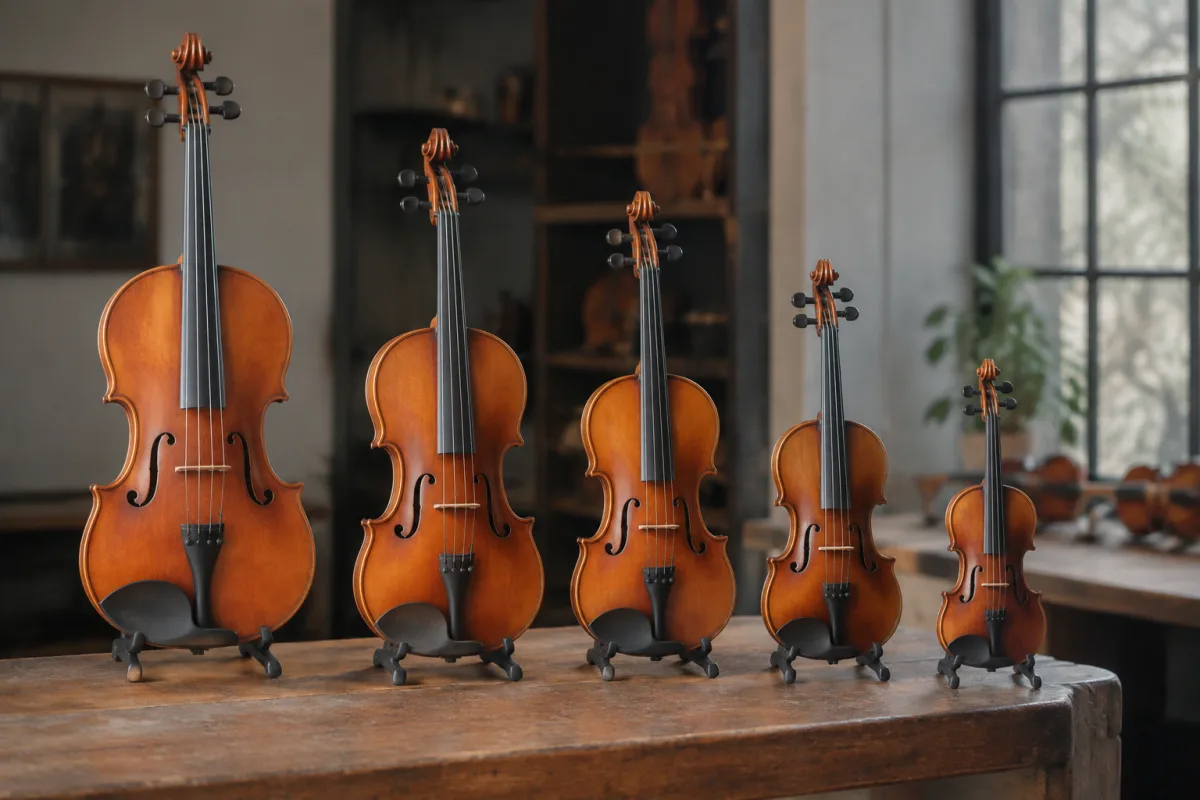
Understanding violin pricing is essential whether you’re a parent seeking an instrument for a child learning music, a beginning adult student, or an experienced musician evaluating your equipment investment. Violin hire rates vary dramatically depending on quality, craftsmanship, materials and heritage, ranging from affordable student instruments under £200 to masterpieces costing tens of thousands. Navigating this pricing landscape requires knowledge of what drives costs and how to assess value at different price points.
What Determines Violin Hire Rates?
Violin pricing reflects multiple interconnected factors, each contributing to the final cost. Understanding these elements helps you evaluate whether a particular violin represents genuine value or represents inflated pricing.
Craftsmanship and Maker: Violins constructed by renowned luthiers command premium prices based on reputation, experience and demand. A violin from a respected contemporary maker might cost £3000–10,000, whilst violins by deceased masters from previous centuries can cost £50,000 or more. The maker’s name alone influences violin hire rates significantly because reputation reflects consistency and desirability.
Wood Quality: The tonewoods used (typically European spruce for tops and European maple for backs) dramatically influence cost. Premium, aged tonewood from specific regions commands significant premiums. Violins using ordinary woods cost considerably less than those built from premium materials.
Construction Method: Hand-carved violins from individual luthiers cost substantially more than mass-produced factory instruments. Handmade violins receive personal attention throughout construction; factory instruments, whilst often excellent value, represent production efficiency rather than individual artistry.
Age and Provenance: Older violins, particularly those with documented histories or connections to famous players, often command premium violin hire rates. An antique violin by a recognised maker becomes a collectible investment as well as a playable instrument.
Violin Price Categories
The violin market naturally segments into broad price tiers, each serving distinct player populations and use cases. Understanding these categories helps you identify realistic pricing expectations.
Student Instruments (£100–500): These represent entry-level options suitable for children beginning lessons or adults exploring music casually. Student violins are factory-made in volume, prioritising affordability and durability. Sound quality is adequate for learning but lacks the sophistication of higher-tier instruments. Most school music programmes recommend student-tier instruments for beginners.
Intermediate Instruments (£500–2000): These bridge the gap between student and professional instruments. An intermediate violin produces noticeably better tone than student models, responds more dynamically to playing technique, and uses better materials. Musicians progressing beyond beginner level typically upgrade to this tier.
Professional Instruments (£2000–10,000): These are played by serious amateurs, semi-professional musicians and professionals in non-elite contexts. Professional violins feature superior craftsmanship, premium materials and exceptional sound quality. Individual luthiers and smaller workshops often produce these instruments.
Concert/Investment Violins (£10,000+): These represent the premium end of the market. Concert violins might be played by professional orchestral musicians or elite soloists, or they might be historical instruments held as investments. Pricing at this level is determined by maker reputation, age, rarity and documented history rather than functional superiority alone.
Comparing Violin Hire Rates by Type
| Violin Type | Typical Price Range | Construction | Sound Quality | Best For |
|---|---|---|---|---|
| Student Violin | £100–500 | Factory-made | Adequate for learning | Beginners, children |
| Intermediate Violin | £500–2000 | Factory or semi-handmade | Good responsiveness | Progressing students, amateurs |
| Professional Violin | £2000–10,000 | Handmade by luthier | Excellent, nuanced | Serious amateurs, professionals |
| Concert/Collector Violin | £10,000+ | Master craftsman or antique | Exceptional, unique character | Professional soloists, investors |
Geographic and Market Variations in Violin Hire Rates
Violin pricing varies geographically based on local manufacturing traditions and market conditions. European instruments, particularly those from violin-making regions like Cremona, Romania and Germany, often carry price premiums reflecting centuries of craftsmanship heritage. Chinese factory instruments often undercut European pricing by 30–40%, sometimes offering surprising value despite the cost difference.
The secondhand market significantly influences violin hire rates. Used intermediate and professional instruments often represent better value than new instruments at comparable price points, as the initial depreciation has already occurred. Antique instruments, conversely, sometimes appreciate over time as they become rarer and their historical value increases.
Retail margins also influence pricing. Purchasing directly from a luthier sometimes offers better value than buying through retail shops, which add markup to cover overhead and profit. Online retailers sometimes offer lower prices than brick-and-mortar stores, though the inability to physically inspect the instrument before purchase carries risk.
Rental Versus Purchase: Cost Considerations
For beginners and young learners, violin rental often represents better value than purchase. Monthly rental costs typically range from £20–50, with annual rental totalling £240–600. If the student abandons violin after six months, renting eliminates the £300–500 loss of purchasing an entry-level instrument.
However, rental costs accumulate: two years of renting costs £500–1200, approaching the cost of a modest student violin purchase. At some point, purchasing becomes economically sensible. Many families rent initially, then purchase after confirming the child’s commitment to music study.
Understanding Violin Hire Rates and Value
Superior instruments cost more because they genuinely perform better: they produce richer tone, respond more dynamically to technique and provide more expressive possibilities. A beginner cannot fully exploit a concert violin’s capabilities, making the investment wasteful. However, a progressing player will genuinely benefit from an intermediate or professional instrument’s superior responsiveness.
The relationship between violin hire rates and playability plateaus eventually. A £5000 violin is noticeably superior to a £1000 instrument, but the difference between a £20,000 and £50,000 violin is more subtle, driven partly by investment value and maker reputation rather than functional superiority alone.
Making Informed Purchasing Decisions
Before committing to a violin purchase, play multiple instruments within your budget range. Tone perception is subjective; an instrument others praise might not appeal to your ear. Comparing instruments helps you identify which characteristics matter to you personally. Consult your teacher about their recommendations; experienced musicians can identify quality indicators that beginners miss.
Consider the long-term trajectory. If you’re certain violin will remain a lifelong pursuit, investing in quality now makes sense. If you’re testing your commitment to music, starting modestly and upgrading later is prudent. The secondhand market provides excellent instruments at lower prices than comparable new instruments, representing intelligent value.
Conclusion
Violin hire rates reflect genuine quality differences across a broad spectrum from affordable student instruments to priceless masterpieces. Understanding what drives pricing and how to assess value at different price points enables you to make purchasing decisions aligned with your needs and budget. Whether beginning your violin journey or seeking to upgrade your current instrument, recognising that higher violin hire rates typically correlate with superior craftsmanship, materials and sound quality helps you invest wisely. With knowledge of the market and realistic expectations for your current playing level, you can find an instrument that serves your musical development and represents genuine value.
Frequently Asked Questions
Should beginners buy expensive violins? No. Student instruments priced £200–500 are suitable for beginners. As your skills progress, investing in better instruments makes sense. Beginners cannot exploit expensive instruments’ superior capabilities.
Do vintage violins always cost more? Not always. Age alone doesn’t determine value. A well-maintained vintage instrument by a recognised maker is valuable; a worn antique by an unknown maker might cost less than a new professional instrument.
Is it worth buying a famous luthier’s violin? Yes, if you’re a professional or serious amateur benefiting from the instrument’s superior capabilities. For amateurs or students, investing in reputation beyond your current playing level is inefficient.
Why do violin hire rates vary so much? Variation reflects differences in maker reputation, materials, craftsmanship, age and historical significance. A violin’s functional performance differences justify some variation; investment value and collectability drive premium pricing.
Can I negotiate violin hire rates? Yes, particularly with independent luthiers. Retail shops may offer discounts on student instruments or package deals. Don’t assume prices are fixed; respectful negotiation sometimes yields better value.
Is the cheapest violin always bad value? Not necessarily. Some budget violins represent genuine value, though the lowest-priced options (£50–100) often have quality issues. Student instruments around £200–300 typically offer the best value at the entry level.



Comments