


Size of Violin article
Size Of Violin for Beginners: A Complete Guide
Selecting the correct size of violin is critical for beginner success. This guide walks you through measurement, sizing classifications, and testing before purchase.
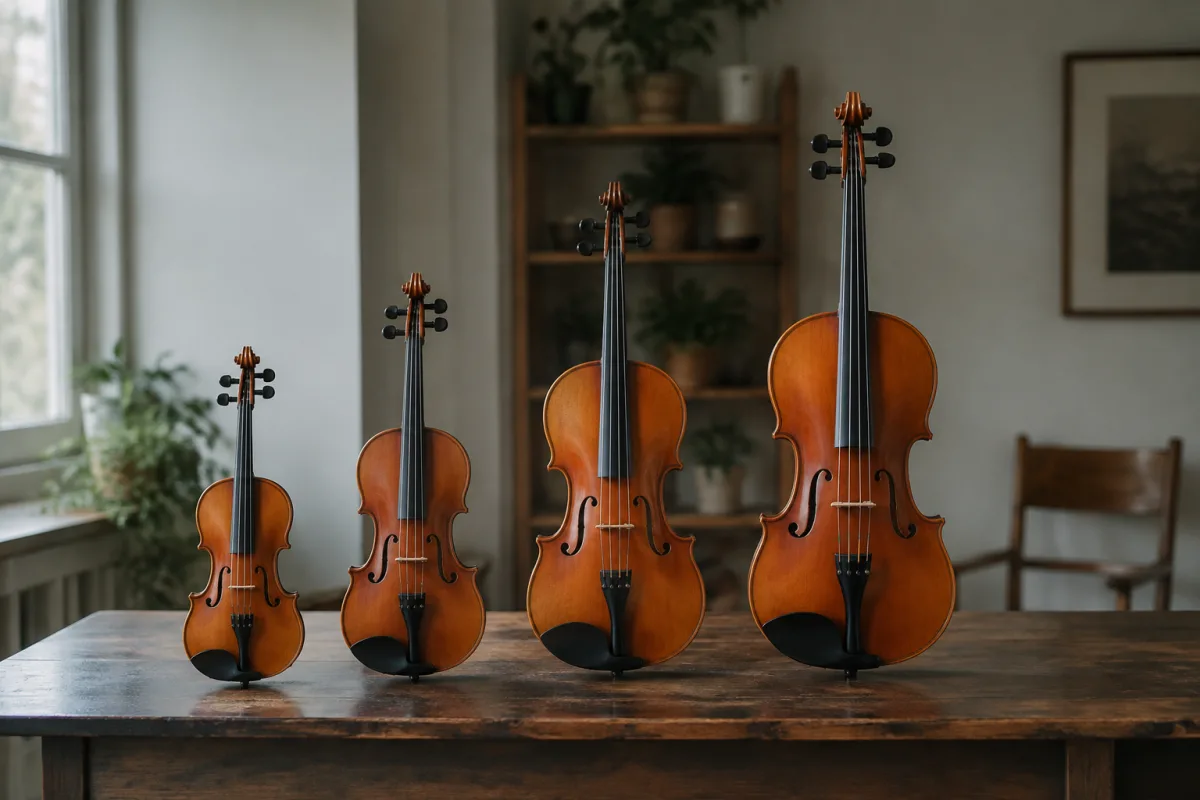
If you're picking up a violin for the first time, one of the most critical decisions you'll make is selecting the correct size of violin. It's tempting to assume "one size fits all" or that you can simply buy an adult-sized instrument and grow into it. This approach leads to frustration, poor technique, and many beginners abandoning the instrument within months. The right size of violin makes learning enjoyable; the wrong size creates unnecessary obstacles. This guide walks you through sizing for your first instrument.
Why Size of Violin Matters for Beginners
An incorrectly-sized violin fundamentally affects your ability to learn. Too large and you'll struggle to reach the fingerboard comfortably, your left hand will tire quickly, and you'll develop poor bow hold and posture habits that take years to correct. Too small and you'll outgrow the instrument within a year, forcing an expensive upgrade just as you're finding your footing. Getting your size of violin right from the start ensures comfort, builds confidence, and lets you focus on technique rather than fighting your instrument.
Professional luthiers and teachers universally agree that proper sizing prevents the single biggest obstacle to beginner violinists: physical discomfort leading to abandonment. An instrument that feels natural in your hands encourages daily practice and musical progress. Conversely, struggling with an ill-fitting violin makes even 30-minute practice sessions feel exhausting rather than enjoyable.
The Standard Size of Violin Classifications
Violins come in internationally standardised sizes, each designed for different heights and arm lengths. Understanding these classifications is your first step toward selecting the right instrument. The common size of violin designations include 1/16, 1/10, 1/8, 1/4, 1/2, 3/4, 4/4 (full-size), and occasionally 5/4 or 7/8 fractional sizes. These fractions don't indicate percentages of a full violin; they're historical designations that roughly correlate to the instrument's body length.
Full-size (4/4) violins are standard for adults and older teenagers. Most children and many adults with smaller frames require smaller fractional sizes. The appropriate size of violin depends on your height and arm length measurements, not your age—some eight-year-olds require full-size instruments whilst some teenagers still play 3/4 sizes.
Measuring for Your Size of Violin
The most accurate method for determining your size of violin involves measuring from your chin to the tip of your outstretched arm. This measurement directly correlates to the distance you need to reach comfortably whilst playing. Here's how to measure accurately:
- Stand naturally without stretching or forcing your posture
- Extend one arm straight out to the side, at shoulder height
- Measure from your chin to the tip of your extended middle finger
- Round to the nearest inch for reference
This chin-to-fingertip measurement maps directly to your size of violin requirements. Generally, measurements of 16 inches or less suggest fractional sizes, 16-20 inches indicate 3/4 to 4/4 sizes, and 20+ inches confirm full-size (4/4) instruments.
Size of Violin Quick Reference for Beginners
| Chin-to-Fingertip Measurement | Recommended Size of Violin | Typical Age Range (Approximate) |
|---|---|---|
| Fewer than 14 inches | 1/16 or 1/10 | 3-5 years |
| 14-15 inches | 1/8 | 5-7 years |
| 15-16.5 inches | 1/4 | 7-9 years |
| 16.5-18 inches | 1/2 | 9-11 years |
| 18-20 inches | 3/4 | 11+ years, smaller adults |
| 20+ inches | 4/4 (Full-size) | Most teenagers and adults |
Physical Comfort: The Real Test of Size of Violin
Measurement provides a starting point, but actual comfort whilst holding the instrument is the final arbiter. When you hold your size of violin correctly in playing position, you should be able to reach the top of the fingerboard without stretching excessively or hunching your shoulder. Your left arm should have a comfortable bend (approximately 90 degrees) at the elbow. Your bow arm should extend without locking.
Additionally, you should be able to anchor your chin firmly on the chinrest without the scroll jamming into your shoulder. If the scroll extends past your shoulder or you must hunch to reach the fingerboard, your size of violin is too large. If the entire instrument feels tiny and cramped in your hands, it's too small.
Common Beginner Sizing Mistakes
Many beginning violinists—particularly adults—buy full-size instruments assuming this is the "correct" choice. Adult arm spans vary dramatically; many women and some men benefit from 3/4 size instruments despite their age. Conversely, some tall children already require full-size violins. Age and assumed adult status are irrelevant; your actual measurements and comfort are what matter.
Another frequent error involves "buying up" a size to avoid upgrades. Whilst eventually you might outgrow a 3/4 size, starting with one that's genuinely comfortable ensures you build proper technique and stick with learning. You can upgrade in two years once you're committed and skilled. Struggling with an oversized instrument in year one risks abandoning entirely.
Budget-conscious beginners sometimes rent instruments that don't fit properly, accepting poor fit to save money. Renting is sensible, but insist on correct sizing. Most rental companies stock fractional sizes; there's no excuse for renting an instrument that's physically uncomfortable.
Fractional Sizes Don't Last Forever
Fractional size instruments serve their purpose but have limits. A properly-sized 1/2 violin works beautifully for a 9-year-old but becomes too small by age 13. Budget for upgrading to larger sizes as your child (or you, if an adult learner) grows. This isn't wasteful—it's necessary for continued progress and comfort. Most teachers recommend upgrading when the student's playing becomes markedly uncomfortable or when measurements indicate a larger size would fit better.
For more comprehensive information about violins and their roles in orchestral and folk music, explore our complete guide to size of violin, which covers violin construction, acoustic properties, and considerations beyond sizing.
Testing Before You Buy or Rent
Always physically hold and play-test your intended size of violin before committing. A music shop or luthier will let you try several sizes; this brief testing phase prevents expensive mistakes. Play open strings, move up the fingerboard, and assess whether reaching the higher positions feels natural. Bow a few notes and listen to the response. The right size of violin should feel like an extension of your body within minutes of picking it up.
If buying or renting online without physical testing, research the seller's return policy carefully. Some companies allow returns within 14 days if size proves incorrect—worth checking before ordering.
Your Path Forward
Selecting your size of violin correctly sets you up for success as a beginner. The small investment of time measuring your chin-to-fingertip distance and testing different sizes prevents months of frustration and potentially saved money on upgrades if you choose too large initially. Comfort and proper fit aren't luxuries—they're foundations of effective learning. With your size of violin sorted, you're ready to begin your musical journey genuinely prepared.



Comments