


Large Violin article
Large Violin for Beginners: A Complete Guide
Upgrading to a large violin is a milestone. This beginner's guide addresses sizing, physical adjustments, common fears, how to choose your first large violin, and what to expect in your first weeks.
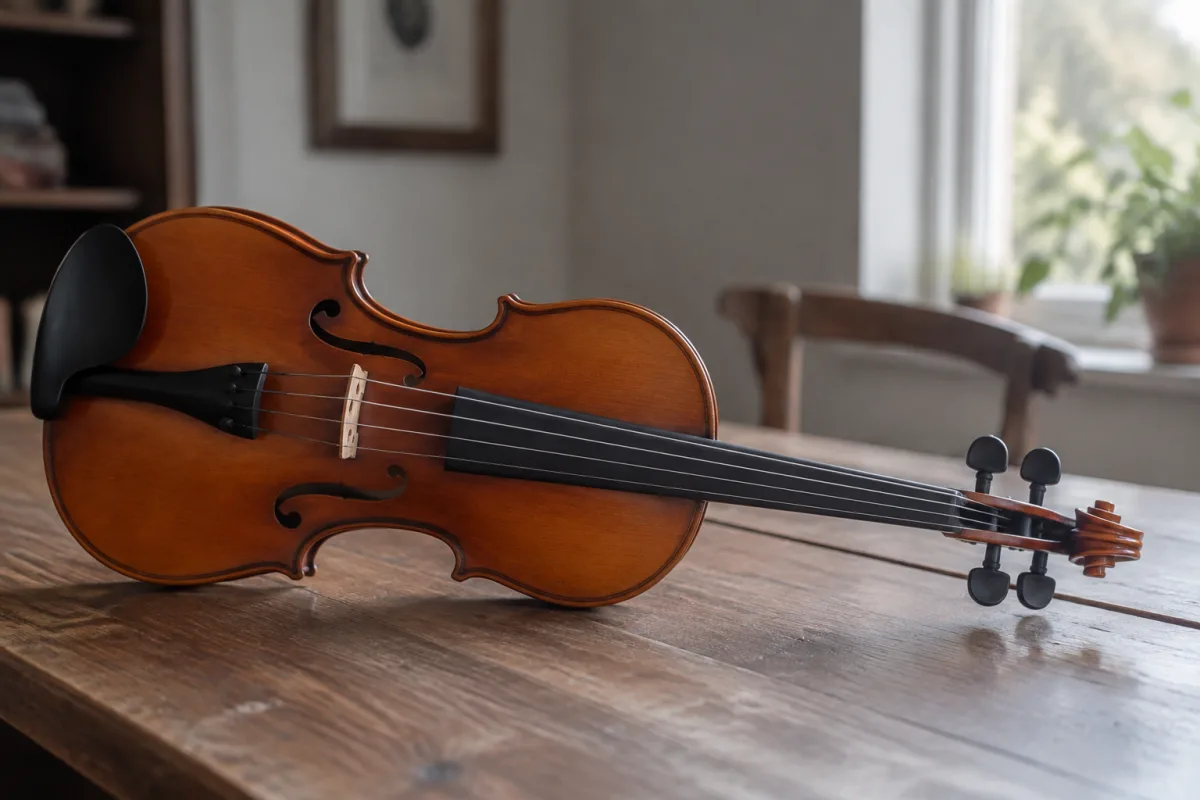
Stepping up to a large violin is a significant milestone—you're moving from a fractional-sized student instrument to a full-size (or near full-size) violin, which means richer tone, better projection, and instruments taken more seriously in ensemble settings. If you're making this transition, you might feel uncertainty: is your shoulder ready for the weight? Will the larger size hinder your playing? How do you know when you're actually ready to make the jump? This guide walks you through the beginner's perspective on large violins, addressing the confidence gaps and practical questions that stop many advancing players from upgrading confidently.
Understanding Large Violin Sizes and When You're Ready
A "large violin" typically means a full-size 4/4 instrument (the standard adult size) or occasionally a 7/8 (slightly smaller, still adult-pitched). Student violins come in 1/4, 1/2, 3/4, and sometimes 7/8 sizes. The step from 3/4 to 4/4 is the most common—many players make this jump between ages 10–15, but it depends on arm length and shoulder height, not age. If you're playing a 3/4 violin and your fingers are cramped, or if your arm feels stretched reaching the G string, you're probably ready for a large violin. Conversely, if your 3/4 still feels comfortable and you're producing good tone, there's no rush. The transition happens when both your instrument and your playing outgrow the smaller size.
The Physical Adjustment to a Large Violin
Switching to a large violin feels strange for the first few weeks. The bow feels different in your hand—slightly longer, requiring subtle changes to how you hold and move it. The larger body changes where you position your chin and jaw slightly. Your left hand's finger spacing adjusts because the fingerboard is wider. These changes are not difficult—they're just different. Your muscle memory from years of 3/4 violin will initially resist the change, but your body adapts quickly once you commit to the larger instrument. Most players report that after 2–4 weeks of regular practice, a large violin feels natural and they can't imagine going back. The psychological hurdle is bigger than the physical one: you're worried the change will throw off your playing, but in reality, you adapt faster than you expect.
Why Large Violins Sound Better: Realistic Expectations
A quality large violin sounds noticeably richer, warmer, and more resonant than a 3/4 because the larger wooden body has more mass to vibrate. This tonal improvement is real, but only if the large violin itself is quality. A cheap 4/4 sounds worse than a good 3/4. When you switch to a large violin at a similar quality level to your current 3/4, you'll immediately hear more tone depth. High notes project further; low notes have more body; the entire range feels more confident. This improvement is one of the rewards of advancing—your instrument finally matches your developing skills. However, manage expectations: a large violin won't fix technical problems (intonation, bow control). It amplifies whatever you're already doing, so make sure your technique is solid before upgrading.
Common Beginner Fears About Large Violins
- I'm too small for a large violin: If you're ready musically (3/4 feels cramped), you're ready physically. Shoulder rest design and chin rest choice matter more than your actual height. Adjusting these accessories solves almost all comfort issues.
- I'll lose my position and intonation when I switch: Yes, temporarily. The first week feels sloppy because everything is slightly different. By week three, your muscle memory resets and you're more accurate than before on the larger fingerboard (more space between notes means cleaner intonation).
- A large violin will ruin my bow hold: Bow technique is about the hand, not the violin. A slightly longer bow requires minor adjustments, but your hold doesn't change fundamentally. If anything, the more comfortable bow length on a large violin improves your hold.
- Large violins are expensive: Quality matters, but you don't need to spend thousands. A good student-to-intermediate large violin (£400–800) is affordable compared to guitars or keyboards. Professional large violins cost more, but that's a later decision.
- My teacher says I'm not ready: Listen to your teacher—they know your playing. Readiness isn't just arm length; it's musical development and technical stability. Trust their guidance, but ask what specific improvements they want to see before upgrading.
Choosing Your First Large Violin: What to Look For
When shopping for a large violin, prioritise sound over appearance. Play several in your budget range and listen to how each projects, sustains tone, and responds to different bow speeds and pressures. A large violin that sounds thin or harsh compared to others at the same price is the wrong choice, no matter how beautiful it looks. Check the setup: the bridge should be straight and positioned correctly, the strings should be a comfortable height off the fingerboard, and the pegs should turn smoothly without sticking. Ask your teacher to help choose if possible—a teacher's ears and experience are invaluable for spotting quality problems you might miss. Buying online without playing multiple instruments is riskier, but many retailers allow returns within 14 days for large violins, so you can test it in your actual environment before committing.
Setup and Adjustment for Your Comfort
When you bring your large violin home, a professional setup might be needed. The chin rest and shoulder rest you used on your 3/4 might not suit the larger body. Chin rests come in different sizes and heights—finding the right one dramatically improves comfort and stability. Shoulder rests likewise have options: some players prefer a full shoulder pad, others a shorter minimalist rest, others no rest at all. Don't settle for uncomfortable setup—invest in adjustment. A £30–60 professional adjustment ensuring the chin rest and shoulder rest are right for your body is money well spent. You'll spend hundreds of hours playing this instrument; comfort matters.
Your First Weeks with a Large Violin
Expect your playing to feel slightly less controlled for the first week. Your fingers are learning new spacing; your bow arm is adjusting to a longer bow. This temporary dip in confidence is normal and passes quickly. Practice regularly but patiently—don't rush through difficult passages. Focus on fundamentals: long tones, scales, simple exercises. This grounds your muscle memory in the new instrument. Within two weeks, you'll recognize that your new large violin is actually easier to play well than your old 3/4. The extra space and resonance work in your favour.
Moving Forward with Your Large Violin
Once you're comfortable on a large violin, you won't look back. The tonal possibilities, the ensemble blend, the feeling that your instrument finally matches your skills—all of this makes the transition worthwhile. Whether you're playing orchestral music, chamber music, or solo pieces, a quality large violin supports your advancement in ways a 3/4 eventually can't. Be patient with yourself during the adjustment, trust that the transition is normal, and enjoy the improved sound and playability that a large violin offers.
Stepping up to a large violin is a confident decision. You've outgrown your fractional-sized instrument musically; now your physical adjustment will catch up within weeks. Focus on sound quality, get proper setup adjustments for your comfort, and embrace the temporary awkwardness knowing it's the last time you'll feel that way on your instrument. For detailed guidance on maintenance, proper technique on larger instruments, and repertoire recommendations, see our complete guide to large violins.


Comments