


String Cleaner article
The Ultimate Guide to Cleaning Guitar Strings
String cleaner extends the life and brightness of guitar strings. Learn the best products, application techniques, and preventive maintenance approaches.
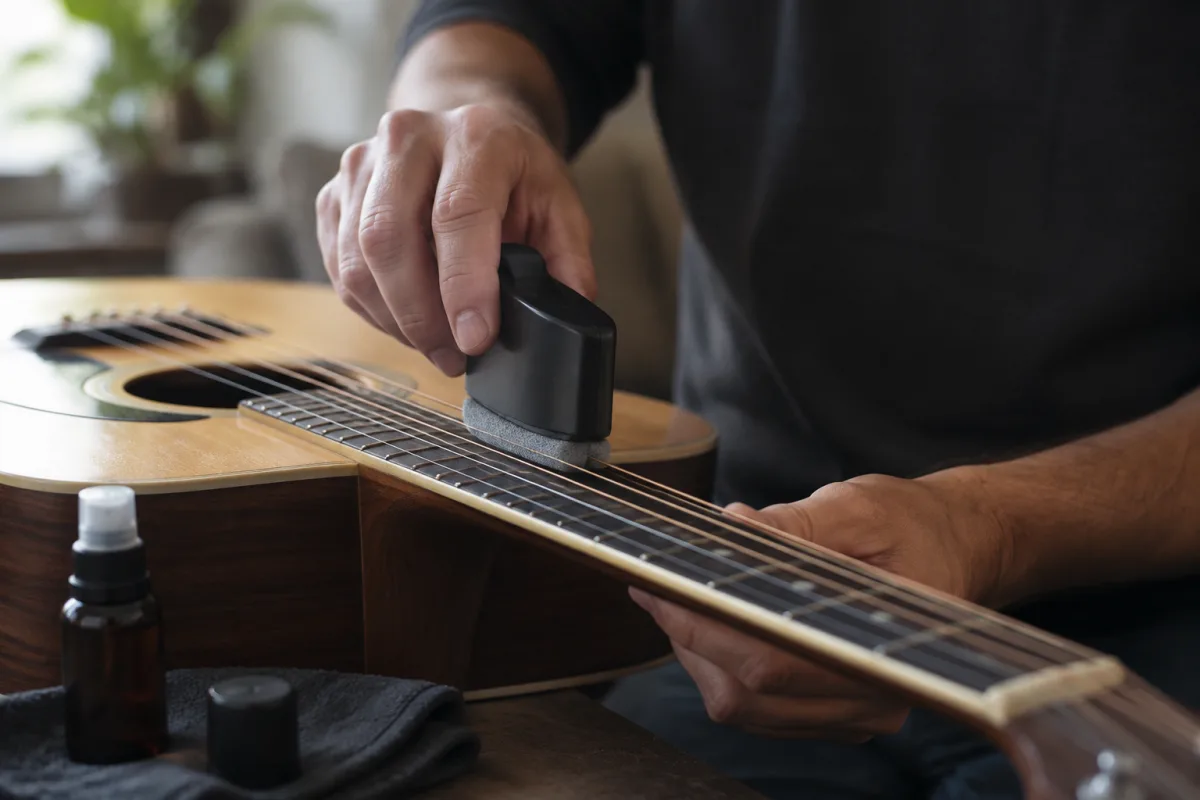
String cleaner is a simple yet essential maintenance product for every guitarist and bassist. Clean strings sound brighter, last longer, and play more reliably than neglected ones. Understanding different string cleaner types, application methods, and preventive maintenance approaches helps you keep your strings sounding fresh and extend their lifespan, ultimately saving money and improving your playing experience.
Why Clean Strings Matter
Over time, strings accumulate dead skin, sweat, dust, and corrosion from humidity and air. This buildup dampens brightness, increases friction against frets, and accelerates tonal degradation. Clean strings ring clearly, respond better to playing dynamics, and resist corrosion. For gigging musicians where every tone matters, string maintenance is a practical investment in sound quality and gear longevity.
Types of String Cleaner Products
Liquid Cleaners
Spray-bottle or liquid-based string cleaners are the most common type. You apply the cleaner directly to the strings and wipe with a cloth. Quality formulations dissolve oils and debris without damaging the string's core or windings. These cleaners range from £4–10 per bottle and typically last months with regular use.
String Conditioners with Cleaning Action
Some products combine cleansing with protective conditioning, leaving a thin lubricating film that extends string life and improves feel. These hybrid products cost slightly more (£6–12) but offer additional benefits beyond basic cleaning.
Soft Cloths and Wipes
Pre-moistened microfibre wipes (like GHS Fast Fret wipes or Ernie Ball Wonder Wipes) combine cleaner and applicator in one product. Convenient for quick maintenance, though less economical than liquid cleaners over time.
String Cleaning Tools
Specialised tools—string scrapers, string brushes, and string rinsing devices—provide mechanical cleaning without chemicals. Some prefer this approach for minimising product buildup or working with vintage/delicate strings.
Application Techniques
Apply cleaner conservatively. A small amount works better than soaking—excess product can seep into fretboard pores or under pickups and create residue buildup. Wipe each string individually, working from the nut toward the bridge, paying attention to under the strings where debris accumulates most.
Allow dried cleaner to settle briefly before wiping completely clean. This gives the product time to dissolve oils and debris. For heavily played strings, repeat the process once or twice monthly depending on playing intensity and climate.
Preventive Maintenance: The Better Approach
Preventing buildup is more effective than aggressive cleaning. After each playing session, simply wiping strings and fretboard with a dry cloth removes most debris. This habit, sustained over time, reduces the need for chemical cleaners significantly.
In humid climates or after particularly sweaty sessions, a quick wipe with a barely damp cloth prevents corrosion. This minimal intervention maintains brightness and extends string life dramatically.
Which Products Actually Work?
Most commercial string cleaners deliver on their basic promise—they remove debris and restore some brightness. Popular options include:
- Fast Fret (GHS): Long-established, effective, pleasant-smelling liquid cleaner. Industry standard for studio and touring professionals.
- Lemon Oil formulas: Gentle, pleasant-scented cleaners that condition whilst cleaning. Slightly pricier but comprehensive.
- Specialised mineral-oil formulations: Designed specifically for guitars, these cleaners avoid aggressive solvents that might damage finishes.
- Simple soap and water: For players preferring minimal products, warm water and gentle soap effectively clean strings with zero risk of chemical damage.
The Economics of String Cleaning
A £6 bottle of cleaner lasts several months with regular use, extending string life by weeks or months. Given that quality string sets cost £8–20, keeping a set sounding fresh through cleaning often pays for itself by delaying string replacement.
For touring musicians or those playing multiple gigs weekly, string cleaner is genuinely economical maintenance.
Storage and Safety Considerations
Store string cleaner in a cool, dry place away from direct sunlight. Keep bottles sealed to prevent evaporation. Most products are safe for guitar finishes when used as directed; however, always test on a hidden area of your instrument first, particularly if you own vintage or rare guitars with unusual finishes.
Avoid getting cleaner on electronic components (pickups, pots) unnecessarily. A targeted application on strings alone prevents potential issues.
Conclusion
String cleaner is an affordable, practical investment in tone and gear longevity. Whether you choose commercial products or simple soap and water, regular string maintenance is among the easiest ways to improve your playing experience. Clean strings sound better, play more responsively, and last longer—a simple maintenance habit that rewards every guitarist and bassist.





Comments