
Orchestral Strings (General) article
The Complete Guide to Orchestral Strings (General)
Orchestral strings form the heart of the symphony, comprising violins, violas, cellos and basses that work together to create lush harmonies and soaring melodies that define classical music.
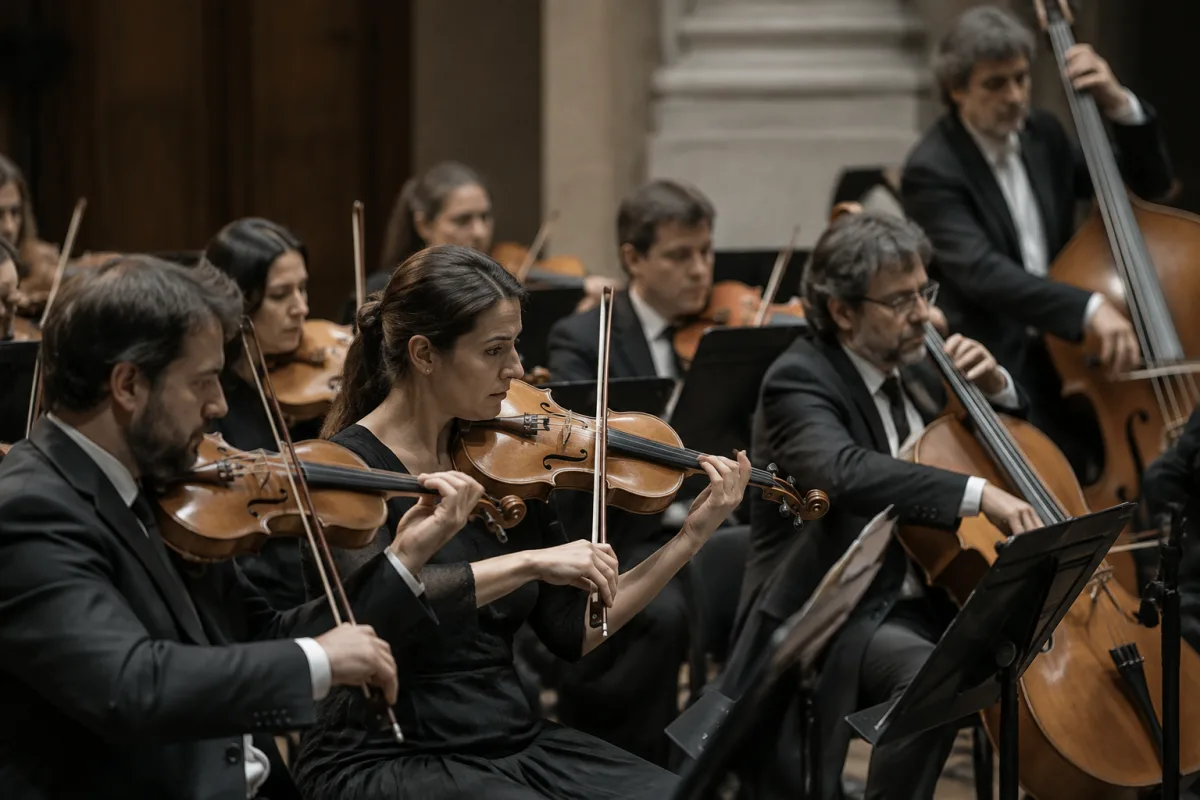
String instruments form the foundation and beating heart of the symphony orchestra, providing lush harmonies, delicate textures and soaring melodies that define classical music's emotional landscape. From intimate chamber settings to vast concert halls, these ensemble staples deliver unparalleled expressive capability, making it essential to understand how the various instruments work together to create the rich, complex soundscapes that captivate listeners worldwide.
The Four Instrument Families
A typical orchestra comprises four distinct families arranged by size and pitch range. The violins represent the highest voices, split into two groups—first violins carrying the primary melodic line and second violins providing harmonic support and counter-melodies. Violas occupy the middle register, offering a warmer, more mellow tone that bridges the brightness of violins and the depth of cellos. Cellos provide the lower harmonic foundation whilst remaining capable of soaring solo passages, and double basses anchor the entire section with the deepest, most resonant frequencies.
Each family utilizes four strings tuned in perfect fifths. Violins use G-D-A-E tuning, violas C-G-D-A, cellos C-G-D-A (one octave lower), and basses E-A-D-G (tuned in fourths). This tuning system enables natural resonance and facilitates chord-playing across adjacent strings, creating rich harmonic combinations impossible on single-string instruments.
Instruments Within the Section
Violin
Violins produce the most brilliant, cutting tones in the orchestra and carry principal melodic responsibility. Modern instruments measure approximately 60 centimetres in length and produce sounds ranging from C3 to E7 and beyond. They can sustain notes indefinitely using the bow, execute rapid passages with unprecedented agility, and produce considerable dynamic range from barely audible whispers to penetrating fortissimo. The instrument's brilliant upper partials allow melodies to carry across entire orchestras without electronic amplification.
Viola
These instruments produce a sonorous, warm tone distinctly darker than violins yet brighter than cellos, occupying a unique harmonic space. Slightly larger than violins (approximately 67 centimetres), they sound one octave lower and deliver particular poignancy in emotionally resonant passages. This tone carries less brightness, making it invaluable for intimate, introspective passages. Many composers have written significant solos recognising their distinctive expressive character.
Cello
Cellos provide the primary bass voice whilst possessing remarkable melodic capabilities that rival violins in the upper register. Measuring approximately 76 centimetres, they sound an octave below violas and deliver warm, singing tones throughout their extensive range. Musicians execute both intimate chamber-like passages and brilliant virtuosic displays. This instrument's warm, human voice quality makes it ideal for both accompanying harmonies and soaring melodic statements.
Double Bass
Double basses anchor harmonic structure with powerful, resonant tones that listeners often feel as much as hear. Modern versions measure 190-210 centimetres and sound the lowest notes, tuned approximately one octave below the cello. Despite their size, skilled players execute rapid passages, pizzicato rhythmic figures and subtle harmonic contributions. Bass players must balance providing solid foundation support with contributing detail and expression to the overall sound.
Fundamental Performance Techniques
Playing these instruments employs diverse bow techniques creating varied colour and character within pieces. Arco (with bow) represents the standard approach, with the bow drawn across strings to produce sustained tones. Pizzicato (plucked) involves plucking strings directly with the finger, creating percussive attacks essential for rhythmic accompaniment and comic effects. Col legno (with the wood) strikes strings using the bow's wooden stick rather than horsehair, producing tapping sounds useful in contemporary compositions.
Advanced techniques include sul ponticello (bowing near the bridge), producing thin, ethereal tones ideal for spectral effects, and sul tasto (bowing over the fingerboard), creating soft, mellow colours. Vibrato—rapid pitch fluctuation—adds expression and warmth to sustained notes. Double stops allow simultaneous playing of two strings, creating chords and harmonic richness. Harmonics (natural and artificial) produce bell-like overtones through specific finger positions and bow techniques.
The Role Within the Ensemble
Within orchestral context, these instruments function as the harmonic and melodic heart, typically outnumbering wind and percussion sections combined. The section provides the primary sustained harmonic foundation upon which winds add colour and detail. The symphonic texture typically places first violins on the highest melodic material, second violins and violas on inner harmonies, and cellos and basses on bass lines—though composers frequently redistribute material across sections for colour and dramatic effect.
The interplay between different voices creates layered textures impossible with single instruments. Divisi—dividing sections into multiple parts—enables complex harmonies and created musical independence between groups. Orchestral conductors use the entire ensemble as the cohesive foundation, with woodwind and brass adding episodic colour and punctuation.
Acoustic Properties and Sound Quality
These instruments produce sound through sympathetic vibration of the entire body, not just the strings themselves. The wooden body acts as a resonance chamber, amplifying and enriching string vibrations. Each carries distinctive tonal characteristics influenced by wood selection, varnish composition, craftsmanship and age. Professional instruments often represent centuries of refinement, with master versions commanding extraordinary value.
The horsehair bow interacting with wound strings creates the complex friction that produces sustained tones. Bow tension, speed and position on the strings control tone colour, dynamics and articulation. Experienced musicians adjust bow technique momentarily to produce endless tonal variations, from brilliant cutting tones to warm, mellow sonorities.
Orchestral Repertoire and Development
Classical composers wrote extensively for these instruments, creating enduring masterpieces showcasing their capabilities. Mozart, Beethoven and Brahms wrote symphonies featuring music of unprecedented sophistication. Romantic composers including Tchaikovsky and Mahler expanded technique and harmonic language. Twentieth-century composers including Shostakovich, Bartók and Stravinsky pushed performance technique into unprecedented territory with extended techniques and unconventional approaches.
Contemporary orchestral composers continue exploring string potential, combining traditional approaches with extended techniques. Film composers particularly rely on these instruments to carry emotional weight in cinematic narratives, often featuring lush sections as thematic backbone.
Conclusion
String instruments represent one of humanity's greatest achievements in instrumental music-making, combining centuries of technical refinement with expressive capability rivalled by no other ensemble. Understanding how violins, violas, cellos and basses work together to create orchestral sound enhances appreciation for symphonic music's beauty and complexity. Whether in intimate string quartets or massive orchestral settings, these fundamental instruments continue captivating audiences worldwide through their warmth, brilliance and expressive depth.


Comments