


Steinberg article
Steinberg Explained: Features, Types and Tips
From Cubase to Dorico, Steinberg's range can look bewildering from the outside. Here's what each product actually does, how they connect, and where to start.

If you've spent any time around home studios or professional post-production suites, you've bumped into Steinberg without necessarily clocking it. This German software house is the outfit behind Cubase, one of the world's most widely used digital audio workstations, and the inventor of VST — the plug-in format that quietly runs underneath almost every modern production rig. Here's a plain-English tour of what Steinberg actually makes, how the pieces fit together, and a few honest tips for getting the most out of any of them.
What Steinberg Actually Makes
It isn't a single product — it's a whole production ecosystem, built up over decades. Depending on what you do, you might only ever touch one corner of it, or you might end up relying on four or five of its tools without really thinking of them as a "range". The lineup breaks down roughly like this:
- Cubase — the flagship DAW for recording, MIDI sequencing, editing, mixing and general music production.
- Nuendo — Cubase's professional sibling, built for film, TV and game-audio post-production.
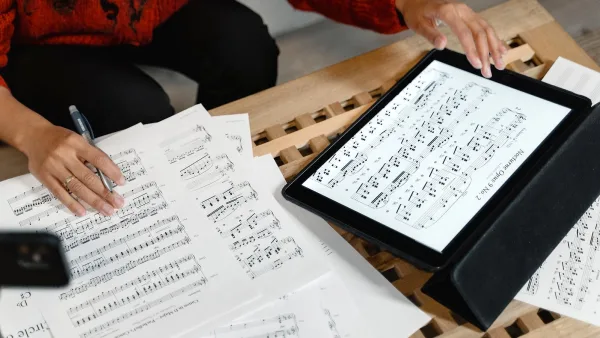
- Dorico — a notation program for composing, arranging and engraving printed scores.
- WaveLab — a mastering and audio-editing environment.
- SpectraLayers — spectral editing software for cleaning up noisy or damaged audio.
- HALion and Groove Agent — sampling, synthesis and drum-production tools.
- Cubasis — a scaled-down DAW for iOS and Android.
Each Steinberg product is designed to slot into the others. A composer might sketch in Dorico, build custom instrument sounds in HALion, then hand the whole thing to Cubase for production, or to Nuendo if it's heading for picture.
Cubase vs Nuendo: The Big Split
The question I get asked most is why Steinberg bothers making two DAWs that look so similar. The honest answer is that they're aimed at different jobs. Cubase is the musician's tool — recording a band, programming a beat, mixing a track. Nuendo shares the same production core but is built around dialogue editing, ADR (automated dialogue replacement, where lines are re-recorded to match picture), multichannel delivery and video-synced workflows. If you're scoring songs, you want Cubase. If you're mixing a film or a game, Nuendo earns its keep.
Where It All Started: The VST Story
It's easy to take virtual instruments and plug-in effects for granted, but Steinberg is the reason they exist in their current form. The company introduced the VST format back in the 1990s, giving developers a common way to build instruments and effects that would run inside a host application rather than as standalone hardware substitutes. In 2026, Steinberg marked 30 years of VST and 25 years of HALion — a reminder that a huge slice of modern computer-based music-making rests on standards this one company set.
Who Actually Uses This Stuff
Cubase turns up in bedroom studios and platinum-selling sessions alike, which is part of why it's stuck around so long — the workflow scales from a laptop and a pair of headphones to a full commercial studio without changing much. Nuendo tends to live in post houses and game studios, where dialogue, ADR and multichannel delivery are the daily grind rather than the exception. Dorico gets picked up by composers, arrangers and educators who need clean, playable scores rather than a mix. None of these are hobbyist toys dressed up as professional software; they're built for people who do this for a living, which is also why the learning curve can feel steep at first.
What's New Across the Range
The company has been busy lately. Recent updates worth knowing about include:
| Product | What changed |
|---|---|
| Cubase 15 / Nuendo 15 | AI-assisted stem separation, redesigned Expression Maps, DAWproject interchange support |
| Nuendo 15 | New Analyzer Track for dialogue intelligibility, MXF video support, redesigned ADR Panel |
| WaveLab 13 | Reworked stereo and Dolby Atmos mastering workflow |
| SpectraLayers 13 | Extra post-production and restoration options |
| Dorico 6.2 | Notation and engraving refinements, plus a maintenance update |
| Cubasis 3.8.6 | Continued mobile updates for iOS and Android |
Worth treating the AI stem separation as a helpful editing aid rather than a substitute for a proper multitrack recording — separated stems can carry artefacts and phase issues, so audition them in context before committing.
A Few Honest Tips
Whichever Steinberg product you're using, a handful of habits make life easier:
- Build separate templates for songwriting, tracking and mixing rather than starting from a blank project each time.
- Keep buffer sizes low while recording or playing instruments live, and raise them again for mixing.
- If you're doing orchestral work, learn Expression Maps early — they keep large sample libraries readable rather than a wall of MIDI.
- Leave headroom on your mix bus before mastering, and check the result at more than one playback volume.
If you're weighing up which product to actually buy, our complete Steinberg buyer's guide walks through editions and pricing tiers, and our beginner's guide is the gentler starting point if all of this still feels like a lot. Once you've settled in, it's worth skimming our list of common Steinberg mistakes so you don't have to learn them the hard way.
The Bottom Line
Steinberg's range can look intimidating from the outside, but it's really just a set of specialist tools built around one shared idea: composition, production and post-production should be able to talk to each other. Start with the one product that matches the job in front of you — Cubase for music, Nuendo for picture, Dorico for scores — and the rest of the ecosystem will make a lot more sense when you eventually need it. For a tier-by-tier look at which option gives you the most for your money, see our guide to the best Steinberg software for the money.




Comments