
Sibelius Notation article
The Complete Guide to Sibelius Notation
Sibelius notation remains the industry standard for professional music composition. Discover why composers trust Sibelius for orchestral and ensemble work.
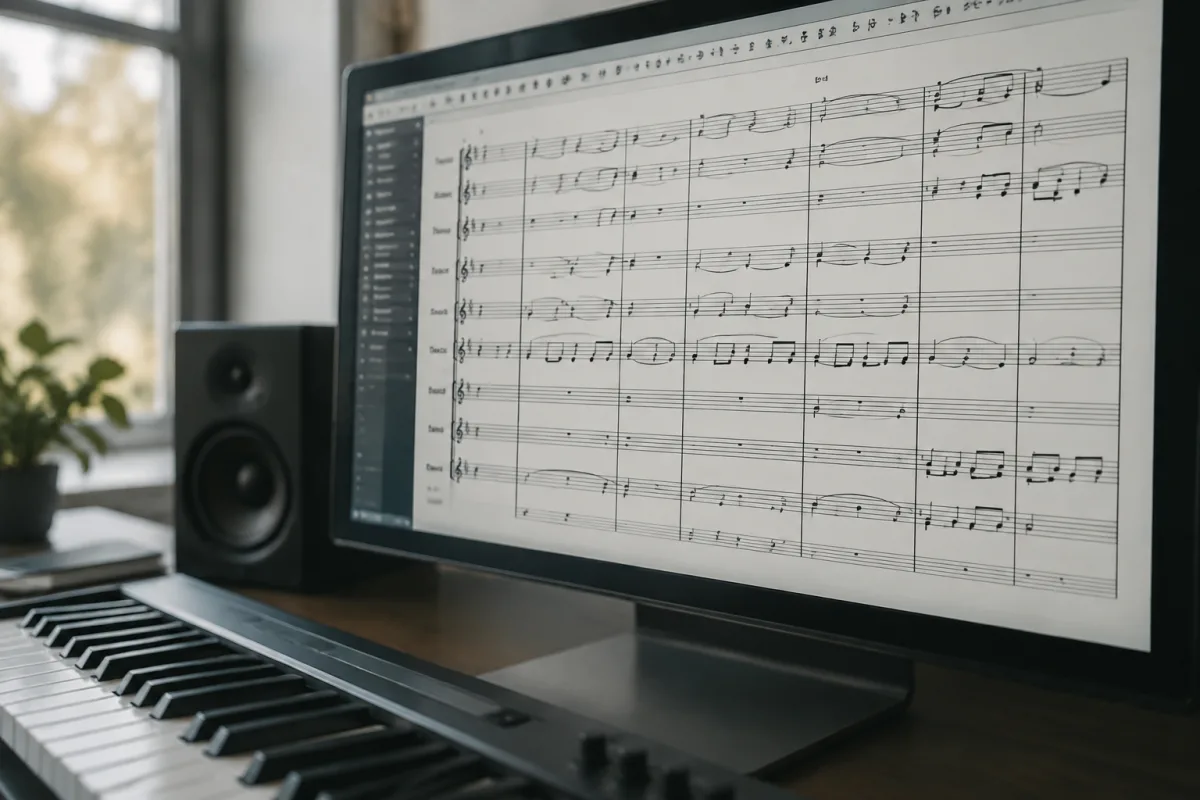
Sibelius notation software remains the industry standard for music composition and publishing. Whether you're an orchestral arranger, band composer, music teacher or student, this professional-grade tool provides what you need to transcribe, compose and publish sheet music with professional polish. From handwritten sketches to polished scores ready for publication, Sibelius handles the complete workflow with elegant, intuitive interface.
Why Sibelius Notation Dominates Music Publishing
Sibelius notation software has been the standard in orchestral and ensemble writing for over thirty years. Professional orchestrators, composers and arrangers choose this software because it understands music. The tool anticipates what you're trying to do, offering intelligent defaults that speed workflow dramatically compared to generic tools.
Libraries of sampled sounds mean you can hear your compositions as you write. Playback quality rivals professional orchestral recordings, letting you refine arrangements and orchestration before committing to physical performance.
Key Features of Sibelius Notation Software
Professional systems include:
- Intelligent score input — context-aware note entry adapts to time signatures, clefs and key changes
- Extensive sound library — orchestral, chamber, band and electronic samples with responsive playback
- Notation publishing — export scores to PDF, graphics and web formats with publication-quality results
- Layout control — precise page formatting, spacing and pagination for physical scores
- Plug-in ecosystem — hundreds of community and professional plug-ins extend capability
- Cloud collaboration — real-time collaboration support for composers and arrangers working together
Sibelius Notation Editions
The software comes in multiple versions. Student Edition offers full features for learners and students at educational pricing. Ultimate Edition provides everything professional composers need, including advanced playback, sound libraries and premium features. The iPad version offers portability for sketching and lighter work on mobile devices.
Choosing between editions depends on your needs. Students start with Student Edition and upgrade as their work becomes professional. Educators often use the Student version in classroom settings.
Sibelius Notation Workflow
Composing typically begins with choosing an ensemble template—orchestral, string quartet, jazz band, etc. Input notes via keyboard, MIDI controller or notation input, and the software automatically manages beaming, stem direction and spacing. It stays out of your way whilst handling the mechanical notation tasks.
Playback helps catch mistakes and refine arrangements in real time. Adjust expression, dynamics and tempo for realistic orchestration feedback. Export finished scores as PDF for distribution to musicians or as MusicXML for collaboration with other composers using different tools.
Sibelius Notation vs. Other Software
Competitors like MuseScore offer free alternatives, and Finale appeals to some composers. However, Sibelius notation combines power with intuitive design more elegantly than alternatives. Many professional orchestrators and music publishers standardise on this software for its consistency, reliability and professional output quality.
Learning Sibelius Notation
Beginners appreciate its logical interface and smart defaults. The learning curve is gentle compared to competitors. Extensive tutorials and documentation support self-teaching. Educational institutions teach it in music composition courses, so many students enter professional life already fluent in the software.
Choosing Sibelius Notation
If you compose orchestrally or arrange for ensembles, Sibelius notation is the professional standard. Educational users should start with Student Edition and upgrade to Ultimate as needs grow. Hobbyist composers and informal musicians may find free alternatives sufficient, but this software's professional features and output quality justify investment for anyone publishing compositions or teaching music.
The Bottom Line
Sibelius notation remains the gold standard for music composition and publishing. Its intelligent design, professional sound libraries and publication-ready output make it the choice of orchestrators, composers and publishers worldwide. Whether you're composing your first piece or managing a publishing catalogue, Sibelius delivers the tools and reliability professionals depend on.



Comments