


Silent Drum Kits article
Silent Drum Kits for Beginners: A Complete Guide
Silent drum kits let you learn drums without the noise. This beginner's guide covers what silent drum kits are, how to choose one, and how to start playing.
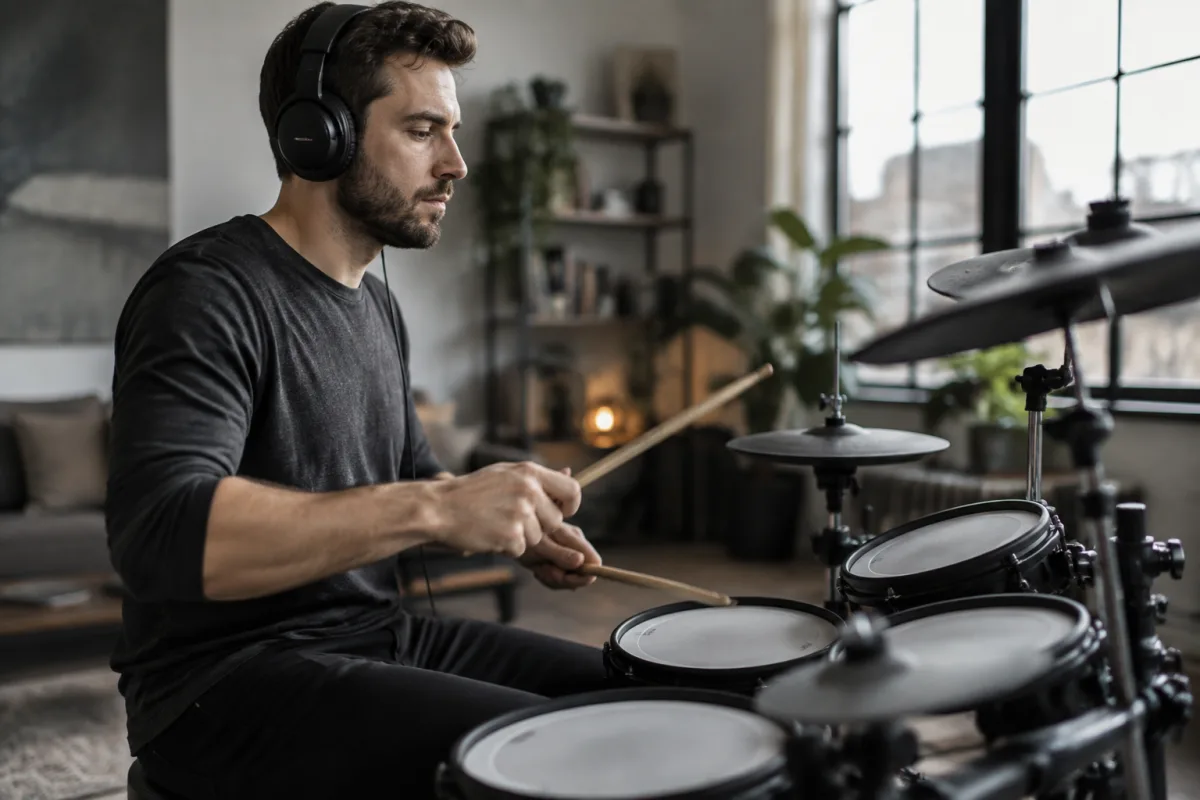
If you've ever wanted to play drums but worried about the noise, silent drum kits might be exactly what you're looking for. Silent drum kits offer a quieter alternative to acoustic drums, allowing you to practice and perform without disturbing neighbours or family members. For beginners, they solve one of the biggest obstacles to getting started: the volume. This guide walks you through everything you need to know to confidently pick your first silent drum kit and start playing today.
What Are Silent Drum Kits?
A silent drum kit is a percussion instrument designed to produce significantly less noise than an acoustic drum set whilst still giving you the feel and responsiveness of playing real drums. Silent drum kits typically consist of mesh drum heads—made from synthetic material rather than animal skin—that absorb much of the impact noise when you strike them. Many silent drum kits also include rubber pads, electronic triggers, or dampening layers that further reduce volume. The result is an instrument you can play at home without upsetting neighbours or family, often whilst wearing headphones to monitor your own performance.
Why Beginners Choose Silent Drum Kits
For a beginner drummer, silent drum kits solve several common challenges. First, they eliminate the noise concern entirely, letting you practise whenever inspiration strikes—early morning, late evening, without worry. Second, they're far more affordable than many acoustic sets when you factor in soundproofing costs. Third, silent drum kits allow you to use headphones, which means you can play along with backing tracks, learn from online lessons, and hear exactly what you're doing without neighbours hearing anything. Finally, if you decide drumming isn't for you, selling a silent drum kit is often easier than selling acoustic drums.
Types of Silent Drum Kits for Beginners
Silent drum kits come in several varieties, each suited to different needs and budgets:
- Mesh-head kits: The most popular choice for beginners. These use synthetic mesh drum heads that feel responsive and produce a quiet "thud" when struck. They're quieter than acoustic drums but louder than rubber pads, and they offer excellent feel and feedback.
- Rubber-pad kits: Extremely quiet and very affordable. Rubber pads produce minimal sound, making them ideal if noise is your primary concern. The tradeoff is that they feel less like traditional drums and offer less nuance in your playing.
- Hybrid kits: A combination of mesh and rubber pads, with mesh on the drums you play most often and rubber pads on others. These offer a middle ground in both cost and feel.
- Electronic drum sets: These use sensors to trigger sounds, allowing you to play through headphones with countless drum sounds and accompaniment options. More expensive but incredibly versatile for learners.
Essential Features to Look For
When choosing your first silent drum kit, pay attention to these important factors:
- Head feel and responsiveness: Strike several different silent drum kits if possible. The best one should feel natural and responsive—your stick should bounce realistically, giving you immediate feedback on your technique.
- Noise level: Silent drum kits vary in how quiet they are. If you're in a flat or apartment, test the kit in the shop or read reviews about actual decibel levels.
- Stick control and dynamics: A quality silent drum kit lets you play both soft and loud by varying your stroke. This is crucial for learning proper technique and expressing yourself musically.
- Hardware stability: Your kit needs to be sturdy and stable during play. Cheap hardware that shifts or wobbles during practice will frustrate you and compromise your technique.
- Portability: If you think you'll transport your silent drum kit, lightweight hardware and compact designs matter. Many beginners appreciate the ability to move their kit to different rooms or take it to rehearsals.
Getting Started: Your First Practice Session
Once you have your silent drum kit set up, here's how to begin:
- Set up in a comfortable space: Place your silent drum kit on a level surface with plenty of room to move your arms freely. Good posture matters from day one.
- Adjust the height: Your snare should be at about waist height when seated. Adjust the throne (drum stool) and all pad positions so everything feels natural and within reach.
- Grip your sticks properly: Hold your drumsticks with a relaxed grip—not too tight. Bad grip habits are hard to break later, so learn it right from the start.
- Start with simple rhythms: Play basic 4/4 beats, focusing on hitting the centre of each pad consistently. Don't worry about speed; accuracy and consistency come first.
- Use a metronome: A metronome keeps you in time and helps you develop rhythm discipline. Start at a comfortable tempo—perhaps 80 BPM—and gradually increase speed.
- Play along with music: Once you're comfortable with simple beats, play along with songs you love. This keeps practice enjoyable and teaches you to follow different tempos and feels.
- Keep sessions short initially: Fifteen to twenty minutes of focused practice is better than an hour of mindless playing. Build your endurance gradually.
Common Beginner Mistakes to Avoid
Learning from others' missteps will accelerate your progress:
- Hitting too hard: Many beginners think harder equals better. In reality, technique and control matter far more than force. Let the stick do the work; strike the centre of each pad with relaxed arms.
- Neglecting posture: Bad posture now creates bad habits and can lead to injury later. Sit upright, keep your shoulders relaxed, and maintain proper distance from your silent drum kit.
- Skipping learning to read music: Even a basic understanding of drumming notation will accelerate your learning and let you follow lessons and tutorials more easily.
- Practising without structure: Aimless noodling feels good but teaches you little. Use a lesson book, online tutorials, or a teacher to give your practice direction.
- Giving up on head feel: If your silent drum kit feels unresponsive at first, don't assume it's defective. Many beginners need time to adjust to the feel. Give yourself a few weeks before deciding it's not right for you.
Making the Most of Your Silent Drum Kit
Your silent drum kit is a tool for learning, growth, and musical expression. To get the most from it, invest in a good practice routine, watch tutorial videos on drumming technique, and don't hesitate to seek out a local drum teacher for a few lessons. They can correct bad habits early and accelerate your progress dramatically. Most importantly, have fun with it. The best drummer is one who plays regularly and enjoys the process—and silent drum kits make that enjoyment accessible to everyone.
For a deeper exploration of silent drum kits, including advanced techniques, different brands, and professional applications, check out our complete guide to silent drum kits, which covers everything from history to mastery.
Your Drumming Journey Starts Now
Silent drum kits remove one of the biggest barriers to learning drums: noise. With a quality silent drum kit, the only thing between you and developing your rhythm and skills is commitment and practice. Start with the basics, be patient with yourself, and remember that every accomplished drummer started exactly where you are now—holding sticks for the first time and learning to keep a beat. Your silent drum kit is ready whenever you are.


Comments