


Serum VST roundup
Serum Vst: A Complete Buyer's Guide
Serum VST: A Complete Buyer's Guide
Serum costs around £89. It's not cheap, but it's the standard in electronic music for a reason. Understanding what you're paying for helps you decide if it's right for your needs.
Understanding Serum's Core Design
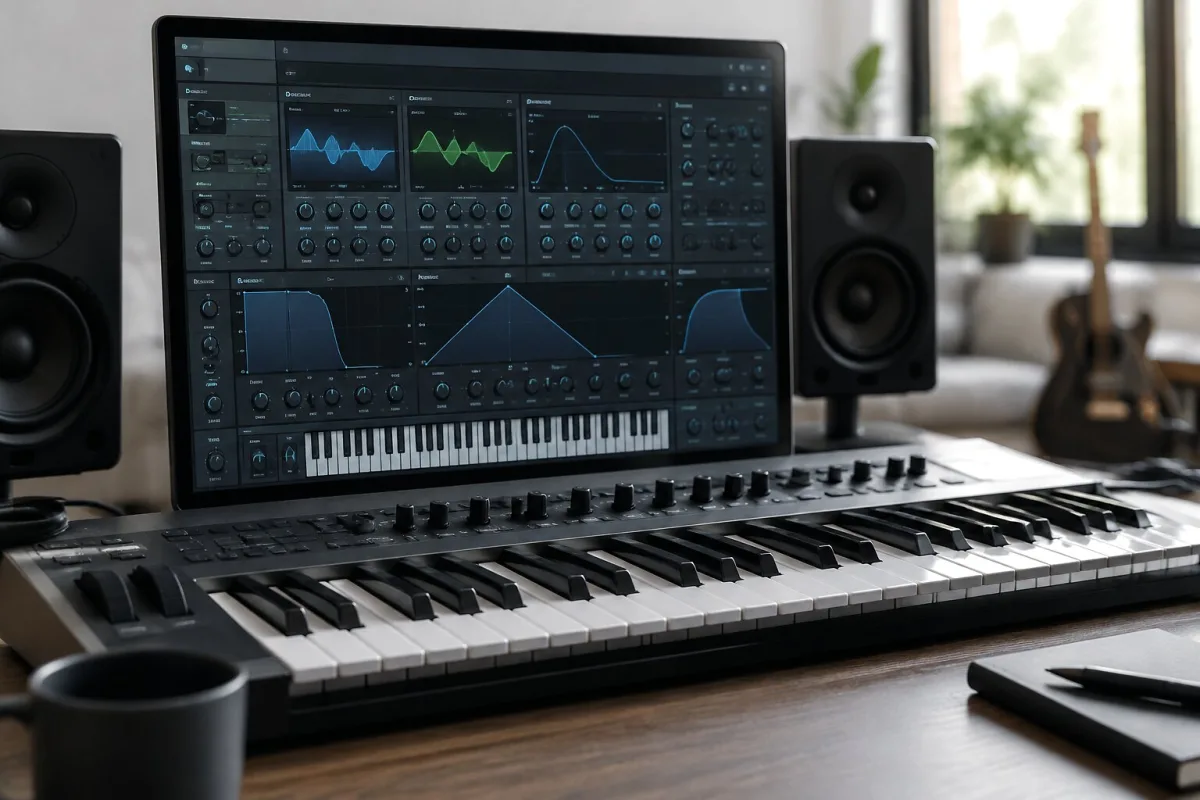
Serum is a wavetable synthesizer. That means it takes digital waveforms—more flexible than basic sine/square/triangle waves—and lets you shape them into sounds. The wavetable editor lets you modify waveforms pixel by pixel, creating unique timbres impossible on other synths. This flexibility is why producers love it.
Key Features for Making Sounds
Serum includes everything needed for sound design: two oscillators, filters, envelope generators, LFOs, and a modulation matrix. The effects section adds reverb, delay, distortion and more. This complete toolset means you can design sounds entirely within Serum without needing external processing.
Why Producers Choose Serum
Serum became standard because it sounds great, it's intuitive despite complexity, and Xfer provides regular updates. The wavetable editor opens possibilities other synths don't. The interface looks professional without being overwhelming once you understand it.
Learning to Use Serum
Start with presets. Play them, tweak parameters, understand how adjustments change sound. After a few hours, the interface becomes clear. After weeks, you're designing original sounds. The learning curve is genuine but entirely manageable.
Making Your Decision
If you make electronic music and you want professional wavetable synthesis, Serum is the standard choice. The price is reasonable for what you get. Updates are free. It's an investment that keeps paying dividends.






Comments