
Roland 808 Machine article
The Complete Guide to Roland 808 Machine
The Roland 808 machine defined hip-hop, electronic music, and pop production. Discover why this legendary drum machine remains essential to modern music.
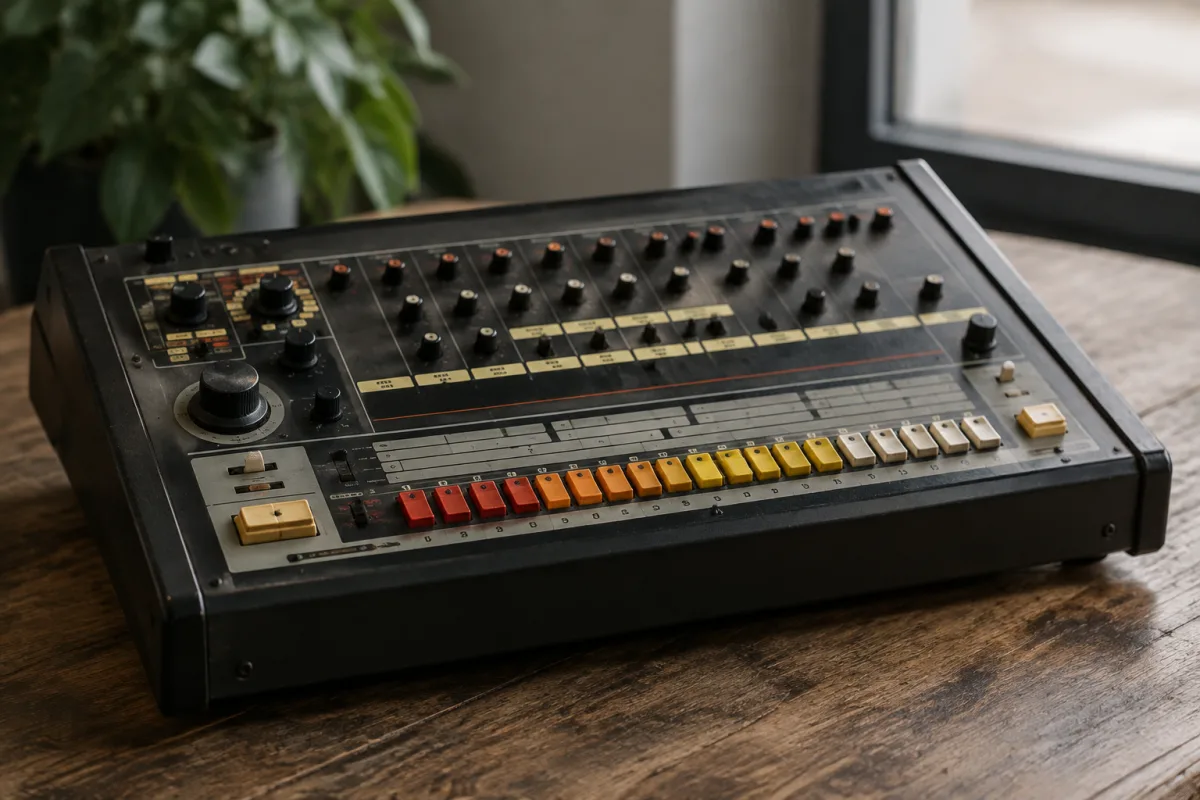
The Roland TR-808, often called the "808", stands as one of music's most influential drum machines. Originally released in 1980 as an affordable alternative to expensive studio equipment, the Roland 808 machine became essential to hip-hop, electronic music, and pop production. Its characteristic warm, punchy sounds defined the sonic aesthetic of multiple decades and continue to influence modern music production.
History and Development of the Roland 808 Machine
Introduced in 1980 by Roland, the TR-808 was designed as a budget drum machine for home and small studio use. At the time, professional drum machines cost thousands of pounds. The Roland 808 machine offered synthetic drum sounds at a fraction of the price, though its artificial tones initially puzzled musicians accustomed to real drum recordings. Early adopters recognised its creative potential, particularly in electronic and dance music.
The Roland 808 machine's iconic bass drum sound — deep, resonant, and capable of extreme pitch variation — became the backbone of electronic music. By the mid-1980s, hip-hop producers began using the Roland 808 machine extensively. Artists like Marvin Gaye, Grandmaster Flash, and countless others built careers around the machine's distinctive voice.
Technical Capabilities of the Roland 808 Machine
The Roland 808 machine provides eight drum tracks: kick drum, snare, clap, closed hi-hat, open hi-hat, tom (high), tom (mid), tom (low), and cowbell. Unlike drum machines that played pre-recorded samples, the Roland 808 machine generated each sound synthetically using analogue circuitry. This meant sounds could be manipulated in real time — the kick drum could be modulated for pitch, decay, and accent, creating infinite variations.
The Roland 808 machine also featured swing, allowing users to offset timing slightly for humanised groove. This swing capability proved crucial to making machine-generated beats feel organic. A Roland 808 machine sequence sounds instantly recognisable when played with swing applied versus straight timing.
Sound Characteristics That Define the Roland 808 Machine
The warm, analogue character distinguishes the Roland 808 machine from modern digital drum machines. The bass drum produces a sub-bass frequency that translates powerfully on dance floors and through car stereo systems. The snare offers punchy attack, the hi-hats deliver metallic character, and the toms provide melodic movement. Together, these components give the Roland 808 machine a cohesive sonic identity that modern equipment manufacturers still try to emulate.
Part of the Roland 808 machine's appeal is its limitations. The machine cannot produce endless variations — producers must work within its constraints, which paradoxically promotes creativity. The most effective Roland 808 machine beats often result from clever programming that maximises the machine's specific character rather than fighting it.
Cultural Impact and Legacy of the Roland 808 Machine
The Roland 808 machine became foundational to hip-hop's emergence. Producers like Marley Marl and Prince Paul built entire productions around its sounds. Grandmaster Flash's "The Message" featured an unmistakable Roland 808 machine kick that defined the sound of early hip-hop. By the 1990s, nearly every hip-hop beat incorporated the Roland 808 machine in some capacity.
Electronic and techno music similarly embraced the Roland 808 machine. Acid house, which emerged in the late 1980s, used Roland 808 machines as the core rhythm element. The machine's bass drum became synonymous with dance music globally. Today, the Roland 808 machine remains essential to contemporary hip-hop, electronic production, and pop music.
Original Units vs. Modern Emulations
Vintage Roland 808 machine units now command steep prices — original 1980s models often sell for £2,000 to £4,000. Collectors value them for their authentic analogue sound and historical significance. However, software emulations and modern recreations have democratised access. Roland itself released official software emulations and hardware recreations. Companies like AIRA (Roland's Analogue Integrated ReAssessment) created updated Roland 808 machine versions incorporating modern features whilst preserving the core sound.
Professional producers often use both: vintage Roland 808 machine hardware for its unmatched character in critical sessions, alongside software versions for convenience and flexibility in workflow.
Using the Roland 808 Machine in Modern Production
Contemporary producers incorporate the Roland 808 machine through hardware units, software emulations, or sample packs. Working with the Roland 808 machine teaches fundamental rhythm and production concepts. The machine's limitations force users to think creatively within boundaries, a valuable skill in music production. Many successful modern producers cite the Roland 808 machine as their first serious production tool.
Common Uses for the Roland 808 Machine
- Hip-hop and trap music foundational beats
- Electronic and techno production
- Pop music rhythm foundations
- Live performance backing tracks
- Educational tool for learning rhythm and production
- Experimental sound design projects
Conclusion
The Roland 808 machine represents a pivotal moment when affordable technology democratised music production. Originally designed as a budget alternative, the machine became foundational to multiple genres and shaped the soundscape of contemporary music. Whether through original hardware, modern recreations, or software emulations, the Roland 808 machine remains essential to music production, proof that constraints and character often matter far more than complexity or cost.


Comments