


Notion Notation Software roundup
Notion Notation Software: A Complete Buyer's Guide
Notion is a strong notation tool for the right user — Studio One composers, tablet writers and those who want quality playback included. Here is how to decide.

Buying music notation software is a decision worth taking seriously — you are likely to work with it for years, and the learning investment alone makes switching later more expensive than it seems. This guide helps you decide whether Notion notation software is the right choice for your situation, and what to consider if it is.
Who Actually Benefits from Notion?
Not every notation program suits every user. Before spending anything, be honest about your workflow. Notion is well-matched to:
- PreSonus Studio One users — the integration between the two programs is the closest in the market. If you already use Studio One, Notion is the obvious companion.
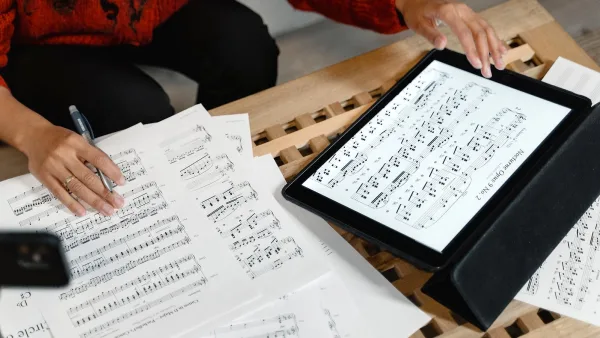
- Tablet-first composers — Notion's iOS and Android versions are among the most complete tablet notation tools available. If you want to compose on an iPad, Notion is a serious candidate.
- Those who want quality playback without a large sample library investment — Notion's built-in sounds are genuinely impressive and include orchestra samples from professional sessions.
- Educators and students who need cross-device access — cloud sync means a score started on a desktop can be continued on a tablet and vice versa.
It is a less natural fit for academic music publishing, complex critical edition work, or anyone deep in the Sibelius or Finale ecosystem who does not need to change.
Pricing and Editions
Notion is available as a one-time purchase or, depending on when you are reading this, potentially as a subscription. Mobile versions have historically had a lower entry point than the desktop application. PreSonus also occasionally bundles Notion with Studio One.
For the most accurate and current pricing, check the PreSonus website directly — software pricing changes, and no third-party guide is reliably up to date. The key question when buying is whether you need the desktop version, the mobile version, or both: the workflows differ, and if you only compose at a desk, the mobile version adds little practical value.
What You Get for Your Money
Relative to its price point, Notion notation software provides substantial value in three areas:
- Sound quality — the built-in soundset draws on professional orchestral samples, which is unusual at this price range. Most programs at similar cost use general MIDI or lesser libraries.
- Mobile depth — the iPad/Android version is significantly more fully-featured than the mobile versions of Sibelius or the MuseScore mobile app.
- DAW workflow — the Studio One bridge is genuinely seamless, which is valuable for anyone whose process involves both writing and producing.
What to Check Before Buying
Before committing to Notion, a few things are worth verifying:
- Operating system compatibility — check the system requirements match your current setup. Older versions of macOS or Windows may not be supported.
- File format interoperability — Notion supports MusicXML (the standard interchange format), which means you can open files from Sibelius, Finale or MuseScore and export to those programs. However, complex scores often do not transfer perfectly; test with a representative file if this matters.
- Feature coverage for your needs — Notion is strong for orchestral and band writing but has fewer specialised tools for early music, complex choral notation or scholarly editions. Check that it handles the specific notation you need.
Alternatives Worth Considering
If Notion does not quite fit, these are the most credible alternatives:
- MuseScore — completely free, genuinely capable, and now includes an online platform. The playback is less impressive than Notion's, and the mobile app is more limited, but for budget-conscious users it is the obvious starting point.
- Sibelius — the professional standard for music publishing. More expensive and more feature-rich. The right choice if your priority is publishing-quality output and you do not need tablet composing.
- Dorico — Steinberg's notation application, widely praised for its intelligent engraving engine. A strong alternative to Sibelius, with growing cross-device support.
To see how the software handles the basics from scratch, the beginner's guide walks through the first sessions step by step. And the complete Notion overview covers all features and how they compare.
The Bottom Line
Buy Notion notation software if you are already in the PreSonus ecosystem, want a serious notation tool on a tablet, or value expressive playback without extra investment in sound libraries. Skip it if you need the most advanced publishing tools, or if you are not sure notation software is worth paying for at all — in which case, try MuseScore first.



Comments