
Sibelius Music Notation Software article
The Complete Guide to Sibelius Music Notation Software
Sibelius music notation software has become the industry standard for professional composers and music educators worldwide. Explore its powerful features and why musicians trust it for serious scoring work.
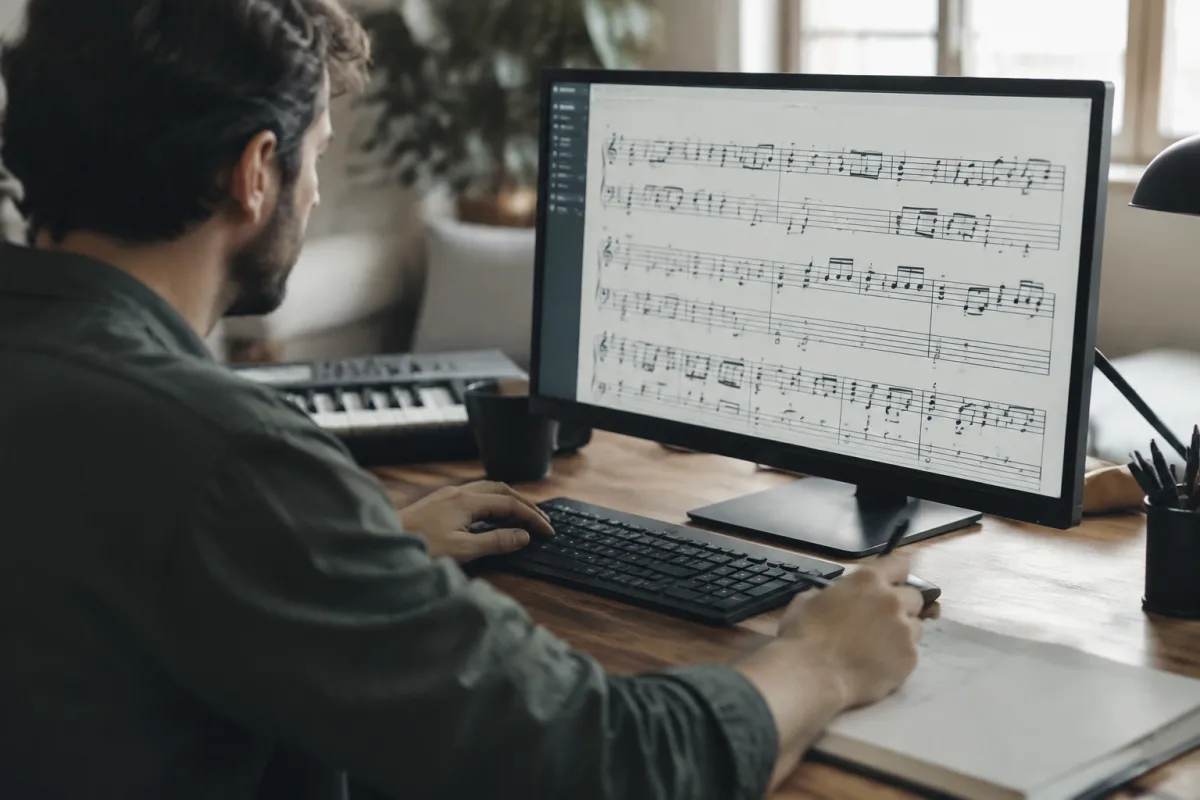
Sibelius music notation software has established itself as the industry standard for composers, arrangers, and musicians worldwide. Whether you're transcribing a jazz solo or scoring an orchestral work, Sibelius music notation software offers powerful tools designed for both beginners and professionals. Understanding what makes Sibelius music notation software the preferred choice for serious musicians will help you decide if it's right for your workflow.
What Is Sibelius Music Notation Software?
Sibelius music notation software is a professional application for writing and editing musical scores. Unlike DAWs that focus on recording and audio production, Sibelius music notation software specialises in creating readable, publication-quality sheet music. The software allows you to compose, arrange, and transcribe music using a virtual staff, then print or export your Sibelius music notation software output for performers or publication.
Owned by Steinberg, Sibelius music notation software competes in a market with other notable options, but its extensive feature set and workflow efficiency have secured it as the default choice in music schools, orchestras, and professional studios across the globe. Musicians trust Sibelius music notation software for everything from film scoring to band arrangements to educational transcriptions.
Core Features of Sibelius Music Notation Software
The power of Sibelius music notation software lies in its comprehensive toolset. When you open Sibelius music notation software, you have immediate access to:
- Flexible staff setup: Define any combination of instruments, transpose for transposing instruments automatically, and adjust key signatures and time signatures on the fly.
- Intuitive note entry: Type notes using your MIDI keyboard, mouse, or computer keyboard, with real-time playback feedback as you compose.
- Advanced layout control: Sibelius music notation software gives you precise command over page breaks, staff spacing, and text positioning for professional-looking scores.
- Playback with realistic sounds: Built-in sound library (or integration with third-party libraries via Kontakt) lets you hear your arrangement as you compose.
- Expression and dynamics: Easily add tempo markings, dynamics, articulations, and stylistic notations; Sibelius music notation software interprets these intelligently during playback.
- Text and lyrics: Add chord symbols, lyrics, technique markings, and analytical annotations directly in Sibelius music notation software.
Scoring Speed and Workflow
Professional composers value Sibelius music notation software because it accelerates the entire scoring process. Smart input modes in Sibelius music notation software anticipate your intentions: if you've been entering treble clef, it stays there; when you switch instruments, Sibelius music notation software adjusts the clef automatically. Shortcuts and custom templates in Sibelius music notation software mean that creating a new score—whether it's a solo piece or a full orchestra—takes seconds.
Arrangers love Sibelius music notation software for transposition capabilities. Need to move a passage up a major third for a different vocalist in your Sibelius music notation software arrangement? Select it, transpose, and Sibelius music notation software handles all the necessary adjustments instantly. This flexibility is what sets Sibelius music notation software apart from simpler alternatives.
Sibelius Music Notation Software vs. Competitors
Sibelius music notation software isn't alone in the notation market. Here's how it compares to leading alternatives:
| Software | Price | Learning Curve | Best For |
|---|---|---|---|
| Sibelius | Subscription (~£90/year) or perpetual license | Moderate; extensive tutorials available | Professional composers, orchestras, educators |
| Finale | Subscription or perpetual licence | Steep; deep customisation requires time | Film composers, customisation-focused users |
| MuseScore | Free (open source) | Gentle; intuitive interface | Students, amateur composers, hobbyists |
| Dorico | Subscription (~£40/month) | Moderate; modern design | Contemporary classical composers, educators |
Sound and Playback Quality
Modern Sibelius music notation software includes a respectable sample library for playback. Whilst not as detailed as a full orchestral sampling library, the included sounds suffice for checking your work and sharing sketches. Sibelius music notation software users often integrate professional-grade orchestral samples via the DAW or virtual instrument libraries (such as Native Instruments Kontakt), elevating playback to concert-hall realism when needed.
One advantage of Sibelius music notation software is that it doesn't force you to commit to a particular sound engine. Export your Sibelius music notation software score as MusicXML, import it into your favourite DAW, and add your preferred orchestral samples—workflow flexibility that many composers appreciate.
Collaboration and File Format Support
Sibelius music notation software supports MusicXML export, the industry-standard format for sharing scores between different applications. A score created in Sibelius music notation software can be opened in Finale, Dorico, or web-based tools, ensuring compatibility. Similarly, if you receive a MusicXML file from a collaborator, Sibelius music notation software imports it reliably.
Cloud collaboration features in modern Sibelius music notation software (through Steinberg's cloud services) allow multiple users to comment on and review scores remotely, streamlining the feedback loop between composer and arranger or teacher and student.
Educational Advantages
Music schools favour Sibelius music notation software for teaching music theory, composition, and arrangement. The visual, hands-on approach of Sibelius music notation software helps students understand voicing, voice leading, and orchestration concepts. Many institutions provide site licences, making Sibelius music notation software accessible in lab and classroom settings. The intuitive interface of Sibelius music notation software means students focus on musical thinking rather than wrestling with software.
Getting Started with Sibelius Music Notation Software
If you're new to Sibelius music notation software, Steinberg provides extensive tutorials, and the community has built a wealth of online resources. You can try Sibelius music notation software through a free trial to see if the workflow suits you. Given the steep learning curve of professional notation software generally, Sibelius music notation software's documentation and support community make it an approachable choice for newcomers.
Conclusion
Sibelius music notation software remains the go-to choice for serious musicians and institutions requiring professional-grade score writing. The combination of powerful features, intuitive workflow, and industry-standard file format support makes Sibelius music notation software invaluable for composers, arrangers, orchestras, and educators. Whether you're writing a film score, arranging for your band, or teaching music theory, Sibelius music notation software delivers the precision and flexibility needed to realise your musical ideas. Its maturity, extensive community support, and proven track record across professional and educational settings ensure that Sibelius music notation software remains the notation software of choice for countless musicians worldwide.


Comments