


Music Theory App article
Music Theory App for Beginners: A Complete Guide
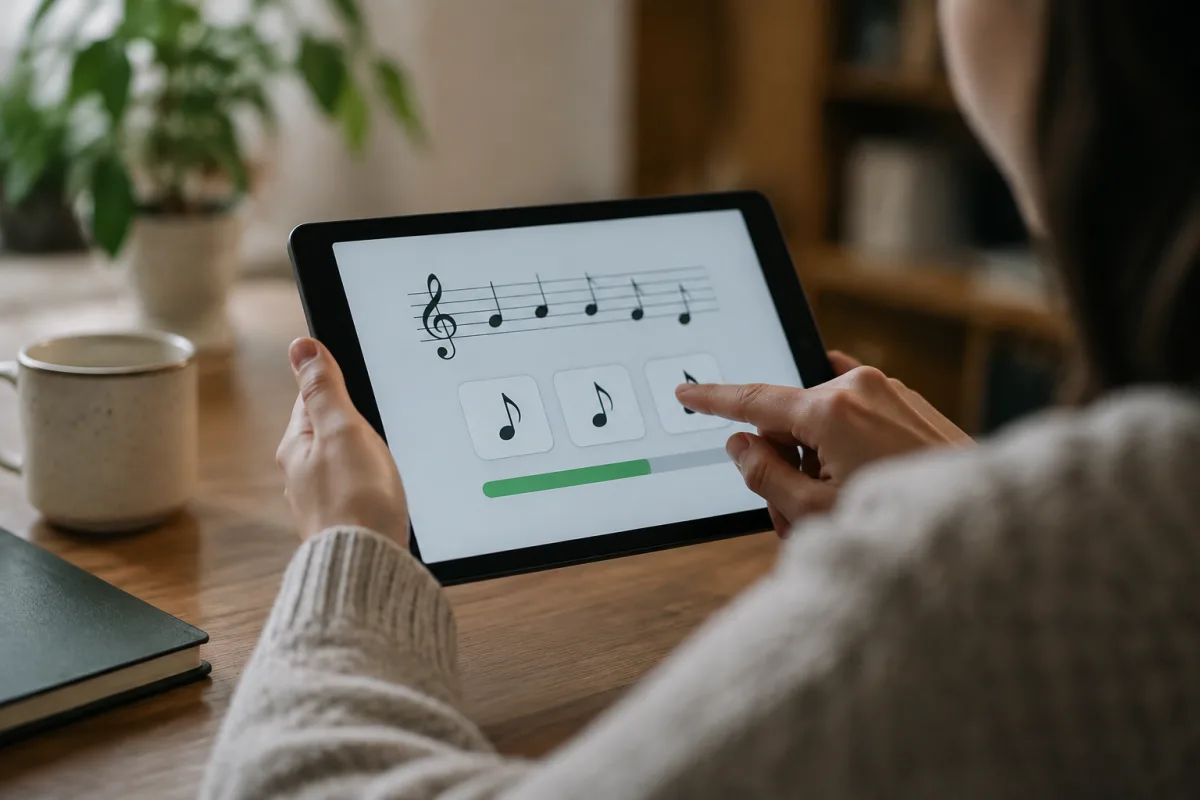
Music theory might sound intimidating, but learning with a music theory app transforms it into something achievable and even enjoyable. Whether you play guitar, piano, or sing, understanding how music works will accelerate your progress dramatically. A music theory app removes the barrier that used to exist—expensive lessons and dense textbooks—giving you a friendly, interactive pathway into foundational concepts. This guide walks you through starting your music theory journey with an app, demystifying what to expect and helping you avoid the frustrations that derail most beginners.
Why Start with a Music Theory App?
Before diving into technical steps, it's worth understanding why a music theory app is such an effective learning tool for beginners. Traditional learning—sitting through lectures or reading music notation textbooks—works for some, but most people learn better through interaction, immediate feedback, and bite-sized lessons. A music theory app delivers all three. You learn at your own pace, practice concepts repeatedly until they stick, and get instant feedback on whether you've understood something correctly.
For more detailed exploration of different apps and how they compare, see our comprehensive guide to music theory apps, which covers the full range of options available.
Choosing Your First Music Theory App
The most important decision for a beginner is choosing the right app to start with. Not all music theory apps are created equal, and picking the wrong one leads many people to quit before they've really begun. Here's what to look for:
| Feature to Prioritise | Why It Matters for Beginners |
|---|---|
| Beginner-Friendly Start | Your music theory app should assume zero knowledge and not throw advanced concepts at you immediately. |
| Clear Explanations | Look for an app that explains concepts in plain English, not jargon-heavy language designed for experts. |
| Interactive Exercises | Your music theory app must include practice exercises you interact with directly—passive learning doesn't build skill. |
| Audio Playback | A music theory app that plays sounds whilst teaching notation helps your ear and brain connect concepts. |
| Sensible Progression | The best music theory app builds skills logically—master the basics before moving to complex ideas. |
| Free Trial Period | Always try a music theory app before paying. What suits one person won't work for another. |
Your First Week: Building the Foundation
Once you've chosen your music theory app, the first week will probably cover four fundamental concepts. Don't rush. Spend 15–30 minutes per day with your music theory app, focusing on one concept until it feels solid before moving on.
- The Musical Alphabet. Your music theory app will introduce the seven letter names—A, B, C, D, E, F, G—which repeat infinitely on any instrument. This is the absolute foundation. Practise until you can name notes instantly.
- The Staff and Clef. A music theory app will show you how notes are positioned on a staff. Treble clef is most common for singing and high instruments. Spend a few days recognising notes on a staff through your app's exercises.
- Rhythm Basics. Your music theory app will introduce whole notes, half notes, quarters, and eighths—basically how long each note sounds. This takes time to internalise; don't skip practice.
- Major Scales. Once your music theory app has covered the basics, it'll introduce scales—sequences of notes that form the building blocks of melodies. C major is often the starting point because it has no accidentals (sharps or flats).
Building Practical Habits with Your Music Theory App
Success with a music theory app depends on consistency more than intensity. Practising 20 minutes daily beats cramming two hours once a week. Set a specific time each day—perhaps whilst having morning coffee or immediately after work—when you open your music theory app. This habit removes the "should I practice?" decision each day and builds genuine progress.
Also, here's a key insight: keep your instrument nearby whilst using your music theory app. When you learn about a C major scale in your app, play it on your instrument immediately. This connection—seeing it on the app, hearing it, and playing it—is where true learning happens. Many beginners miss this step and end up with app-based knowledge that doesn't translate to actual playing.
Common Beginner Mistakes to Avoid
Learning with a music theory app is generally straightforward, but certain habits will slow your progress or discourage you:
- Trying to absorb everything at once. A music theory app is designed to release concepts gradually. Honour that pacing. Rushing doesn't help; it creates confusion.
- Skipping the audio playback. When your music theory app offers to play sounds, listen actively. Your ear learns theory faster than your eyes alone.
- Not practising on your instrument. App-based theory without playing is hollow learning. Your music theory app is a supplement, not a replacement for instrument practice.
- Comparing your progress to others. Everyone's learning curve is different. Use your music theory app at your own pace and celebrate your own improvements.
- Ignoring reviews and ratings. Before committing to a music theory app, read reviews from other beginners. Real user feedback saves you time and frustration.
- Expecting instant understanding. Some concepts take weeks to cement. Your music theory app will revisit ideas repeatedly; that repetition is the mechanism of learning, not a sign you've failed.
Progressing Beyond the Basics
After a month of consistent use, your music theory app will likely introduce intervals, chords, and more complex rhythms. Don't panic. At this stage, you're building on genuine foundations you've already laid. Your music theory app will feel progressively more rewarding as concepts connect and make sense. You'll start recognizing chord progressions in songs you hear, and suddenly music sounds different—more structured, more intentional.
When to Move Beyond Your Music Theory App
A music theory app is an exceptional beginning, but it's not the whole story. After three to six months of consistent work, you'll likely want a music theory app that dives deeper, or perhaps add a teacher for certain topics. That's progress—it means your app has done its job: creating a foundation solid enough to build on. Consider your music theory app a gateway, not the destination.
Embrace the Learning Journey
Starting with a music theory app is genuinely one of the most accessible ways to understand how music works. You're removing barriers that existed for previous generations—no expensive lessons needed, no sitting in quiet rooms with intimidating instructors. Instead, you have an interactive guide available whenever you want to learn. Be patient with yourself, practise consistently, and connect what your music theory app teaches to your instrument. Within weeks, you'll be surprised at how much you understand. Good luck with your theory journey.


Comments