
Softwares for Making Music article
The Complete Guide to Softwares For Making Music
Modern softwares for making music democratise music production, enabling bedroom producers to create professional quality recordings. Discover options suiting your budget and creative needs.
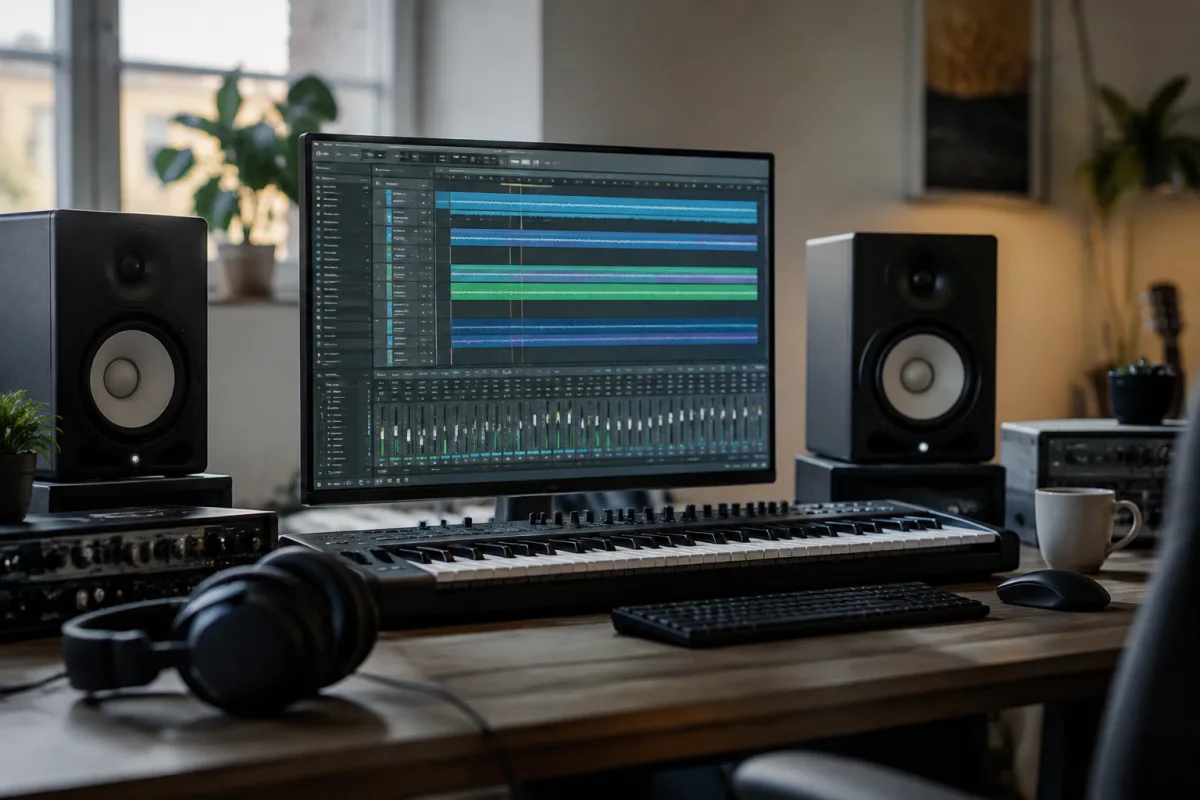
Modern softwares for making music democratise music production, enabling bedroom producers to create professional-quality recordings previously requiring expensive studios. Whether you're composing orchestral arrangements, producing electronic dance music or recording a rock band, selecting appropriate softwares for making music is the crucial first step. Understanding softwares for making music helps you find options matching your creative vision and budget.
Understanding DAWs and Production Software
DAWs (Digital Audio Workstations) form the foundation of modern music production. These softwares for making music handle recording, editing, mixing and mastering tasks within unified interfaces. Production software for making music ranges from free open-source options to professional suites costing thousands of pounds, with corresponding capability differences.
Quality options provide unlimited audio tracks, MIDI sequencing for instrument control, built-in effects processors and mixing tools. Premium systems add advanced sound design capabilities, sophisticated workflow automation and industry-standard plugin compatibility ensuring your creative possibilities remain endless.
Popular Softwares for Making Music
Ableton Live represents a favourite amongst electronic and hip-hop producers. Its session view enables non-linear composition ideal for live performance and experimentation. Among softwares for making music, options like Ableton excel at electronic music production whilst remaining capable for recording acoustic instruments.
Logic Pro appeals to Mac users and singer-songwriters. Apple's bundle includes comprehensive virtual instruments and effects, making Logic excellent value for macOS users. Reaper offers remarkable flexibility at modest price—many professional studios employ Reaper despite advanced users often preferring pricier alternatives.
Studio One, from PreSonus, delivers modern workflow design. Such tools emphasise intuitive interface design and seamless MIDI-to-audio workflow. FL Studio attracts producers seeking pattern-based composition approaches—its environment encourages rapid beat creation.
Softwares for Making Music: Budget Considerations
Free options like GarageBand and Cakewalk by BandLab offer surprising capabilities for hobbyists. These softwares for making music lack advanced features but provide excellent starting points for beginners. Budget-conscious creators can produce remarkable results with free softwares for making music.
Mid-range softwares for making music (£100–£400) offer substantially expanded capabilities. Affordable tools at this price point include comprehensive virtual instruments and effects enabling professional-quality production. Most independent musicians utilise these options in this bracket.
Professional systems (£500+) target recording studios and serious producers. Premium softwares for making music justify higher costs through superior sound quality, extensive plugin libraries and advanced workflow features. However, talented producers create phenomenal results with affordable options, proving that creativity matters more than expense.
Essential Features in Production Software
Look for tools offering unlimited audio and MIDI tracks—this prevents creative frustration when projects grow complex. Professional options provide high-resolution recording (up to 32-bit/192kHz) ensuring pristine audio quality. Built-in mixing capabilities through virtual faders and automation empower you to craft polished mixes without external hardware.
Quality systems include comprehensive virtual instrument libraries. Pianos, strings, drums and synthesizers enable complete musical production without purchasing additional plugins. These tools expand possibilities through plugin architecture supporting thousands of third-party instruments and effects.
Recording Acoustic Instruments
These systems excel at recording live instruments through audio interfaces connecting microphones and instruments. Low-latency operation prevents delay between input and playback—essential for comfortable recording. Premium options minimise latency through optimised processing and driver support.
Editing tools in modern production software for making music enable correcting timing issues, tuning imperfections and noise in recordings. Time-stretching capabilities allow adjusting tempo without changing pitch. They make polishing recorded performances straightforward without sounding artificial.
MIDI Production Capabilities
Production tools provide comprehensive MIDI editing for programming virtual instruments. Piano roll interfaces facilitate precise note entry and timing adjustment. Quantisation tools automatically correct timing imperfections. Professional systems offer sophisticated capabilities like humanisation adjusting programming to sound more natural.
Pattern sequencing in options like FL Studio and Ableton enables rapid beat creation. These tools excel at electronic music where step sequencing aligns with creative workflow. Traditional DAWs offer different approaches optimised for acoustic recording.
Mixing and Mastering in Production Software
Quality options provide virtual mixing consoles with professional tools. EQ processors shape tonal character. Compression dynamics control. These systems include reverb and delay effects creating spaciousness and depth. Professional tools match dedicated mixing consoles through metering and workflow sophistication.
Mastering tools enable creating commercial-quality masters. Metering and analysis tools ensure proper loudness and frequency balance. Whilst mastering traditionally required specialised gear, modern production software provides sufficient control for excellent results. Many independent artists successfully release music mastered entirely within such systems.
Choosing Your First Software
Consider musical genre when selecting tools for production. Electronic and hip-hop producers often prefer Ableton or FL Studio. Singer-songwriters and acoustic producers frequently choose Logic or Studio One. Rock and general recording favours Pro Tools or Reaper. Most systems handle any genre, so personal preference and workflow compatibility matter most.
Download trial versions before purchasing. Extended trials let you evaluate workflow comfort. Community forums provide insight into different options' strengths and limitations. Your choice shapes daily creative experience, making compatibility crucial to success.
Conclusion
Quality production software transforms your computer into a complete recording studio capable of professional results. Whether you choose free, affordable or premium options, the most important factor is selecting tools inspiring your creativity. Start exploring today—many excellent systems offer extended trials enabling risk-free evaluation. Your musical ideas deserve appropriate tools bringing them to life.


Comments