


Music Production Machine article
Music Production Machine for Beginners: A Complete Guide
Starting your first music production machine can feel overwhelming, but it needn't be. This guide strips away the jargon and walks you through your first session.
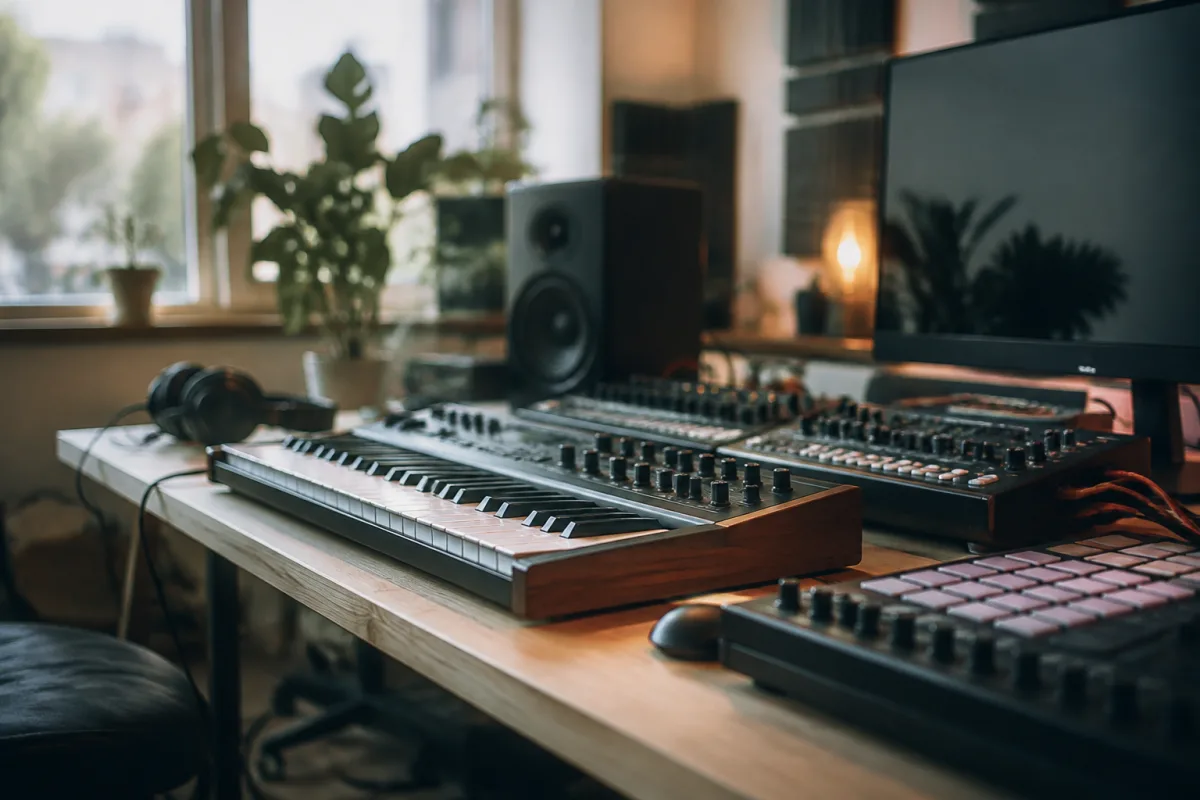
Starting your first music production machine can feel daunting, but it needn't be. Whether you're drawn to beat-making, sampling, or composing electronic music, a production machine is one of the most rewarding tools you'll own. This guide strips away the jargon and walks you through what you actually need to know to get your first machine working and making music within your first session.
What is a Music Production Machine, Really?
Before diving into buttons and menus, let's get clear on what you're actually holding. A music production machine is a self-contained device — no computer needed — that lets you create music from scratch. Think of it as combining a synthesiser, a drum machine, a sequencer, and a sampler all in one box. Some machines specialise in beats; others excel at loops and sampling; a few do everything. The beauty is that once you plug it in, you can start making music immediately.
The key thing to understand: these are *creative tools first*, not just playback devices. You're not just pressing play on preset patterns — you're building your own music, step by step.
Start Simple: The Easiest First Steps
When you unbox your music production machine, don't panic at the grid of buttons. Most machines ship with a "tutorial" or "quickstart" mode built into their software. Your first job is to:
- Read the first 20 pages of the manual — not all 200. You need to know how to power it on, navigate menus, and hear sound coming out.
- Load one of the factory presets or demo patterns. Press play. Listen.
- Find the buttons that control tempo (speed) and volume. These are your friends. Adjust them and hear how the music changes.
- Locate the sequencer — the grid where you'll add sounds. Tap a square on the grid and hear a drum hit. Tap more squares. Congratulations, you've just made your first beat fragment.
That's all you need for day one. Seriously. Spend an evening just playing with the preset sounds and twiddling with the tempo. Muscle memory comes fast.
Getting Sound Out (The Nerve-Wracking Bit)
One thing that worries beginners: "Will it actually make noise?" Yes, it will. Here's the straightforward path:
- Plug the headphone jack from your music production machine into a pair of headphones or powered speakers.
- Turn the volume knob on the machine itself to a low setting (roughly the 9 o'clock position).
- Power on. If it shipped with battery-powered speakers or a built-in speaker, sound appears immediately.
- Load a preset pattern. Press play. You should hear drums, synth notes, or both.
If you hear nothing, check: is the volume on the machine turned all the way down? Is your headphone jack properly seated? If both look fine, hold down the power button and restart. Audio always comes through, though the first-timer usually just needs to turn the volume knob up.
The Three Sections You Need to Know
Every music production machine has three layers of control, though they're called different names depending on the brand:
The Sequencer (the Grid)
This is the most visual part — a grid of buttons or pads, often arranged in a 4×4 or 8×8 pattern. You tap the pads to trigger sounds. Each pad is one "step" in a musical pattern. Tap a pad, hear a drum hit (or a note). Tap multiple pads in a rhythmic pattern, and you've written a drum loop. The sequencer is where the magic happens.
The Synth / Sound Controls
Next to (or layered with) the sequencer are knobs and buttons that shape the sounds themselves. Don't overthink these yet — you don't need to know what "filter resonance" means on day one. Instead, just turn a knob while playing a sound and hear it change: brighter, darker, shorter, longer. Knobs are your playground. There's no wrong turn.
The Menu / Settings
Your machine has a screen or display and a handful of menu buttons. This is where you save your work, change the tempo (BPM), and access factory presets. Learn the basics now: how to navigate up and down in a menu, how to select something, and how to back out if you get lost. After that, you'll pick up the rest as you go.
First Session Goals: Keep It Tiny
You won't record a hit single in your first hour, and that's fine. Here's a realistic first session:
- Make a 4-step drum loop using the grid. Doesn't have to be complex — kick on beat 1, snare on beat 3. Done.
- Find the button that adds a synth or melodic layer. Play a few notes on top.
- Adjust the tempo to something you like (80 BPM? 120 BPM? Your call).
- Press play and listen to your creation.
- Save it with a name. Even "Session 1" or "First Beat" counts.
That is a *complete* first session. You've started, made music, and saved your work. Celebrate that. The learning curve accelerates fast from there.
Four Common Beginner Mistakes to Avoid
Thousands of people have sat down with their first music production machine. Here's what tends to trip them up:
Mistake 1: Ignoring the Volume Knob
The biggest cause of silent machines isn't broken audio — it's the master volume turned all the way down. If you hear nothing, turn it up first. Always.
Mistake 2: Expecting Instant Brilliance
Your first beat will not be a masterpiece, and that's normal. Every producer's first pattern is rough. The point is to *start*. Refinement comes after you've made ten beats, not after one. Don't judge your work; just keep making.
Mistake 3: Trying to Master the Menu Before the Music
There are often dozens of menus nested three levels deep. Your music production machine *can* be complex. But you don't need that complexity yet. Stick with the sequencer and the top-level sound knobs for your first month. The menus will still be there when you're ready.
Mistake 4: Not Saving Your Work
Most beginners eventually create a pattern they're pleased with, only to lose it because they didn't save before powering off. Some machines have auto-save, but don't rely on it. After any session you want to keep, find the save button and save. Give it a name you'll remember.
The Beginner's Toolkit: What Else You Might Need
Your music production machine is mostly self-contained, but a few small additions make life easier:
- Headphones or powered speakers: You already have these if you have audio coming out.
- A USB cable: Many machines let you back up your patterns to a computer or load additional sounds. This is optional for now.
- A stand or table: Your production machine deserves a stable home where you can reach all the buttons without straining. Even a music stand with a tray works.
- Batteries or power supply: Check what your machine ships with. Some are battery-powered for portability; others need mains power. Neither is better — just know which is yours.
Learning the Hard Way (and Why That's OK)
The best teachers you'll have are your own ears and a willingness to press random buttons and see what happens. Yes, you might accidentally delete something. Yes, you might trigger a sound you've never heard before and not know how you did it. That's how everyone learns.
After your first week, you'll navigate your machine's sequencer with your eyes closed. After your first month, you'll have made dozens of patterns — some terrible, some surprisingly good. After three months, you'll realise you've stopped thinking about the buttons and you're just thinking about music.
The patience you need is small. The reward is creative freedom, a skill that lasts a lifetime, and a growing library of patterns and beats that are genuinely yours.
Next Steps: Go Deeper When You're Ready
Once you've finished a few sessions and you're comfortable with the sequencer, you can gradually explore deeper features: sampling (recording your own sounds), complex synth programming, working with effects, exporting your tracks. But all of that sits on the foundation you're building right now — just making a simple beat and listening to it play back.
For now, your only job is to plug in, press play, and enjoy the process. The complexity will reveal itself when you need it. Music production machines are designed to be approachable; they reward curiosity and persistence. You're already doing both.
If you want to go deeper into the fundamentals and explore the full range of a music production machine, do check out the complete guide to music production machines, which covers the full landscape of what these devices can do.


Comments