


Ardour DAW article
Ardour Daw Free Download: A Complete Guide
Ardour is a professional-grade, open-source digital audio workstation that rivals commercial offerings like Pro Tools — yet costs nothing and respects your privacy. If you're recording, mixing, or arranging music, Ardour delivers the tools professionals depend on.
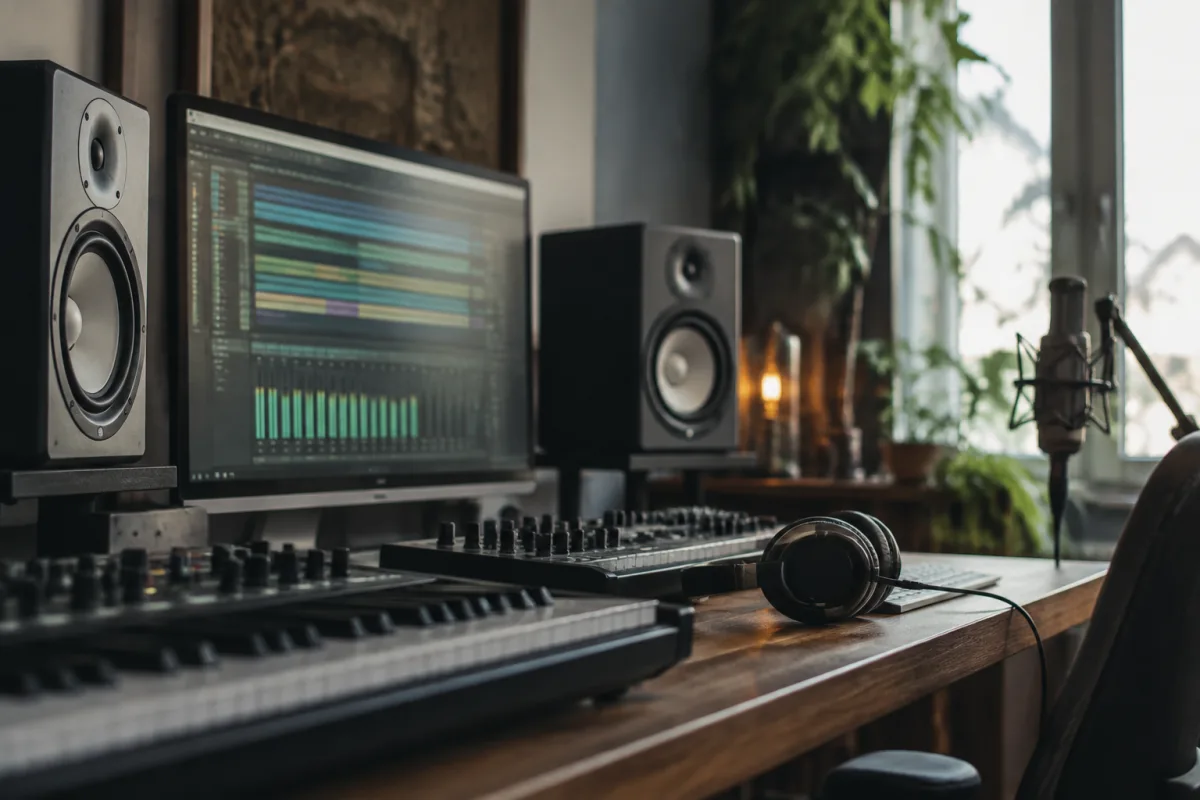
Ardour is a professional-grade, open-source digital audio workstation (DAW) that rivals commercial offerings like Pro Tools and Logic Pro — yet costs nothing and respects your privacy. If you're recording, mixing, or arranging music and want full control without licensing fees or vendor lock-in, Ardour DAW delivers the tools professionals depend on.
What makes Ardour DAW special
Ardour stands apart from free DAWs because Ardour DAW is genuinely professional software. It wasn't built as a "lite" version or hobby tool — it's the result of decades of audio engineering expertise, designed from the ground up for serious music production. Many commercial studios use Ardour alongside (or instead of) pricier alternatives.
The core appeal is freedom. You own your work completely; there's no forced cloud storage, no subscription, no licence key that expires. The source code is publicly available, so if you're technically skilled, you can modify and rebuild it yourself.
Core recording and editing features
Ardour DAW handles both audio and MIDI with professional precision. You can record multiple tracks simultaneously, edit audio non-destructively, and arrange everything on an unlimited timeline. The editing tools in Ardour feel familiar if you've used Pro Tools or Cubase, but they're more flexible.
Key strengths include:
- Non-destructive editing — trim, slip and crossfade audio without affecting the original files
- Unlimited tracks — limited only by your computer's RAM and CPU
- Flexible routing — send audio and MIDI anywhere within your session
- Time stretching and pitch shifting — built-in, with high-quality algorithms
- Powerful audio editing — spectral editing, nudge, quantise and much more
- MIDI editing — arrange, draw and edit notes with a familiar piano roll interface
Ardour also supports video — import a film and mix to picture, then export your audio and video together. That's invaluable for podcasters, video editors and film composers.
Mixing and plugins in Ardour
The mixing engine in Ardour DAW is genuinely professional. You get a full mixing console with faders, panning, mute and solo buttons arranged exactly as you'd expect. Automation is easy to set up in Ardour: draw or record changes to volume, pan, plugin parameters — anything, really — across any track.
Plugin support is comprehensive. Ardour recognises LV2 plugins (the open-source standard) natively, plus VST and AU plugins on macOS. That means you can use thousands of free and commercial instruments and effects from other developers. Popular choices include ToneLib, Calf Studio Gear (free and open-source), and commercial offerings like FabFilter and Native Instruments.
If you don't own many plugins, you're not stuck. Ardour DAW comes with a basic set of built-in processors: equalisers, compressors, reverbs, delays and saturation. They're clean, reliable and good enough for professional work.
Connectivity and workflow
Ardour plays nicely with external hardware. It supports MIDI controllers, audio interfaces and synchronisation via MIDI clock or Timecode. If you're integrating with a hardware setup — a synthesiser, drum machine, mixing desk — Ardour DAW will fit in seamlessly.
The session format is open and portable. Ardour stores sessions as readable XML files, so if you ever need to migrate elsewhere using Ardour, you're not locked in. You can also export in every major format: WAV, AIFF, FLAC, OggVorbis, even MP3.
Installation and getting started with Ardour DAW
Ardour runs on Linux, macOS and Windows. For the most recent builds, you download Ardour from the official website — a simple installer that handles most of the setup. If you're on Linux and prefer your package manager, Ardour DAW is available in most distributions, though the version may lag behind the latest Ardour release.
The learning curve is gentler than it appears. The interface is logical: transport controls at the top, arrange window in the middle, mixer on the right. If you've opened any other DAW, you'll recognise the layout. The official Ardour manual is thorough and free.
Performance and stability
Ardour DAW is lean and efficient. Ardour runs happily on modest hardware — older laptops, entry-level interfaces — without the bloat of some commercial DAWs. On newer machines with decent CPU and RAM, you can handle large, complex sessions in Ardour without stuttering.
Stability of Ardour is excellent. Crashes are rare, and the Ardour developers take bug reports seriously. Sessions don't corrupt unexpectedly, and auto-save keeps you safe if the worst happens.
The open-source advantage
Because Ardour is open-source, it evolves on community and user feedback. If you find a bug, you can report it directly to the developers. If you're a programmer, you can contribute fixes or features yourself. That collaborative model has delivered consistent improvements over two decades.
It also means transparency. You're not wondering what telemetry is being collected or whether your sessions are uploaded anywhere. The code is public; there are no hidden agendas.
Limitations to know
Ardour isn't perfect for every use case. If your workflow depends on a particular commercial plugin ecosystem — say, Pro Tools's AAX plugins — you'll need to compromise. The built-in virtual instruments are basic, so if you rely heavily on software synthesis, you'll want to invest in third-party VST instruments.
Ardour's notation features are minimal compared to specialist DAWs like Finale or Sibelius, so if you're writing orchestral scores, a dedicated notation program is still the right tool.
Value and cost
Ardour is free to download and use indefinitely. The developers also sell reasonably priced binaries (for convenience) and accept donations. Many studios and professionals support the project financially because they value it and want to ensure its future. That voluntary model has kept Ardour solvent for decades without compromising its independence.
Who should use Ardour
Ardour is ideal if you're recording music, podcasts, or audiobooks; mixing albums or film soundtracks; arranging MIDI compositions; or building a home studio on a tight budget. It's equally at home in professional facilities and bedroom studios because the tool itself doesn't constrain your ambition.
Whether you're a singer-songwriter recording your first EP, a seasoned producer mixing an album, or an engineer delivering a film score, Ardour has the features and reliability to do the job. And because it costs nothing and respects your data, you have nothing to lose by trying it.



Comments