
1984 Christmas Number 1 article
The Complete Guide to 1984 Christmas Number 1
Band Aid's 'Do They Know It's Christmas?' was the 1984 Christmas number 1, becoming one of the most significant charity singles ever made. Discover its cultural impact.
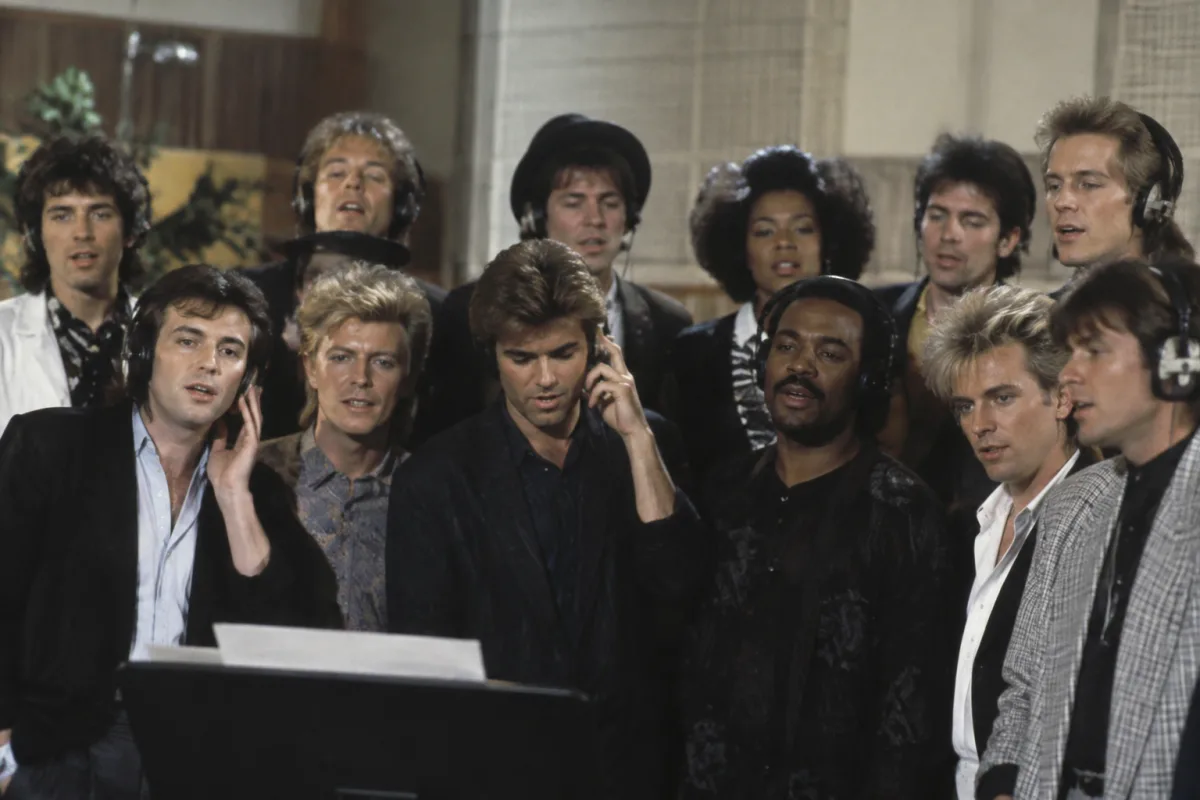
The 1984 Christmas number 1 tells a fascinating story about British pop music, cultural moments and the power of a song released at precisely the right moment. When Band Aid released "Do They Know It's Christmas?" that December, the track became far more than just a festive novelty – it became the defining record of the season and one of the most culturally significant charity singles ever made.
Understanding the 1984 Christmas number 1 means understanding why a supergroup charity project could dominate the charts so completely, what made the song resonate with listeners, and how it launched a fundraising phenomenon that would echo through decades of music history.
Band Aid and the Context of 1984
By late 1984, news reports of famine in Ethiopia were reaching British and Irish audiences with increasing urgency. The humanitarian crisis was acute and the media coverage was raw and confronting. Bob Geldof and Midge Ure of Thin Lizzy and Ultravox respectively saw a musical response as both a moral imperative and a creative opportunity. They assembled a constellation of British and Irish pop stars under the name Band Aid to record a single specifically to raise funds for famine relief.
The timing was crucial. Christmas shopping was in full swing, radio stations were playing seasonal music, and the project tapped into genuine public concern for the crisis. The combination of star power, topical urgency and festive season release made "Do They Know It's Christmas?" impossible to ignore.
The Song and Its Impact
Released on 3 December 1984, "Do They Know It's Christmas?" moved swiftly to the top of the UK charts and held the number 1 position through the Christmas week, securing it as the 1984 Christmas number 1. The single featured Phil Collins on drums, Sting, George Michael, Bono, Freddie Mercury, and numerous other major artists of the moment. The novelty of hearing so many recognisable voices on a single record was itself part of its appeal.
The song's lyrics – particularly the line "Feed the world" and references to Africa – became instantly iconic. It was perceived as sincere and purposeful rather than cynical or exploitative, which resonated with audiences. The fact that all proceeds went to the Save the Children Fund's Ethiopian famine relief efforts added weight to the gesture.
Chart Dominance and Cultural Moment
What made the 1984 Christmas number 1 especially significant was its commercial dominance. "Do They Know It's Christmas?" didn't just win the Christmas number 1 slot – it won it decisively, outselling its nearest competitor by a comfortable margin. It became one of the best-selling singles of all time and continues to chart during the Christmas period decades later.
The single raised millions of pounds for famine relief, validating the charitable intent and proving that pop music could mobilise both money and public attention for humanitarian causes. The success spawned Live Aid in 1985, extending the concept into a full-scale benefit concert, demonstrating how the momentum from the 1984 Christmas number 1 created something much larger.
The Sound and Production
Musically, "Do They Know It's Christmas?" is a fairly straightforward pop song – accessible, memorable and designed to appeal to the widest possible audience. The production quality is polished but not ostentatious. The vocal arrangements layer different voices across the track, each artist recognisable but integrated into the overall sound. This approach made it both a successful pop record and an effective charity single – commercially viable but clearly purposeful.
The song's structure and melodic simplicity helped it chart globally. It performed strongly across Europe and reached the top 10 in multiple countries, making it a genuinely international charitable statement at a time when global pop charts were less interconnected than they are today.
The Artists Involved
Part of the 1984 Christmas number 1's appeal was the who's-who roster of British and Irish pop luminaries. Duran Duran's John Taylor, Culture Club's Boy George, Wham!'s Andrew Ridgeley, Frankie Goes to Hollywood's Holly Johnson, Phil Collins as mentioned, and many others contributed. The guest list became almost as much a topic of discussion as the music itself – people tuned in to hear their favourite artists, spot who was singing which section, and appreciate the unlikely collaborations.
For some artists, it was their only appearance on a number 1 Christmas single. For others, particularly Bono and Freddie Mercury, it remains one of their most widely-heard recordings simply because it plays on radio every Christmas season.
Legacy and Ongoing Impact
The 1984 Christmas number 1 established a template that persists today – the concept of a star-studded charity single released for Christmas is now a regular occurrence. However, "Do They Know It's Christmas?" remains the original and, in the eyes of many, the definitive example of the format. Its combination of genuine charitable purpose, musical credibility and commercial success has never been quite matched.
The single re-charted during subsequent Christmas seasons and continues to sell throughout December every year. When the BBC counts down the greatest British pop singles, "Do They Know It's Christmas?" regularly appears in top rankings, usually higher than the initial chart position might suggest, reflecting its cultural impact beyond mere chart success.
The Wider Context
1984 was an interesting year in pop music. Prince, Madonna and Michael Jackson were at the height of their commercial powers. Synthesizer-based pop dominated the UK charts. Indie rock was emerging but hadn't yet disrupted mainstream pop's dominance. The 1984 Christmas number 1 captured that moment – it was a pop record in the truest sense, designed to please the broadest audience whilst serving a charitable cause. That balance between popularity and purpose is ultimately what made it so successful.
The 1984 Christmas number 1 remains a touchstone moment in British pop history, a reminder that popular music can engage with real-world events without sacrificing commercial appeal or artistic credibility.


Comments