
Recording Studio Gear article
The Complete Guide to Recording Studio Gear
Professional recording studio gear need not be expensive. This guide covers essential equipment, how to build incrementally, and what genuinely improves recording quality.
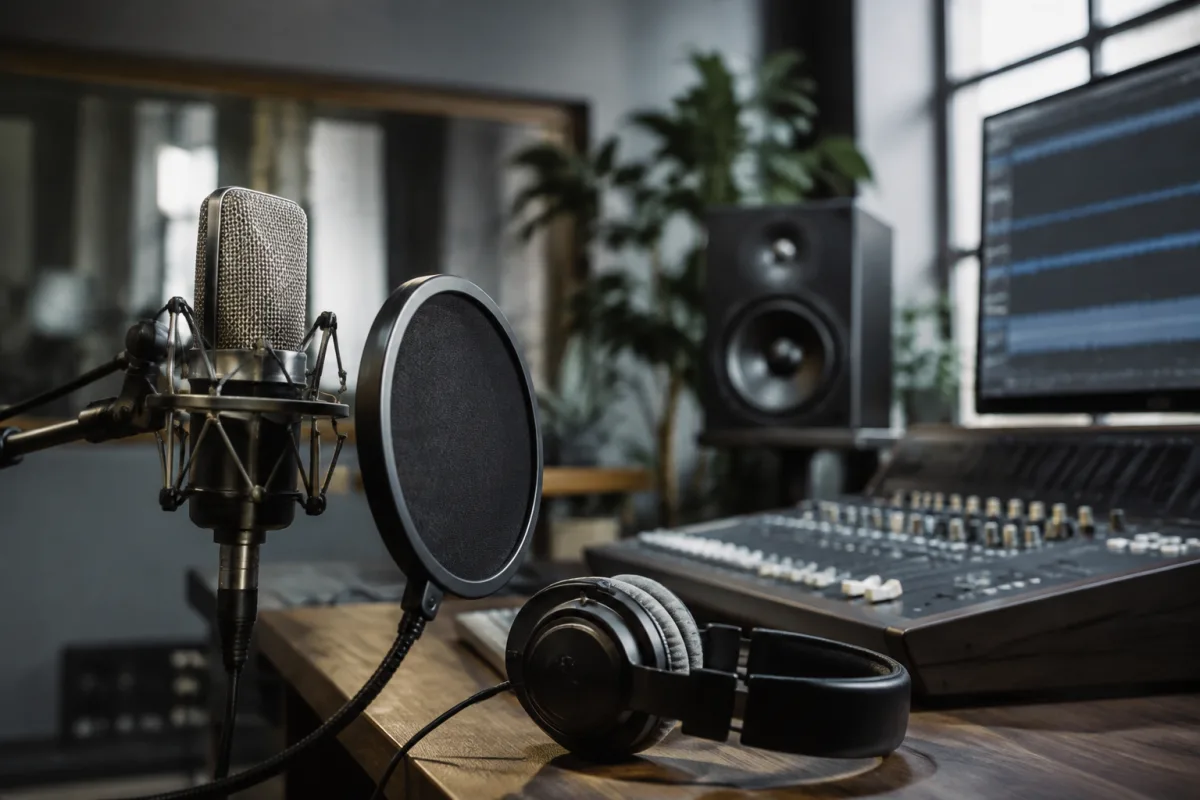
Professional recording studio gear represents a significant investment, yet many aspiring musicians feel overwhelmed by the array of equipment options and competing technologies. Building an effective home studio requires understanding which tools are genuinely essential and which are supplementary. This guide clarifies the core recording studio gear every serious musician needs, helping you make informed purchasing decisions that will serve your creative ambitions.
The Essential Recording Studio Setup
A functional recording studio requires only a few core components: a computer, audio interface, microphone, headphones, and monitor speakers. Beyond these essentials, additional recording studio gear expands capabilities but is not strictly necessary for producing quality recordings. Many professional albums originate from minimal setups; expensive equipment amplifies capability but does not guarantee good results.
Focus initially on quality fundamentals rather than accumulating equipment. A solid microphone and interface matter far more than owning ten mediocre pieces of gear. Upgrade gradually as your skills and budget allow.
Audio Interfaces and Converters
An audio interface is the bridge between your instruments and computer, converting analogue signals into digital data and vice versa. This is non-negotiable recording studio gear. Budget interfaces (£50–150) handle basic recording adequately. Mid-range options (£150–500) offer better preamps, lower noise, and multiple input/output combinations. Professional interfaces (£500–2,000+) deliver pristine audio quality and extensive connectivity.
Key specifications matter: preamp quality, signal-to-noise ratio, latency, and I/O options. Professional interfaces often feature superior preamps that capture subtle details of acoustic instruments better than budget alternatives. Latency—the delay between playing and hearing yourself—significantly affects recording experience; professional units minimise this.
Microphones and Microphone Techniques
Microphone choice fundamentally affects recording quality. Large-diaphragm condenser microphones, the standard for professional recording studios, cost £100–500 for quality options. Budget condensers sound surprisingly good; investment in boutique or vintage microphones appeals mainly to professionals with specific sonic preferences.
Dynamic microphones (£50–200) suit live performance and certain recording applications. Ribbons (£300–2,000+) deliver warm, detailed character prized for vocals and instruments. Most home studios start with a single quality large-diaphragm condenser and expand with additional microphones as needs evolve.
Monitor Speakers and Headphones
Accurate monitoring is crucial for professional mixes. Studio monitors differ fundamentally from consumer speakers: they reproduce audio transparently rather than adding flattering colouration. Budget monitors (£150–300 per pair) deliver adequate accuracy. Professional monitors (£300–1,000+ per pair) provide reference-quality reproduction.
Headphones remain essential recording studio gear, particularly for tracking (recording) and detailed editing. Closed-back headphones (£150–400) provide isolation and bass response. Open-back designs (£200–500) offer more natural sound but require acoustic isolation. Professional recording studios use both speakers and headphones, exploiting each for different aspects of production.
Microphone Stands and Pop Filters
These seemingly minor recording studio gear items significantly affect recording quality. Quality microphone stands (£30–80) isolate the microphone from vibration. Boom arm stands provide convenient positioning without requiring table space. Pop filters (£20–50) reduce plosive sounds (hard consonants like p and t) that cause unpleasant recordings.
Shock mounts suspend microphones, further isolating vibration and improving recording clarity. For vocal recording in particular, quality microphone stands and pop filters are essential recording studio gear that directly improves results.
Cables and Connectors
Good cable quality prevents noise and interference. Budget cables often introduce hum or hiss. Quality cables (£10–30 each) eliminate these problems. Invest in proper cable management—messy setups introduce hum and make troubleshooting difficult. Balanced XLR cables suit microphones and studio monitors; unbalanced quarter-inch cables work for guitars and keyboards.
Connectors degrade over time with repeated connection/disconnection. Good connectors (gold-plated, tight-fitting) resist degradation. This seems trivial but contributes significantly to overall recording studio setup reliability and sound quality.
Acoustic Treatment and Room Considerations
Even excellent recording studio gear cannot overcome poor acoustic environments. Untreated rooms suffer from reflections and resonances that colour recordings. Acoustic treatment—bass traps, absorption panels, diffusers—transforms ordinary rooms into adequate recording spaces.
Professional acoustic treatment is expensive; DIY solutions using materials like rockwool in fabric panels reduce costs significantly. Many home studios begin without treatment and add panels gradually as budgets allow. Even basic treatment dramatically improves recording quality compared to untreated rooms.
Recording Software (DAWs) and Plugins
Digital audio workstations (DAWs) are the hub of modern recording studios. Professional options include Pro Tools, Logic Pro, Ableton Live, and Cubase (£200–500 for perpetual licenses or £10–20 monthly subscriptions). Free alternatives like Reaper (one-time £60) and Cakewalk provide genuine professional capability without investment.
Plugin instruments and effects add creative possibilities but are not essential initially. Start with a DAW's built-in tools and add plugins gradually. Many excellent free plugins exist; paid options (£20–200) typically offer sophisticated features and sonic character not found in free alternatives.
Building Your Recording Studio Gear Gradually
Rather than purchasing everything simultaneously, build your recording studio gear systematically. Start with an audio interface (£150–300), a quality microphone (£150–300), and a DAW (free or paid). This £300–600 investment establishes baseline capability. Add monitors and headphones (£300–500) next, then acoustic treatment (£200–500). Expand from there based on your evolving needs.
This gradual approach accomplishes several goals: it spreads costs over time, prevents purchasing items you discover are unnecessary, and allows learning before expanding. Many successful home studios cost under £1,000 total; professional results come from skill and technique, not equipment budgets.
The Bottom Line
Professional recording studio gear need not bankrupt you. Essential items—audio interface, microphone, headphones—form the foundation. Supplementary recording studio gear expands capability progressively. Focus on quality fundamentals, skip unnecessary purchases, and upgrade strategically. Countless professional albums originate from modest home setups; excellent recording results depend more on technique and acoustic environment than equipment budgets.



Comments