


Amp Reviews review
A Complete Guide to Amp Reviews
Understanding amp review language—what terms like 'chime,' 'headroom,' and 'sag' actually mean—helps you read reviews critically and make amplifier purchasing decisions aligned with your needs.
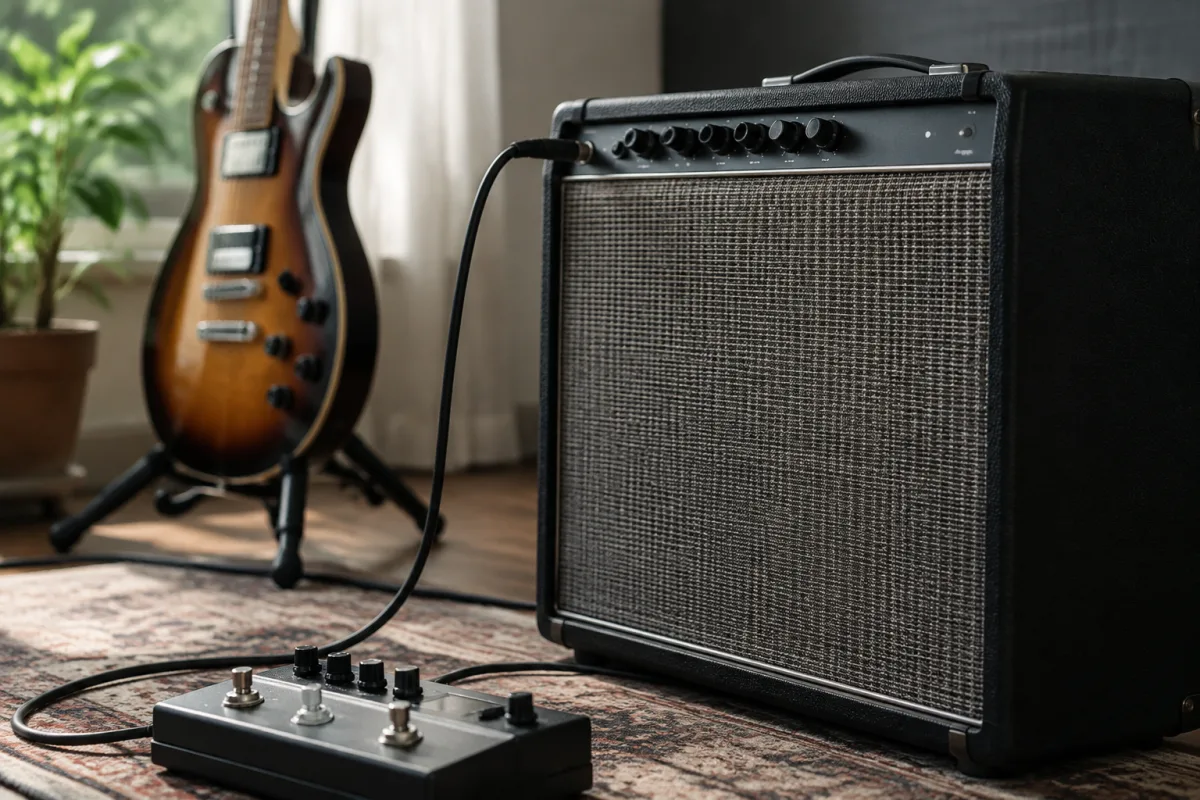
Reading amp reviews with a critical eye separates informed purchasing decisions from marketing-driven impulse buys. Understanding what reviewers mean by "headroom," "chime," "breakup," and "sag," plus recognising the difference between reviewer preference and objective performance, transforms how you evaluate amplifiers for your specific needs and playing style.
What Amp Reviews Actually Measure
Legitimate amp reviews address several key domains. Tonal character describes the amplifier's sonic signature—whether it tends toward brightness or warmth, aggression or musicality. Responsiveness examines how the amp reacts to your playing dynamics, which requires subjective evaluation by experienced players. Build quality assesses construction robustness, component reliability, and long-term durability prospects. Feature functionality evaluates whether advertised capabilities actually work and prove useful in real scenarios.
Good amp reviews compare similar-category instruments—a jazz amp against other jazz amps, a high-gain rock amp against competitors in that genre. Poor reviews compare incomparable products (a practice combo with a touring head) or fail to acknowledge an amplifier's intended purpose.
Tonal Descriptors in Amp Reviews—What They Actually Mean
Chime refers to bright, bell-like overtones and harmonic shimmer, particularly prominent in Fender-style amplifiers. A chiming amp emphasises high-mid frequencies and responds musically to dynamics.
Punch describes immediate, forward attack and percussive impact. Punchy amps respond quickly to your playing dynamics and cut through dense mixes. Bass-centric amps and aggressive gain structures tend toward punchiness.
Breakup means the point at which the amplifier's tone becomes overdriven rather than clean. A low breakup point means the amp overdrives easily at moderate volumes; high breakup requires driving hard. Reviewers describe breakup character—natural and musical, or harsh and fatiguing.
Sag refers to the amplifier's power amp responding to sudden loud transients by compressing slightly—the volume momentarily softens before recovering. Vintage amps sag noticeably, creating a fat, compressed quality. Modern efficient amps sag minimally, sounding tighter and more controlled. Neither is objectively superior—it's a stylistic characteristic.
Headroom means the maximum volume at which the amplifier remains clean without breakup. An amp with excellent headroom reaches loud levels staying clean; an amp with limited headroom breaks up earlier. For genre, style, and venue matter more than raw headroom numbers—a blues amp might never need headroom, whilst a recording engineer constantly chases clean volume.
Articulation describes whether individual notes and playing dynamics remain distinct and defined through the amplifier, or blur into a compressed wash. Well-articulated amps reveal playing technique clearly; mushy amps obscure nuance.
Reading Between the Review Lines
Reviewer preference significantly colours amp reviews. A reviewer favoring vintage warmth will praise warm amplifiers whilst criticising bright, modern designs as "clinical" or "harsh." That same bright amp might receive glowing reviews from a reviewer prioritising clarity and cut. Neither review is dishonest—they're equally valid from their respective perspectives.
The most useful reviews explicitly state the reviewer's preference and priorities. A trustworthy reviewer might say, "I prefer warm, compressed breakup, so this modern efficient amp feels too clean for my taste—but for players wanting articulate cleans, it's exceptional." This transparency helps readers understand whether the review represents genuine product shortcomings or merely divergent aesthetic preferences.
Recognising Advertising Disguised as Reviews
Manufacturer-sponsored reviews warrant skepticism. When a company funds a review, financial incentives discourage criticism. Be wary of reviews lacking any meaningful criticism or comparison. An authentic review acknowledges specific strengths and specific weaknesses—"excellent tonal character but noisy reverb circuit" or "robust build but limiting feature set."
Similarly, reviews published on manufacturer websites or appearing only in official channels should be cross-referenced with independent reviewers before making purchasing decisions. Multiple perspectives reveal patterns of genuine strengths and weaknesses versus outlier opinions.
What Good Amp Reviews Include
- Multiple instruments tested — Excellent reviews trial the amplifier with guitars, basses, or instruments appropriate to its category, revealing how responsive it is across different playing styles and pickup types.
- Volume considerations — Practical discussions of how the amp behaves at bedroom volumes versus stage volumes matter. Some amps sound great loud but mushy at whisper levels; others excel at low volume.
- Specific examples and comparisons — "The tone is warm" means little. "It sounds warmer than a Fender Twin but cleaner than a Marshall Bluesbreaker" provides concrete reference points.
- Reviewer transparency about preferences — Trustworthy reviewers state their bias. "I prefer aggressive overdrive, so this clean-focused amp isn't my first choice" helps readers understand the review's perspective.
- Practical longevity assessment — Discussion of build quality, component choices, and serviceability addresses whether the amp will remain playable and repairable years from purchase.
- Honest acknowledgment of limitations — All amplifiers compromise somewhere. Excellent reviews identify what you're trading off, not pretend perfection.
Understanding Amplifier Specifications
Wattage doesn't directly translate to volume—an efficient 50-watt amp can sound louder than an inefficient 100-watt design. Speaker quality, sensitivity, and enclosure design affect volume more than raw wattage. A good review contextualises wattage within the amp's actual stage-volume capabilities.
Impedance matching requires that your speakers' impedance (typically 8 ohms or 16 ohms) matches the amp's output impedance. Running mismatched impedances damages amplifiers. Reviews addressing impedance options indicate engineer thoughtfulness.
Tone stack configuration (three-band versus five-band EQ, presence controls, bright switches) significantly affects tonal shaping capability. A simple three-band stack suits straightforward tonal shaping; a complex control set offers deeper frequency manipulation but rewards patience in learning.
Comparing Amplifiers Across Different Reviewer Opinions
When multiple reviewers cover the same amplifier, divergent opinions usually reflect reviewer preferences rather than product inconsistency. A warm-loving reviewer calling an amp "transparent" whilst a clarity-focused reviewer praises "accuracy" both describe the same amplifier from different aesthetic angles. Reading several reviews and filtering for common threads—reliable feedback across multiple reviewers—reveals genuine product characteristics versus subjective reactions.
How to Use Reviews to Make Purchasing Decisions
Start with reviews from sources you trust based on past accuracy. Read multiple perspectives, noting where opinions converge (genuine product characteristics) versus diverge (reviewer preference). Identify reviews from reviewers whose aesthetic preferences align with yours—this allows predicting how you'll likely feel about an amp.
Ask yourself: Does this reviewer prioritise what I prioritise? If you care deeply about clean headroom and articulation, pay special attention to how reviewers address those qualities. If you favour warmth and breakup, read more carefully their descriptions of high-gain character and overdrive response.
Whenever possible, hear amplifiers before purchasing. Reviews provide context and guidance, but nothing replaces your own ears and hands. An amplifier's feel and responsiveness can only be truly understood through personal playing experience.
Conclusion
Amp reviews become maximally useful when you understand what reviewers mean by their language, recognise the role of reviewer preference, and seek multiple perspectives on the same equipment. The best reviews acknowledge both genuine product characteristics and the reviewer's aesthetic bias, allowing readers to make informed decisions aligned with their priorities. By reading critically, cross-referencing sources, and understanding technical terminology, you transform amp reviews from marketing noise into genuinely helpful information guiding your purchasing decisions toward amplifiers that will serve your playing for years to come.




Comments