
Binaural Beats article
The Complete Guide to Binaural Beats
Binaural beats create frequency-following responses in your brain, potentially supporting meditation, relaxation, and sleep. Understand the science and practical applications.
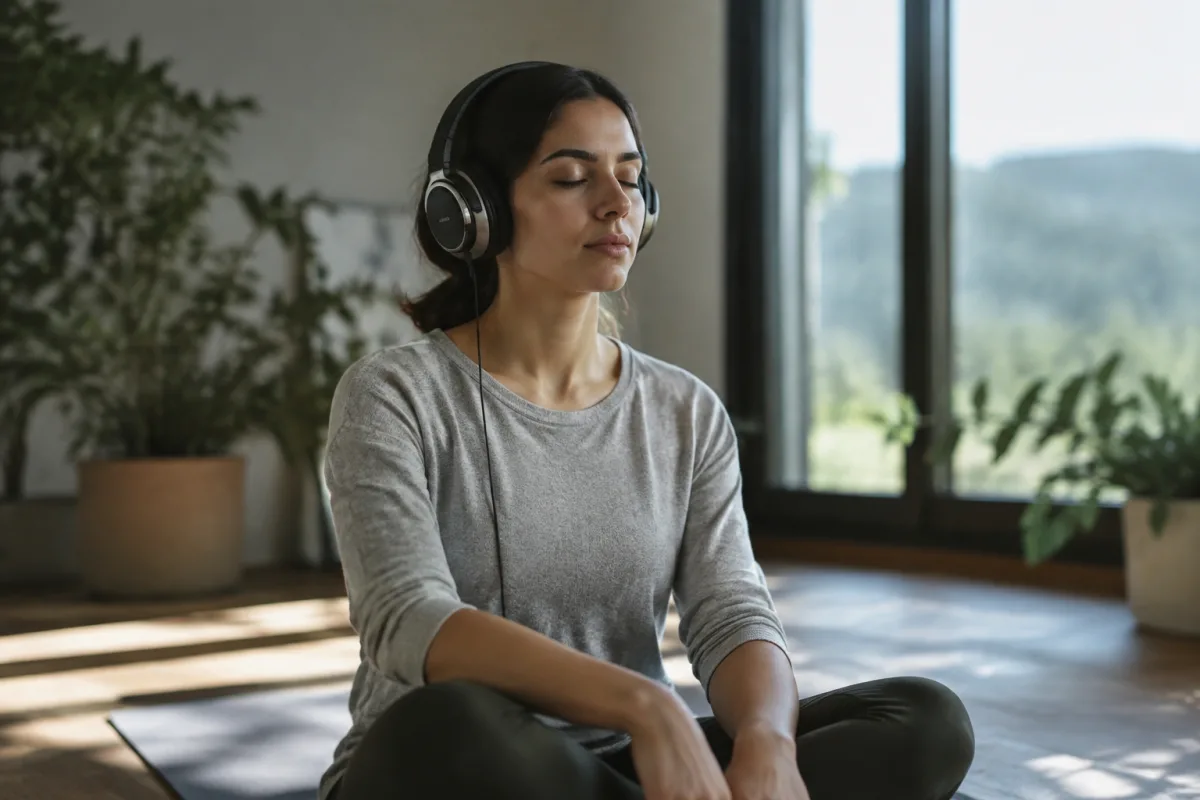
Binaural beats represent a fascinating intersection between neuroscience, acoustics, and audio production. These auditory phenomena create the illusion of a third tone when two slightly different frequencies reach your ears simultaneously, potentially influencing brainwave activity and mental states.
What Are Binaural Beats?
Binaural beats occur when your brain perceives frequency differences between two tones presented separately to each ear. When the left ear receives 200 Hz and the right receives 210 Hz, your brain perceives a "beat" at 10 Hz—the mathematical difference. This phenomenon, known as frequency-following response, suggests your brain naturally entrains toward this beat frequency.
The effect requires stereo headphones or earbuds delivering different frequencies to each ear simultaneously. Listening through speakers or mono systems won't produce binaural beats because both ears receive all frequencies.
Scientific Foundation
The scientific understanding of binaural beats stems from early neuroscience research examining how brains respond to periodic stimuli. Dr Gerald Oster's 1973 research provided foundational understanding of frequency-following response. Subsequent investigations examined whether binaural beat exposure correlates with specific brainwave states—alpha, theta, and delta frequencies associated with relaxation, meditation, and deep sleep.
Current scientific consensus acknowledges binaural beats create measurable auditory phenomena but emphasises that claimed neurological effects remain partially unproven through rigorous clinical research. Some evidence suggests correlation with relaxation and modest attention improvements, but large-scale clinical validation is limited.
Brainwave States and Frequencies
Different brainwave frequencies supposedly correspond to distinct mental states:
- Delta (0.5–4 Hz): Deep sleep and unconsciousness
- Theta (4–8 Hz): Meditation, relaxation, creative states
- Alpha (8–12 Hz): Relaxed wakefulness, light meditation
- Beta (12–30 Hz): Normal waking consciousness, focused attention
- Gamma (30+ Hz): High cognitive processing, heightened awareness
Binaural beat enthusiasts select beat frequencies matching their desired mental state. Alpha-frequency binaural beats allegedly promote relaxation; theta-frequency beats encourage meditation; delta-frequency beats facilitate sleep.
Purported Benefits
Advocates suggest binaural beats support:
- Meditation and mindfulness practice
- Sleep improvement and faster onset
- Focus and concentration during study or work
- Stress reduction and anxiety management
- Creative thinking and problem-solving
- Athletic performance enhancement
These claims remain largely anecdotal. Individuals report subjective improvements, but controlled research often shows modest or inconsistent results. Placebo effect likely contributes significantly to reported benefits.
Audio Production and Quality
Commercially available binaural beat recordings combine the beat frequency with ambient sounds—rainfall, nature sounds, meditation music, or simple tones. Production quality varies enormously. High-quality recordings use clean sine waves and carefully calibrated frequency separation. Lower-quality versions use compressed audio or imprecise frequency calculations.
The carrier frequency (the base tone onto which the binaural beat is imposed) matters significantly. Some producers use subsonic frequencies; others use audible tones. Ambient accompaniment quality—whether it enhances or detracts from the beat effect—depends on individual production choices.
Practical Usage
Using binaural beats requires quality stereo headphones or earbuds delivering separate frequencies to each ear. Most sessions last 15–60 minutes. Users typically employ binaural beats during meditation, study sessions, sleep preparation, or relaxation activities. The brain requires time to entrain toward the beat frequency; brief exposures show minimal effects compared to sustained listening.
Consistency matters more than occasional use. Regular practitioners—daily binaural beat exposure over weeks—report stronger subjective effects than sporadic listeners.
Safety Considerations
Binaural beat exposure at standard volumes poses no known health risks for most people. However, certain precautions apply:
- Epilepsy: Individuals with photosensitive epilepsy should exercise caution with any frequency-based stimulation.
- Hearing Health: Excessive volume at any frequency can damage hearing. Moderate, safe listening levels apply to binaural beats as to any audio.
- Psychological Sensitivity: Individuals with certain mental health conditions should consult healthcare providers before sustained binaural beat use.
- Driving and Operating Machinery: Deeply relaxing or sleep-inducing binaural beats shouldn't be used whilst driving or operating equipment.
Commercial Applications
Binaural beat recordings proliferate across meditation apps, YouTube, streaming services, and specialised producers. Apps like Insight Timer, Calm, and Spotify feature binaural beat content. Dedicated platforms focus exclusively on binaural beat productions at various frequency ranges and durations.
Quality varies dramatically. Some productions employ rigorous frequency calibration; others use approximate calculations. Some ambient soundscapes enhance the experience; others feel derivative. Finding personally effective binaural beat recordings often requires experimentation.
Scientific Criticism
Sceptics note that claimed effects often lack large-scale clinical validation. Some research suggests binaural beats show effects no stronger than placebo. The frequency-following response itself is established, but whether this neural entrainment produces the claimed psychological benefits remains debated. Many studies suffer from small sample sizes or methodological limitations.
The scientific standard requires reproducible, controlled evidence demonstrating binaural beats produce specific neurological changes. Current evidence falls short of this rigorous standard, though preliminary research remains suggestive.
Effective Usage Tips
For those interested in exploring binaural beats:
- Use quality headphones or earbuds delivering distinct frequencies to each ear
- Start with 15–30 minute sessions during relaxed periods
- Maintain consistent daily practice for several weeks before assessing effects
- Select frequencies matching your intended mental state
- Keep volume moderate to protect hearing health
- Approach with realistic expectations, avoiding exaggerated claims
Conclusion
Binaural beats represent genuine auditory phenomena capable of creating frequency-following neural response. Whether this translates to the dramatic psychological effects some advocates claim remains scientifically uncertain. The evidence supports modest, subjective benefits for relaxation and meditation when combined with intention and practice. If you're interested in exploring meditation enhancement or sleep improvement, binaural beats offer a low-risk, accessible experimentation avenue. Approach with scientific scepticism rather than uncritical enthusiasm, and focus on personal experience rather than manufacturer claims.


Comments