
Big Band article
The Complete Guide to Big Band
Big band is jazz played by full orchestras—arrangements, swing, brass and reeds working together. A form that defined the 1930s and 40s and still sounds compelling today.
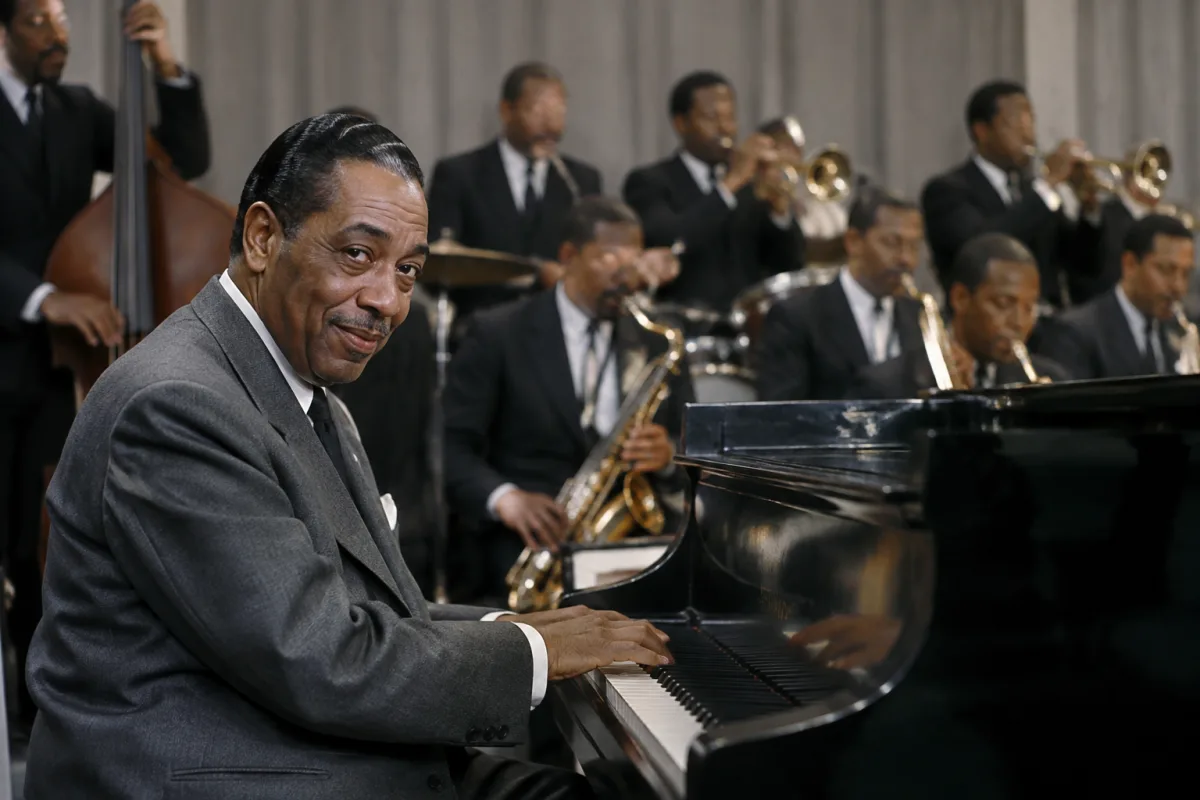
This form of jazz swings with the energy of a full orchestra. If you've heard Duke Ellington, Count Basie or Glenn Miller, you've experienced it—a genre that defined an era and still sounds thrilling today. Big band brings together brass, reeds, rhythm and melody in arrangements that range from intricate to simple, often with a vocalist up front. It's jazz at scale, and its influence shaped popular music for generations.
What Is Big Band Music?
Big band is a jazz style played by orchestral ensembles, typically thirteen to twenty musicians. The standard line-up consists of a rhythm section (drums, bass, piano, guitar), brass sections (trumpets, trombones), reed sections (saxophones and clarinets), and often a vocalist. Unlike small jazz combos where musicians improvise freely, it relies on written arrangements that guide the ensemble through carefully orchestrated sections, solos and ensemble passages.
The term refers both to the size of the group and to a specific historical era—roughly the 1930s and 1940s—when large jazz orchestras dominated popular music. During that time, this style wasn't a niche genre; it was *the* popular music. Every major city had orchestras of this scale, dance halls hosted evenings devoted to it, and radio broadcast performances constantly.
The Sound and Character
A big band's signature sound comes from the interplay of sections. Saxophones provide warmth and swing; trumpets cut through with brightness; trombones add depth and humour. The rhythm section drives everything, anchored by the walking bass and swinging drums. When these elements blend in a well-arranged chart, the result feels both powerful and graceful—music you can dance to that also engages the mind.
Swing is the heartbeat of this genre. The rhythm isn't played straight; it's intentionally bent and pushed, giving the music its characteristic groove. Big band swings when musicians feel the beat and push slightly behind it, creating momentum. This swing feel is what makes the music feel alive, even in a recording made decades ago.
The Golden Age: When Big Band Ruled
The 1930s and 1940s were its peak. Duke Ellington led one of the most innovative ensembles in music history, creating compositions still performed today. Count Basie's orchestra was famous for its tight, driving rhythm section and blues-rooted approach. Glenn Miller became the most commercially successful leader of this style, and his orchestra's smooth sound defined an era. Other legends—Benny Goodman, Harry James, Artie Shaw—each brought their own style to big band arrangements.
During this golden age, the genre was dance music. Swing dancers filled ballrooms, and such music was the soundtrack to courtship, celebration and social life. The music was composed for movement; arrangements built in space for dancers to interpret the rhythm. This connection to dancing is crucial to understanding the genre's character—it's music meant to move you.
Key Elements of Big Band Composition
Arrangements and Orchestration
A big band arrangement isn't improvised on the spot; it's written. The arranger orchestrates the entire piece—which instruments play which notes, when sections enter and exit, where soloists take their turns. Great arrangers like Sy Oliver and Billy May created arrangements so clever that musicians still study them. The arrangement is the composer's voice; a skilled arranger can make the same melody sound entirely different depending on orchestration.
Solos Within Structure
Within the arranged framework, individual musicians take solos—moments to improvise and shine. A chart typically features trumpet solos, saxophone solos, and trombone solos, each set within the structure of the tune. The solo space is defined by the arrangement; the soloist interprets it. This balance between composed structure and individual improvisation is what makes the genre compelling.
The Rhythm Section's Role
The drums, bass, piano and guitar are the engine. The drummer swings the ensemble forward with the kick drum on two and four, and the high-hat cymbals driving the swing feel. The bass walks—plays a moving line of notes on each beat, providing harmonic and rhythmic foundation. The piano comps—plays stabs of chords—and the guitar provides rhythm guitar texture. Together, they create an irresistible forward motion.
Big Band Legends and Their Contributions
Duke Ellington wasn't just a leader; he was a composer who used the ensemble as an instrument. His pieces—"Take the A Train", "Mood Indigo"—showcase orchestration as sophisticated as any classical music. Count Basie's approach was blues-rooted and rhythm-driven; his orchestra was famous for its relaxed, swinging groove. Glenn Miller's sound was accessible and smooth, designed for broad appeal. Benny Goodman brought a technical brilliance to his clarinet and led an innovative mixed-race band during a segregated era.
The Decline and Enduring Legacy
After World War II, its dominance faded. Bebop and other jazz styles challenged the genre's conventions, and popular music shifted toward new sounds. Large orchestras became economically difficult to maintain; paying twenty musicians wasn't affordable for every bandleader. Rock and roll arrived, and this style retreated from mainstream radio.
Yet it never disappeared. Jazz festivals feature ensembles of this scale; composers still write for large groups; the arrangements of the golden age are still performed and studied. Modern orchestras like Maria Schneider's prove that the form still lives, still innovates. Its influence shaped bebop, cool jazz, and continues to echo in contemporary jazz.
Why Big Band Still Matters
This genre is a masterclass in orchestration, arrangement and ensemble playing. The compositions of the golden age are melodically strong and structurally fascinating. The improvisers of that era—saxophone players, trumpet players, trombonists—developed techniques and approaches that jazz musicians still study. The style taught jazz musicians how to play together; how to lock into a rhythm; how to swing as one organism.
Listening to the genre also teaches you about the history of jazz, dance and American popular culture. The music captures a moment when jazz wasn't marginal; it was central. The energy in a Duke Ellington recording or a Count Basie performance is genuine—these musicians were playing at the height of their power for audiences who loved them.
Getting Into Big Band Music
Start with the canon: Duke Ellington's "Such Sweet Thunder", Count Basie's "April in Paris", Glenn Miller's "Moonlight Serenade". Listen to how the sections work together, how solos emerge from and return to the arrangement, how the rhythm section drives everything forward. Then branch out to lesser-known bandleaders and modern orchestras. The genre rewards close listening; a tune that sounds simple at first reveals layers the more you hear it.
Conclusion
Big band is jazz at its most orchestral and organised—large ensembles playing carefully arranged compositions with space for individual brilliance. It defined an era, shaped jazz's trajectory, and influenced genres far beyond jazz. The music swings with discipline and wildness in equal measure, inviting both intellect and movement. Whether you're a jazz devotee or a casual listener stumbling on a Glenn Miller record, this style's appeal is immediate: it's music made for joy.


Comments