
Electronic Music Keyboard Piano article
The Complete Guide to Electronic Music Keyboard Piano
The keyboard is the heart of electronic music production. From classic synthesisers like the Moog to modern digital workstations and software instruments, keyboards have defined the sound of electronic genres from ambient to techno.
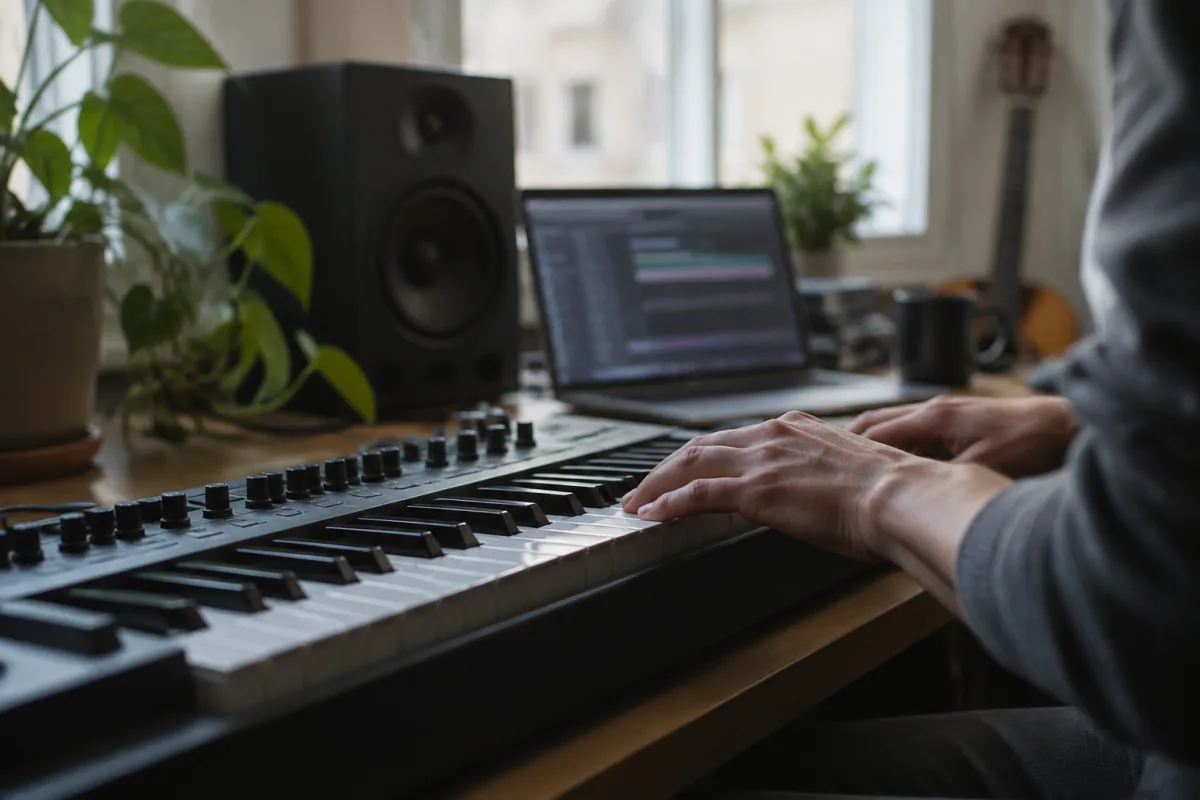
Electronic music owes its very existence to keyboard instruments. From early synthesisers to modern digital workstations, the keyboard has been central to shaping electronic music's sound. Understanding the keyboards and pianos used in electronic music reveals the instruments behind genres ranging from ambient to techno to progressive house.
The Synthesiser as the Foundational Electronic Instrument
The synthesiser—an electronic keyboard that generates and shapes sound—is the quintessential instrument of electronic music. Unlike acoustic pianos, which produce sound through strings struck by hammers, synthesisers create sound from oscillators (circuits that generate waveforms) and then shape that sound through filters, envelopes, and effects.
Early synthesisers like the Moog and ARP models from the 1960s and 1970s were large, unwieldy instruments requiring technical knowledge to operate. They were monophonic (could only play one note at a time) and expensive. Yet pioneering artists like Kraftwerk, Giorgio Moroder, and Vangelis showed that synthesisers could be expressive instruments in their own right, not merely imitations of acoustic instruments.
Over decades, synthesisers became smaller, more affordable, and more powerful. The introduction of MIDI (Musical Instrument Digital Interface) in the 1980s allowed synthesisers to communicate with one another and with computers. By the 1990s and 2000s, software synthesisers—programs running on computers—democratised access to sophisticated sound-shaping tools.
The Piano in Electronic Music
Many electronic music producers use acoustic piano sounds as a foundation. The piano's tonal character—warm, expressive, capable of playing multiple notes simultaneously—contrasts richly with synthetic timbres. Ambient pioneers like Eno used prepared pianos and piano-like textures as entry points into spacious, evolving soundscapes.
Digital pianos and Fender Rhodes-style electric pianos became staples in electronic music production. The Rhodes—a semi-acoustic keyboard from the 1960s with hammers striking metal tines—has a warm, bell-like tone that sits beautifully in electronic arrangements. Many contemporary electronic producers layer Rhodes sounds with synthesisers to create warmth and familiarity within more abstract sonic contexts.
Types of Electronic Keyboards Used in Electronic Music Production
Today's electronic music producers use diverse keyboard instruments:
- Hardware synthesisers — physical instruments ranging from compact monophonic units to elaborate polyphonic workstations with thousands of sounds and complex sequencers.
- Digital workstations — keyboard-shaped controllers that integrate synthesisers, samplers, sequencers, and effects in a single unit (e.g., Korg Kronos, Roland Fantom).
- Software synthesisers — plug-ins running in a DAW (Digital Audio Workstation) offering unlimited flexibility and sound possibilities.
- MIDI controllers — keyboard controllers with no built-in sounds that trigger synthesisers or samples via MIDI.
- Digital pianos and stage keyboards — instruments designed to replicate acoustic piano action and sound, used in live performance and recording.
- Samplers — keyboards that allow producers to trigger pre-recorded sounds and manipulate them in real time.
The Role of Keyboard Touch and Feel
Though often overlooked, the physical feel of a keyboard profoundly affects how music is created. Weighted keys that simulate acoustic piano action allow for dynamic, expressive playing. Light, responsive keys suit rapid, delicate performances. After-touch sensitivity (responding to pressure applied after a note is struck) adds another layer of expression.
Professional producers often invest significantly in their keyboard interface, understanding that physical comfort and responsiveness influence both the creative process and the quality of recordings made with the instrument.
Electronic Music Genres and Their Keyboard Traditions
Different electronic music genres rely on keyboards in distinct ways. Techno and house music often feature repetitive, arpeggiated synthesiser sequences that drive the groove. Ambient music uses keyboards for atmospheric textures and evolving tones. Progressive house layers multiple synthesiser lines to create complex, shifting soundscapes. Drum and bass uses keyboards alongside fast breakbeats to add melodic and harmonic depth.
These genre conventions shape how producers approach keyboard work—the rhythms, note densities, and timbral choices differ markedly across electronic music's subgenres.
Modern Production and Virtual Instruments
Contemporary electronic music production relies heavily on software. Artists compose and arrange using digital audio workstations (DAWs) like Ableton Live, Logic Pro, or FL Studio, controlling virtual synthesisers via MIDI. The advantage is vast sonic flexibility and low cost compared to accumulating hardware synthesisers.
However, many producers still favour hardware synthesisers and keyboards, arguing they inspire creativity through limitation and tactile feedback. The contemporary approach is often hybrid—using hardware for certain sounds and sequences, then processing and layering them in software.
Learning Electronic Music Keyboard Techniques
For producers beginning with electronic music, understanding basic keyboard skills is invaluable. This includes understanding synthesiser architecture (oscillators, filters, envelopes), MIDI routing and sequencing, and how to layer multiple synthesised sounds for depth and movement. Many beginners start with software synthesisers before investing in hardware, building knowledge in a low-cost, flexible environment.
The keyboard remains, despite the era of production technology, the most intuitive interface for creating melodies and harmonies in electronic music. It bridges the gap between acoustic music training and electronic sound design.



Comments