
Disco Music Light article
The Complete Guide to Disco Music Light
Disco culture was as much about spectacular visual design as it was about the music. Lighting—from iconic disco balls to synchronised strobes—transformed the dancefloor into an immersive, otherworldly environment.
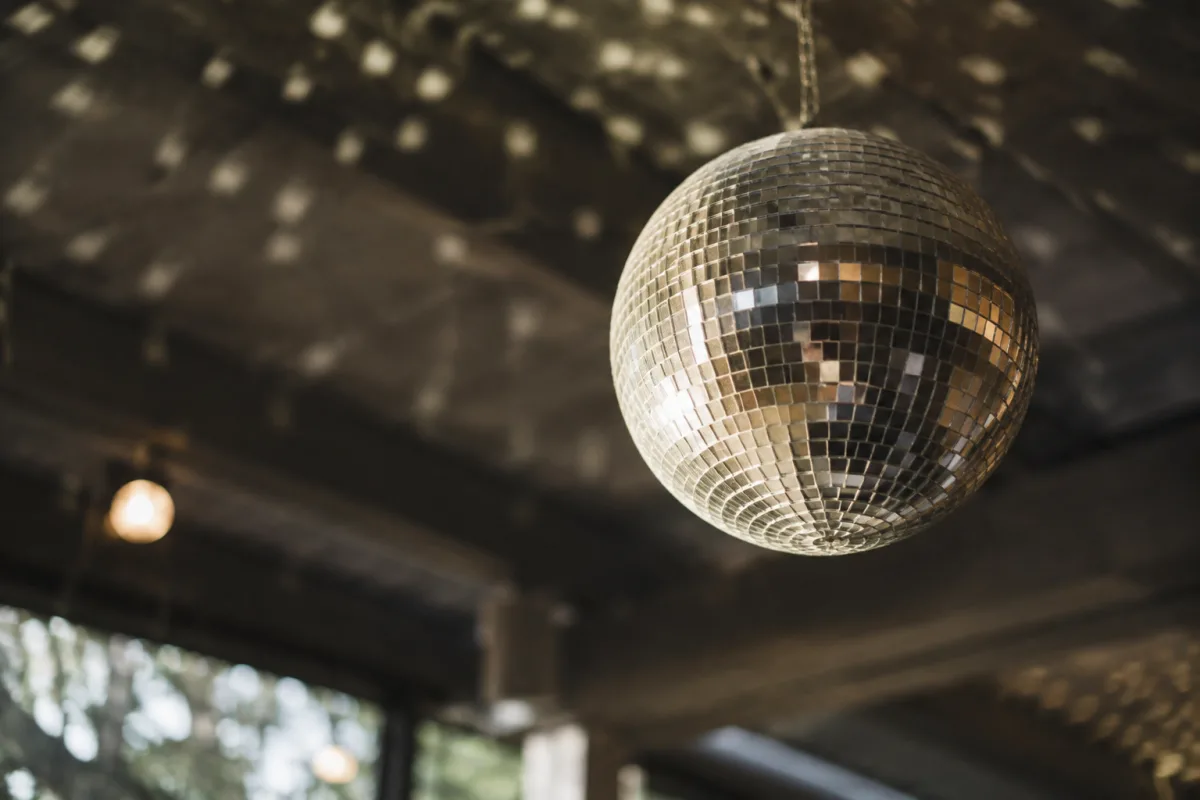
Disco culture was as much about spectacle and visual experience as it was about the music. At the heart of this was lighting—the dazzling interplay of light and dark that defined the disco dance floor and made the genre unmistakable. Understanding disco music lighting reveals the artistry behind the beat.
The Disco Ball: Icon of an Era
No element defines disco lighting quite like the disco ball. Suspended above the dance floor, this mirrored sphere reflects hundreds of light beams across dancers and walls, creating an immersive, kaleidoscopic environment. The disco ball wasn't purely decorative—it was essential to the disco experience, transforming the entire room into a dynamic visual instrument that moved with the music.
The invention predates disco itself. Mirror balls were used in theatres and dance halls as early as the 1920s. However, disco culture adopted and perfected them, making them iconic. A quality disco ball contains thousands of mirrored tiles, each carefully angled to distribute light evenly across the space. The effect was hypnotic and participatory—dancers became part of the light show, their movements interacting with the reflected beams.
Strobe Lights and Rhythm
Strobes were the second pillar of disco lighting design. These rapidly flashing lights created a stroboscopic effect that fractured movement into distinct frames, making dancers appear to move in slow motion or jump between positions. The strobe frequency was often synchronised with the beat, heightening the connection between music and movement.
The strobe effect served a psychological purpose too. The discontinuous visual feedback altered perception of time and space, creating a trance-like state that enhanced the immersive quality of the dance. Combined with the hypnotic repetition of disco's four-on-the-floor beat, strobes made the dancefloor feel otherworldly.
Colour and Atmospheric Lighting
Beyond the disco ball and strobes, disco venues employed coloured gels and spotlights to shape the atmosphere. Reds, blues, purples, and ambers washed over the dancefloor in sequences, often timed to musical changes or DJ cues. These colour shifts kept the visual experience fresh and prevented the eye from adapting to a static palette.
Uplighting and sidescreens added depth to the visual landscape. Lights hidden behind the DJ booth or integrated into the architecture created layers of illumination, guiding attention and sculpting the space. A well-designed disco environment was three-dimensional—not just a room with lights, but a complete sensory construct.
Platform Lighting and Elevation
Many disco venues featured elevated platforms or stages where dancers could be seen by the entire room. These platforms were often ringed with footlights or edge-lit to make performers stand out. This design served the theatrical side of disco—dancing was performance, and the room's lighting architecture made that explicit.
Interestingly, not all dancers used the platforms. The hierarchy of lit and shadowed space created subcultures within the single venue. Some dancers sought the intense visual focus of the lit platform; others preferred the anonymity of the darker periphery. The lighting design accommodated multiple modes of participation.
Practical Disco Lighting Setup
For anyone recreating a disco atmosphere today—whether for a themed event, a dance studio, or a performance—understanding the essential elements helps. A functional disco lighting rig includes:
- A motorised disco ball with a dedicated spotlight (typically 500–1000 watts of halogen or LED)
- Strobe units (ideally with adjustable frequency and Master/Slave synchronisation for multiple units)
- LED PAR lights for coloured washes (allowing remote colour selection)
- A lighting controller that can sync effects to music via sound-reactive mode or manual control
- Adequate rigging points and heat management (halogen fixtures generate substantial heat)
Modern LED fixtures have made disco lighting more accessible. They consume less power, generate less heat, and allow for complex colour sequences. However, the principles remain unchanged—layered lighting, synchronisation with music, and a focal point (usually the disco ball) to anchor the visual design.
The Psychology of Disco Lighting
Disco lighting worked because it bypassed rational thought. The combination of repetitive music, fractured visual input from strobes, and the hypnotic rotation of the disco ball created a heightened state of awareness. The body responded before the mind could fully process the sensory input.
This wasn't accidental. Disco DJs and lighting technicians understood, intuitively if not scientifically, that light and sound shape behaviour. Strobes increase heart rate. Colour gradations guide mood. Movement in the visual field triggers reflexive dancing. Disco venues weaponised these principles, turning the dancefloor into a precisely calibrated instrument for inducing euphoria and connection.
Disco Lighting's Legacy
The specific aesthetic of disco lighting has faded from mainstream clubs, replaced by lasers, video projection, and LED screens. However, the principles persist. Any modern nightclub, concert, or festival that uses coordinated lighting, strobes, and visual synchronisation with music owes a debt to disco. The disco ball endures as an icon—instant shorthand for the era, instantly recognisable, and still present in venues across the world.
Understanding disco music lighting is understanding disco itself. The music was built for the dancefloor, and the lighting was built for the music. Together, they created an environment where the boundary between performer and audience dissolved, where individual movement became part of a collective visual and sonic tapestry. That fusion of light, sound, and movement defined an entire cultural moment.


Comments