


Tuner Metronome article
Tuner Metronome for Beginners: A Complete Guide
A tuner metronome combines tuning and rhythm in one portable device. Perfect for beginners, it simplifies your practice setup and builds solid fundamentals.
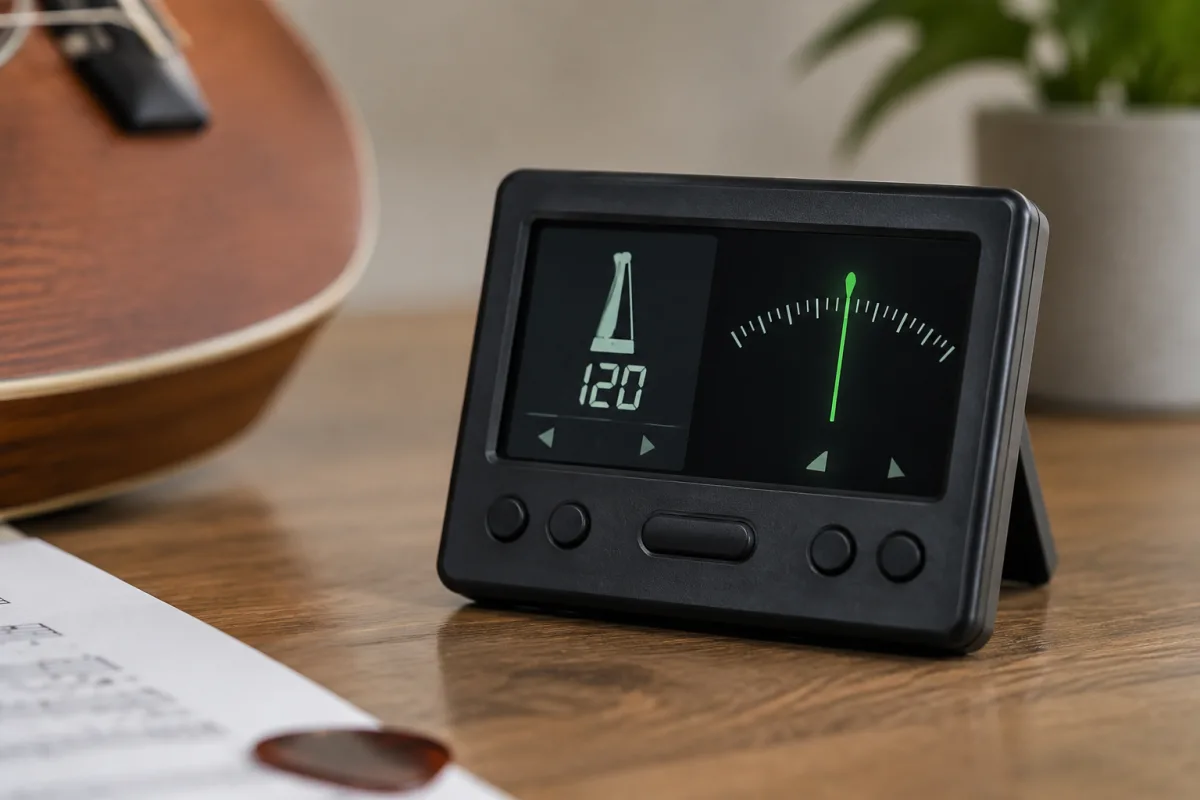
As a beginner musician, keeping your instrument in tune and maintaining steady rhythm are two fundamentals you'll need to master. A tuner metronome combines both tools into one pocket-sized device, simplifying your practice kit and giving you exactly what you need to build solid technique. If you're just starting out, understanding how a tuner metronome works and why one might suit your practice can save you money and confusion.
What Is a Tuner Metronome?
A tuner metronome is a single device that does two jobs. On one side, it tunes your instrument—it listens to the note you play and tells you whether you're sharp (too high) or flat (too low). On the other side, it acts as a metronome, giving you a steady beat to practise with. Instead of juggling two separate gadgets, you have one tool that handles both essential tasks. For beginners, this is genuinely convenient and keeps your practice desk uncluttered.
Why Beginners Should Consider One
When you're starting out, you're learning so many things at once—finger placement, how to hold your instrument, breathing technique, music reading. Tuning and keeping time are two more skills you need to develop, but they're not the main focus yet. A tuner metronome lets you check your tuning and practise with a steady beat without having to fuss with separate devices or apps that might distract you. It's purpose-built for the job, reliable and always there when you need it.
Many beginner guitarists, ukulele players and other string players benefit enormously from a tuner metronome because they can quickly check tuning between practice pieces and immediately play along with a beat. For wind players, checking tuning and maintaining steady rhythm are equally important, making a combo device a natural fit.
Getting Started: How to Use One
Using the Tuner Function
The tuner part of your device is straightforward. Play a single note on your instrument—say, the open A string on a guitar. The tuner display will show which note you're playing and whether it's sharp or flat. If the needle points to the left, you're flat (play sharper, tighter). If it points to the right, you're sharp (loosen the string). Adjust until the needle centres, and you're in tune. Repeat for each string or note you need to check.
Most tuner metronomes have a bright, clear display so you can see it in various lighting conditions. Some use a needle or meter; others use lights or a graph. They all work the same way: they tell you how far off you are from the target note and which direction to adjust. Don't overthink it. Play the note, look at the display, adjust, and tune.
Using the Metronome Function
Switch to metronome mode (usually a button on the device) and set your desired tempo using the up and down buttons. Start at something slow and comfortable—60 BPM is a nice beginner pace. Press the start button and listen to the beat. Now play your scales, exercises or pieces along with that steady pulse. The rhythm will guide you and help lock in your timing. When you're ready, gradually increase the tempo over days or weeks.
Many beginner players use the metronome function more than the tuner at first. That's fine. Get comfortable with the beat, feel how it steadies your playing, and then add tuning checks between pieces.
The Advantages for New Musicians
- One device, two essential functions: You're not hunting for a separate tuner and metronome, and you're not juggling apps on your phone that might distract you.
- Affordable: A good tuner metronome costs £20–40, which is less than buying a separate quality tuner and a separate metronome.
- Portable: It fits in a jacket pocket or music bag. You can practise anywhere, anytime.
- No batteries to buy separately: One set of batteries powers both functions, so you're not replacing batteries in two different devices.
- Familiar interface: Once you learn it, you won't need to learn two different devices. Just one simple menu.
- Encouragement: Seeing your instrument come into tune and playing along with a steady beat builds confidence fast. Both are concrete, immediate wins.
Common First-Time Worries
The Display Is Confusing
It's not. Read the instructions (really, just five minutes) to understand whether your device uses a meter, needle, lights or a graph. Once you know, it's obvious. All tuner metronomes work the same way: show you if you're sharp or flat, and centring the display means you're in tune.
I'm Not Sure I'm Using the Tuner Correctly
You probably are. Play a single, clear note. Look at the display. If it shows the note name you just played and a centred needle or light, you're in tune. If the display points left, go flatter (loosen your string or adjust your embouchure). If it points right, go sharper. That's it. Adjust and check again. Within a week, you'll do it without thinking.
What If I Use It Wrong and Ruin My Instrument?
You won't. A tuner metronome only listens; it doesn't change anything. It's not like tuning is dangerous. Thousands of beginners tune their instruments every day with tuner metronomes. You're safe.
The Metronome Tempo Keeps Jumping Around
You might be accidentally pressing buttons while practising. Keep your hands on your instrument, not on the device. Or the device might have accidental button presses from contact. Just accept that you may need to glance at it occasionally and reset the tempo if needed. It's not a flaw; it's a minor quirk of small devices.
Your First Week With a Tuner Metronome
Here's a gentle plan to get comfortable:
- Day 1–2: Just look at the instructions and practise tuning one string or one note five times. Get used to reading the display.
- Day 3–4: Tune all your instrument's strings or notes if applicable. It should now feel routine.
- Day 5: Switch to metronome mode and just listen to the beat at 60 BPM for a few minutes. Don't play yet.
- Day 6–7: Play simple exercises or scales along with the metronome at 60 BPM. Celebrate—you've now got a working tuner metronome practice setup.
That's genuinely all you need to do. After a week, both tuning and practising with a steady beat become automatic.
When to Upgrade
A tuner metronome is a fantastic beginner tool and many musicians use one for years. Some will eventually want a specialist tuner (for faster, ultra-precise tuning in loud environments) or a standalone metronome with more features (complex time signatures, different sounds, visual feedback). But for your first year or two of learning, a single tuner metronome handles everything you need. If it ever stops working, you can upgrade then; until that day, enjoy the simplicity.
For more information on how tuner metronomes compare to other practice tools, see our complete tuner metronome guide.
Bottom Line
A tuner metronome is the perfect beginner's practice companion. It's simple to use, affordable and handles the two skills you need to develop early: keeping your instrument in tune and maintaining steady rhythm. Spend a week getting comfortable with it, and you'll wonder how you ever practised without one. It's one less thing to worry about and one more tool supporting your growth as a musician.



Comments