


Strobe Tuner article
The Ultimate Guide to Strobe Tuner
Strobe tuners provide precision tuning accurate to fractions of a cent, essential for professional musicians and studios. This guide covers how they work and usage.
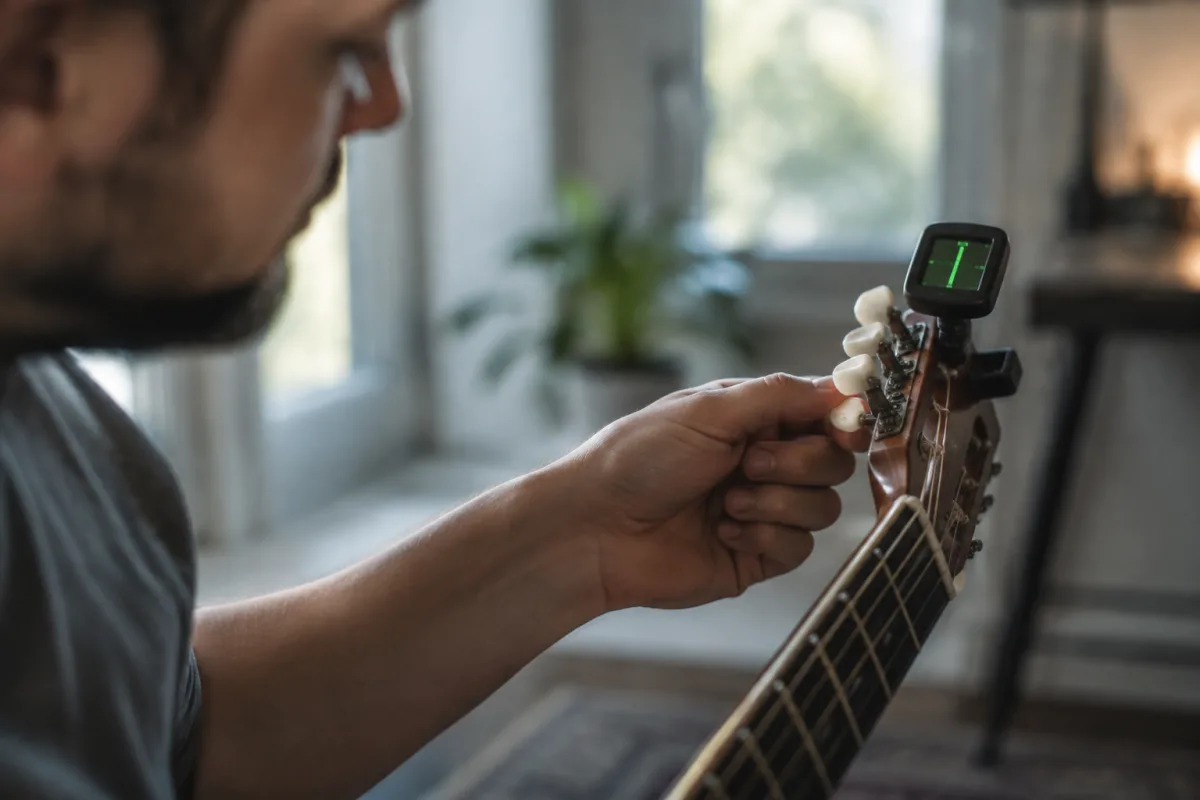
A strobe tuner is a precision tuning device that uses a spinning rotating pattern to display pitch accuracy visually, allowing musicians to tune their instruments with exceptional accuracy. Unlike needle-based or LED tuners that approximate pitch, strobe tuners reveal minute pitch deviations imperceptible to human ears, making them essential tools for professional musicians, studio engineers and anyone seeking perfect tuning. This guide explores how strobe tuners work, their advantages over conventional tuning methods, and how to use them effectively.
How Strobe Tuners Work
A strobe tuner uses the principle of aliasing—when a rotating pattern's rotation speed matches the frequency of an incoming signal, the pattern appears to slow or stop. By observing how fast the pattern rotates or stands still, musicians can determine exact pitch and deviations from the target note with precision to fractions of a cent (1 cent = 1/100 of a semitone).
When the incoming pitch matches the target note exactly, the strobe pattern locks and appears stationary. If the pitch is sharp (too high), the pattern rotates clockwise; if flat (too low), it rotates counter-clockwise. The rate of rotation indicates how far sharp or flat the note is, allowing precise pitch adjustment.
Advantages of Strobe Tuners
Strobe tuners offer several compelling advantages:
- Extreme precision — accurate to within 0.1 cent, revealing intonation accuracy no human ear can perceive
- Visual feedback — the rotating pattern provides immediate, intuitive visual indication of pitch deviation
- Professional quality — essential for recording studios, mastering and professional orchestral musicians
- Harmonic tuning — many strobe tuners display multiple harmonics simultaneously, revealing complex intonation issues
- No audio signal required — some strobe tuners can detect vibrations directly from the instrument, working silently without audio input
- Objective assessment — removes subjective hearing limitations; the tuner never lies
Types of Strobe Tuners
Strobe tuners come in several formats:
Hardware Strobe Tuners
Standalone devices like the Peterson StroboStomp or Korg DTX provide dedicated strobe tuning displays. Hardware strobe tuners offer reliable, immediate tuning feedback without software dependencies. They typically cost £80–300 depending on features and portability.
Software and App-Based Strobe Tuners
Computer and mobile applications provide strobe tuning through your device's microphone. Apps like TunerPro, SmartChromatic and iStroboSoft cost £5–20 and work anywhere you have a device, though accuracy depends on the device's microphone quality.
Digital Multi-Effects Units
Many modern guitar effects pedals and bass units include built-in strobe tuning modes, providing convenient tuning without additional gear investment.
Strobe Tuner vs Traditional Tuning Methods
Strobe tuning offers advantages over conventional tuning approaches:
- vs needle tuners — strobe tuners resolve pitch to fractions of a cent; needle tuners typically resolve to ±0.5 cent
- vs LED tuners — LED tuners display approximate regions (sharp, flat, in-tune); strobe tuners show precise degree of deviation
- vs ear training — human hearing alone cannot detect the fine pitch deviations strobe tuners reveal; strobe tuning is more objective
- vs tuning forks — tuning forks provide single reference pitches; strobe tuners simultaneously display multiple pitches and harmonics
Using a Strobe Tuner Effectively
Maximum strobe tuning accuracy requires proper technique:
- Place the tuner in a quiet environment free from background noise and vibrations.
- Select the appropriate note on the tuner display corresponding to the string/note you are tuning.
- Play the note steadily and clearly, sustaining it without volume fluctuations.
- Watch the strobe pattern: stationary = in tune, rotating clockwise = sharp, rotating counter-clockwise = flat.
- Adjust the tuning machine head gradually until the pattern stops rotating and appears stationary.
- Fine-tune in both directions; approach the exact pitch from both flat and sharp to ensure accuracy.
- Allow several seconds of observation; brief fluctuations are normal; true accuracy is when the pattern remains consistently stationary.
Professional Applications
Strobe tuners are essential in professional contexts:
- Recording studios — precise tuning ensures no tuning-related phase issues or audible detuning in multitrack recordings
- Orchestral and classical music — intonation precision is central to ensemble sound; strobe tuning ensures absolute accuracy
- Acoustic guitar recording — open tuning and natural drift require continuous verification using objective strobe methods
- Mastering and critical listening — reference pitches must be exactly accurate for confident mastering decisions
- Instrument setup and repair — luthiers and technicians use strobe tuning to verify precise tuning during repairs and modifications
Limitations and Considerations
Strobe tuners have some limitations worth understanding:
- Overkill for casual playing — home hobbyists may not perceive benefits of sub-cent accuracy; traditional tuners suffice
- Requires steady notes — tuning requires sustaining notes without fluctuation; tuning fast passages or rhythm instruments is difficult
- Background noise sensitivity — strobe accuracy depends on clean audio signal; noisy environments degrade reliability
- Learning curve — interpreting the rotating pattern requires understanding and experience; beginners may find strobe tuning confusing initially
Conclusion
A strobe tuner provides precision tuning accuracy essential for professional musicians, recording studios and anyone pursuing perfect intonation. The visual rotating pattern provides intuitive feedback revealing pitch deviations impossible to detect by ear alone. Whether using hardware strobe devices or software applications, strobe tuning transforms intonation precision and ensures your instrument performs at its absolute best. Invest in quality strobe tuning for any professional application where tuning accuracy directly impacts final audio quality.




Comments