


String Action Buying guide
String Action: A Complete Buyer's Guide
String action affects playability, tone, and comfort significantly. This buying guide explains measurement standards, evaluation techniques, and how to avoid costly mistakes.
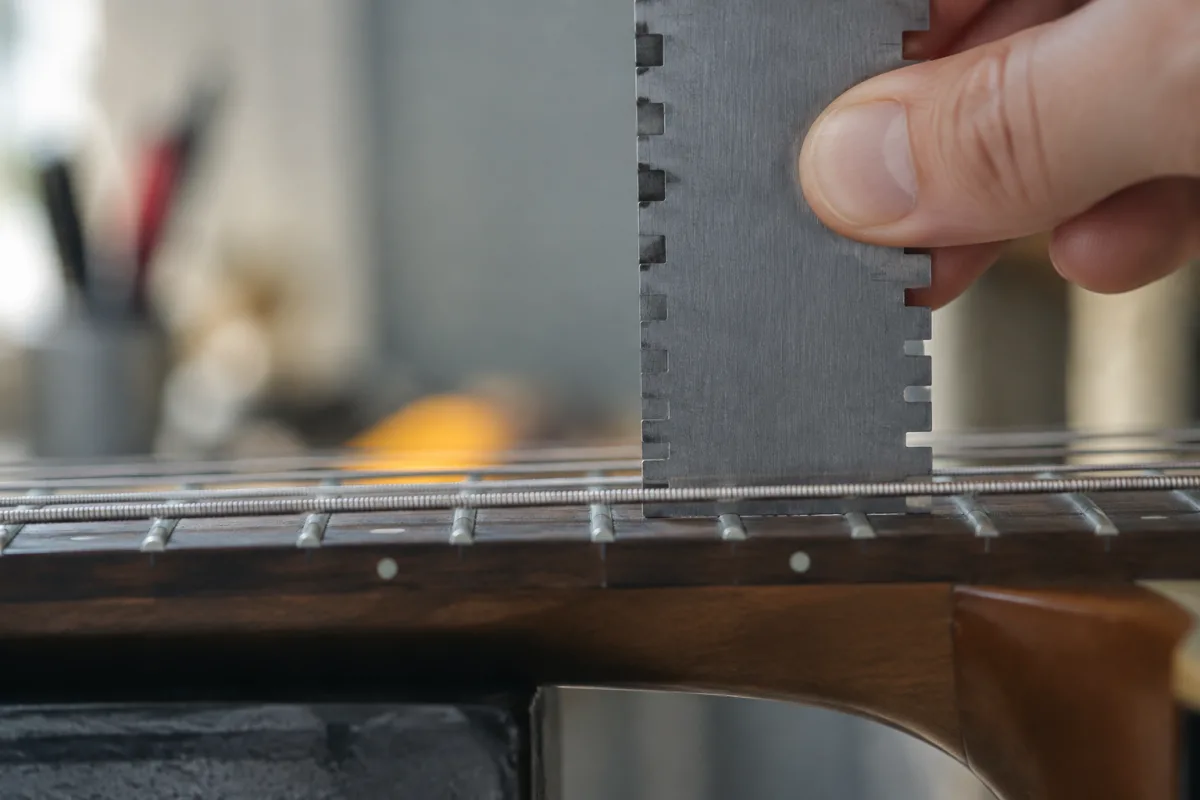
String action stands out as one of the most misunderstood yet critically important factors when purchasing a stringed instrument. Understanding string action fundamentally changes how you evaluate instruments and prevents costly purchasing mistakes. This buyer's guide focuses on practical evaluation, measurement standards, and making smart decisions based on how string action affects your playing.
Defining String Action: What You're Actually Measuring
String action refers to the vertical distance between strings and the fretboard. It's measured at the first fret and at the twelfth fret. Understanding what string action measurement means helps you communicate with technicians and evaluate instruments accurately. String action directly impacts both playability and tone, making it a primary consideration when shopping.
High string action means greater distance between strings and fretboard. Low string action means strings sit closer to the fretboard. Neither is universally "better"—they represent trade-offs between comfort and sonic characteristics.
Measurement standards vary by instrument type. Acoustic guitar string action typically measures higher (2-3mm at first fret) than electric guitar string action (1.5-2.5mm). Bass guitar string action usually runs 2.5-3.5mm. Understanding instrument-specific string action standards helps you make appropriate comparisons.
The String Action Playability Trade-Off
Low string action feels easier on your hands. Your fingers need less pressure to fret notes, reducing hand fatigue during practice. Beginning players benefit from lower string action to build endurance comfortably. If you're comparing instruments before purchase, test how string action affects your hand comfort over extended playing sessions.
However, very low string action introduces trade-offs. The risk of fret buzz increases—the string vibration touches frets during playing, creating undesirable metallic buzzing. Evaluating string action means balancing comfort against the possibility of buzz.
Higher string action avoids fret buzz and generally produces clearer tone. Acoustic guitars especially benefit from higher string action for superior projection and resonance. The trade-off is increased finger pressure required for fretting. Many professional players prefer higher string action despite the physical demand.
Evaluating String Action When Shopping
Spend time holding and playing instruments before purchase. Don't just strum a few chords and move on. Check string action by sighting down the neck from the headstock toward the body. You'll immediately notice if string action is unusually high.
Play barre chords to evaluate string action demands. Barre chords reveal how comfortable an instrument feels under pressure. If string action requires excessive force during barre chords, that instrument might be physically exhausting for daily practice.
Test string action at different positions on the neck. Some instruments have uneven string action due to fret wear or neck warping. Evaluating string action across the entire fretboard catches these issues before purchase.
Ask the shop staff about string action specifications. Quality retailers have string action measurements for their inventory. Comparing exact measurements helps you make informed decisions when evaluating similar instruments from different brands.
String Action Measurement Standards by Instrument
Acoustic guitar string action typically measures approximately 2.5mm at the first fret and 3.5mm at the twelfth fret. These measurements preserve projection while remaining reasonably comfortable. When purchasing an acoustic guitar, evaluate string action against these benchmarks.
Electric guitar string action usually runs 1.5-2mm at the first fret and 2-2.5mm at the twelfth fret. Electric guitars tolerate lower string action than acoustics without sacrificing tone significantly. Understanding these electric guitar string action standards helps you evaluate purchases.
Bass guitar string action typically measures 2.5-3mm at the first fret and 3.5-4mm at the twelfth fret. Bass string action runs higher than guitar due to the thicker strings and longer scale. When shopping for bass, evaluate string action using bass-specific standards.
Classical guitar string action usually runs 2.5-3mm at the first fret. Classical instruments benefit from slightly higher string action for fingerstyle playing clarity.
The Cost of String Action Adjustment
Professional string action adjustment typically costs £50-150, depending on the work required. If you find an instrument you love but string action isn't optimal, factor adjustment cost into your total purchase price. A £300 guitar needing £80 adjustment costs effectively £380.
Minor string action adjustments involve bridge sanding or nut filing. More extensive corrections might require truss rod adjustment or fret levelling. Understand the scope of work before committing to purchase an instrument with problematic string action.
Some used instruments benefit dramatically from professional string action setup. A well-adjusted used instrument often plays better than new budget models with factory string action settings.
Common String Action Buying Mistakes
First mistake: accepting poor string action because you like the instrument's appearance. You find a gorgeous guitar but string action is uncomfortably high. You rationalize that you'll adjust it later. Don't. Factor adjustment costs and uncertainty into your decision upfront.
Second pitfall: not testing string action adequately. You play a few simple open chords in the shop, everything feels fine, so you buy. Once home, you discover that extensive barre chords make the high string action exhausting. Play extensively before committing.
Third error: comparing instruments without considering string action differences. You think one guitar feels worse than another, not realising the difference comes entirely from string action setup. Adjusting string action on both instruments might make them feel identical.
Fourth mistake: ignoring fret wear affecting string action. You buy a used instrument with seemingly perfect string action, but worn frets mean string action can't be set properly. Always inspect frets when evaluating used instruments.
String Action and Instrument Quality
Professional setup of string action is normal maintenance, not a sign of poor instrument quality. Even premium instruments may arrive from factories with string action requiring adjustment. What matters is whether the instrument's neck and frets support proper string action setup.
Conversely, some cheap instruments have structural problems preventing satisfactory string action adjustment. Warped necks or poorly crowned frets limit how low string action can be set without buzz. These instruments should be avoided regardless of price.
When evaluating an instrument before purchase, consider not just current string action but whether the instrument's structure supports good setup. Ask technicians for their assessment when evaluating potential purchases.
Your String Action Decision
For comprehensive information about string action optimization for different playing styles and instruments, explore our complete guide to string action. That resource covers advanced setup techniques and genre-specific recommendations.
When purchasing a stringed instrument, prioritise string action evaluation. Test extensively, understand the measurements, ask questions, and factor adjustment costs into your decision. The difference between a barely-playable instrument and an inspiring one often comes down to string action setup.


Comments