


Thumb Guitar Pick Buying guide
Thumb Guitar Pick: A Complete Buyer's Guide
Choosing a thumb guitar pick involves understanding materials, thickness, grip, and personal preference. This buying guide helps you select the right pick for comfort, tone, and playing style.
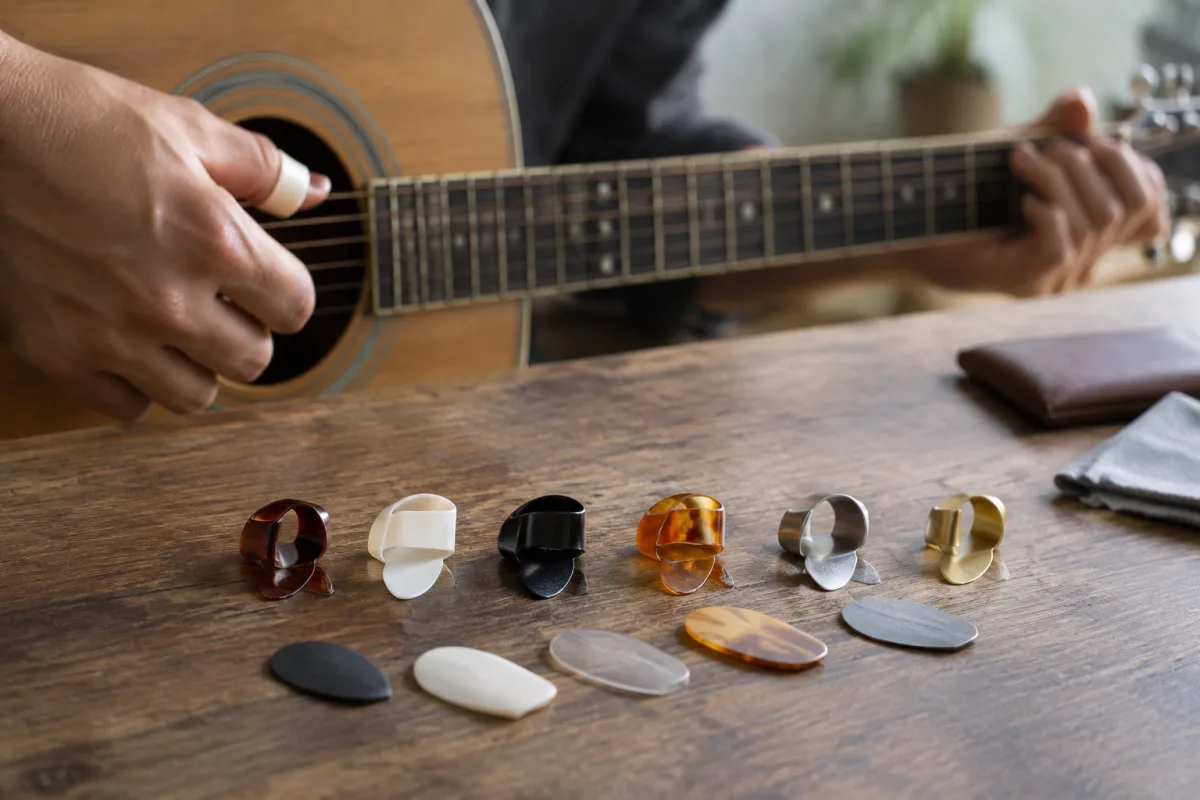
Choosing a thumb guitar pick feels trivial—it's a small accessory, inexpensive, and easy to overlook. Yet what seems like a minor detail profoundly affects tone, comfort, and playing experience. A thumb guitar pick that's too thin feels flimsy and produces thin tone; one that's too thick becomes difficult to control. Wrong materials dull your attack; poor fit exhausts your hand after short practice sessions. Understanding what separates an excellent thumb guitar pick from a mediocre one isn't about snobbery—it's about optimising your playing experience and ensuring your investment in practice time yields satisfying tone. This buying guide walks you through materials, thickness specifications, fit considerations, and brand recommendations so you can choose a thumb guitar pick that enhances rather than compromises your playing.
Thumb Guitar Pick Materials and Their Sonic Impact
The material of your thumb guitar pick determines tone colour, durability, and feel more than any other factor. Different materials deliver distinctly different characters:
- Celluloid: The classic thumb guitar pick material, warm and rounded tone. Celluloid picks wear quickly—softer players might replace them weekly. Excellent for fingerstyle blending; less suitable for aggressive picking. Most traditional and folk players favour celluloid thumb guitar picks.
- Nylon: Bright, crisp attack with longer durability than celluloid. Nylon thumb guitar picks resist fraying and maintain consistent feel across hundreds of hours of playing. Most versatile and beginner-friendly material. Nylon thumb guitar picks suit jazz, pop, and general-purpose playing.
- Tortoiseshell (genuine or resin): Warm, articulate tone between celluloid and nylon. Genuine tortoiseshell is expensive and regulated; resin alternatives capture the sonic character affordably. Professional thumb guitar pick players often prefer resin tortoiseshell for warm attack without the ethical concerns.
- Metal: Bright, aggressive tone favoured in bluegrass and fingerstyle. Metal thumb guitar picks accentuate note definition and are nearly indestructible. Downside: they can damage frets if used carelessly, and wear finger pads quickly with extended playing. Best reserved for experienced players using thumb guitar picks deliberately for specific styles.
- Stone (bone, horn, ivory alternatives): Rare but highly prized for unique tone. Natural stone thumb guitar picks are expensive and fragile, but produce warm, organic character impossible to replicate synthetically. Specialised accessory for collectors and traditionalists.
- Plastic blends: Manufacturers increasingly mix nylon with cellulose or other compounds to optimise feel and durability. These hybrid thumb guitar picks can be excellent, though they vary widely in quality.
Thickness: The Critical Specification
Thumb guitar pick thickness directly affects playability and tone, measured in millimetres (mm):
| Thickness Range (mm) | Pick Type | Tone Character | Best For |
|---|---|---|---|
| 0.4–0.6 | Thin/Light | Warm, mellow, rounded | Fingerstyle, jazz, soft playing, beginners |
| 0.6–0.8 | Medium-light | Balanced warmth and clarity | General purpose, folk, pop, learning |
| 0.8–1.2 | Medium | Clear, defined attack | Versatile, most professional players |
| 1.2–1.5 | Heavy | Bright, aggressive, cutting | Rock, metal, bluegrass, fast picking |
| 1.5+ | Extra-heavy | Maximum brightness and sustain | Metal, aggressive styles, experienced players |
Most professional thumb guitar pick players gravitate toward 0.8–1.2mm range, where tone is defined without becoming too brittle, and control is excellent. Beginners often start with medium-light (0.6–0.8mm) for comfortable feel, then discover which thickness suits their style through experimentation.
Thumb Guitar Pick Shape and Ergonomics
Traditional teardrop shapes dominate, but variations exist and affect comfort significantly:
- Standard teardrop: The default thumb guitar pick shape—curved, tapered point. Most versatile, suits diverse playing techniques. Most beginners gravitate toward standard thumb guitar picks.
- Jazz shape (triangle): Shorter, sharper point. Offers excellent precision for intricate picking but less surface area for strumming. Popular among jazz and fingerstyle players using thumb guitar picks.
- Rounded tip: Softer attack than pointed shapes. Some thumb guitar pick manufacturers offer rounded alternatives for players seeking warmer tone without switching materials.
- Grip texture: Smooth thumb guitar picks can slip during vigorous playing. Textured grips (dimpled, etched, or raised centre) prevent hand fatigue and improve control. If your thumb guitar pick slides during playing, upgrade to textured alternatives.
- Size considerations: Standard thumb guitar picks suit most players. Larger hands might prefer oversized picks; smaller hands gravitate toward compact versions. Test both before committing—wrong size exhausts your hand.
Brand Recommendations and Price Tiers
Thumb guitar pick quality varies enormously across brands:
| Brand/Type | Price Per Pick | Quality/Durability | Best Features |
|---|---|---|---|
| Generic celluloid (bulk packs) | £0.10–0.30 | Variable, short-lived | Budget-friendly for experimenting |
| Fender Standard | £0.30–0.50 | Good, consistent | Reliable, widely available, forgiving |
| Jim Dunlop Tortex | £0.50–0.80 | Excellent, long-lasting | Consistent tone, durable, professional standard |
| Ernie Ball/Slinky | £0.40–0.70 | Good durability | Bright tone, fast attack, metal options |
| Clayton | £0.60–1.00 | Excellent, precision | Premium materials, precise manufacturing |
| Stone/specialty picks | £2–10+ | Variable, collector items | Unique tone, aesthetic appeal, investment pieces |
Best value concentrates in the £0.50–0.80 range where Dunlop and equivalent brands deliver professional-grade thumb guitar picks at reasonable prices. Bulk purchases (12-packs) lower per-pick cost further. Specialty materials cost significantly more but offer character impossible to achieve with standard options.
Buying Strategies: Experimentation Matters
Finding your ideal thumb guitar pick requires sampling:
- Buy variety packs first: Many manufacturers sell assortment packs containing multiple thicknesses and materials. A £5–8 variety pack lets you experiment with different specifications before committing to full packs.
- Sample materials across one thickness: Pick a thickness (say, 0.8mm), then try celluloid, nylon, and tortoiseshell. This isolates material differences while holding thickness constant.
- Test grip comfort before buying large quantities: A smooth thumb guitar pick that slides during aggressive playing wastes money. Always test grip before bulk purchasing.
- Consider playing style when buying: Aggressive rock players benefit from heavier, brighter thumb guitar picks (1.2+ mm metal or nylon). Fingerstyle players gravitate toward lighter, warmer materials (0.6–0.8mm celluloid). Match your thumb guitar pick to your technique.
- Don't settle for uncomfortable picks: If a thumb guitar pick causes hand fatigue, numbness, or slipping, it's not "good enough" regardless of tone. Comfort during playing matters tremendously.
Common Buying Mistakes
Several errors trip up buyers when selecting thumb guitar picks:
- Assuming heavier always means better tone: Thick picks (1.5+mm) produce bright tone but can be difficult to control for beginners. The "best" thickness is the one that suits your hand, technique, and playing style—not an absolute standard.
- Ignoring the grip issue: A slippery thumb guitar pick during intense playing creates tension and hand fatigue. Many players struggle with comfort before realising a textured grip would solve the problem instantly.
- Buying expensive specialty picks without testing: Stone and exotic material thumb guitar picks are expensive. Try samples before investing in £5+ picks. Not everyone hears the sonic difference.
- Sticking with uncomfortable picks too long: Players often accept mediocre picks out of habit. Experimentation with new materials or thicknesses can revolutionise your playing comfort.
- Not considering material wear rate: Celluloid thumb guitar picks wear quickly under aggressive playing. Metal and nylon last far longer. If you're replacing picks constantly, upgrade to harder materials.
- Overlooking left-handed options: Lefty players sometimes settle for standard thumb guitar picks because alternatives are hard to find. Several manufacturers produce left-handed versions—seek them out.
Environmental and Ethical Considerations
Purchasing thumb guitar picks in bulk creates environmental impact—millions of tiny plastic pieces discarded annually. Consider these alternatives:
- Invest in durable materials: Metal or stone thumb guitar picks last years. Though expensive upfront, the per-use cost becomes negligible over time.
- Buy quality over quantity: Premium nylon or tortoiseshell thumb guitar picks last months instead of weeks. Fewer replacements mean less waste.
- Support eco-conscious manufacturers: Some brands create biodegradable or sustainable thumb guitar picks. Research options before bulk buying.
Most musicians end up with drawers full of discarded picks. Buying better thumb guitar picks and losing fewer is a small way to reduce personal consumption.
Making Your Final Decision
Your ideal thumb guitar pick is a personal preference shaped by hand size, playing style, comfort sensitivity, and sonic preference. Start by experimenting with variety packs across materials and thicknesses. Notice which feels most natural in your hand and which tone character suits your playing. For deeper context on thumb guitar picks and their role in different playing styles, see our complete guide to thumb guitar picks.
Once you've identified your preferred specifications, buy thumb guitar picks in quantity to ensure consistency. Most professional players keep several packs on hand so they never run out during practice or performance. Your ideal thumb guitar pick is waiting—you just need to test enough variety to find it.


Comments