


Guitar Hanger Hercules article
Guitar Hanger Hercules for Beginners: A Complete Guide
New guitar owner wondering about wall storage? This beginner's guide to Hercules hangers covers types, installation, safety, and why quality matters.
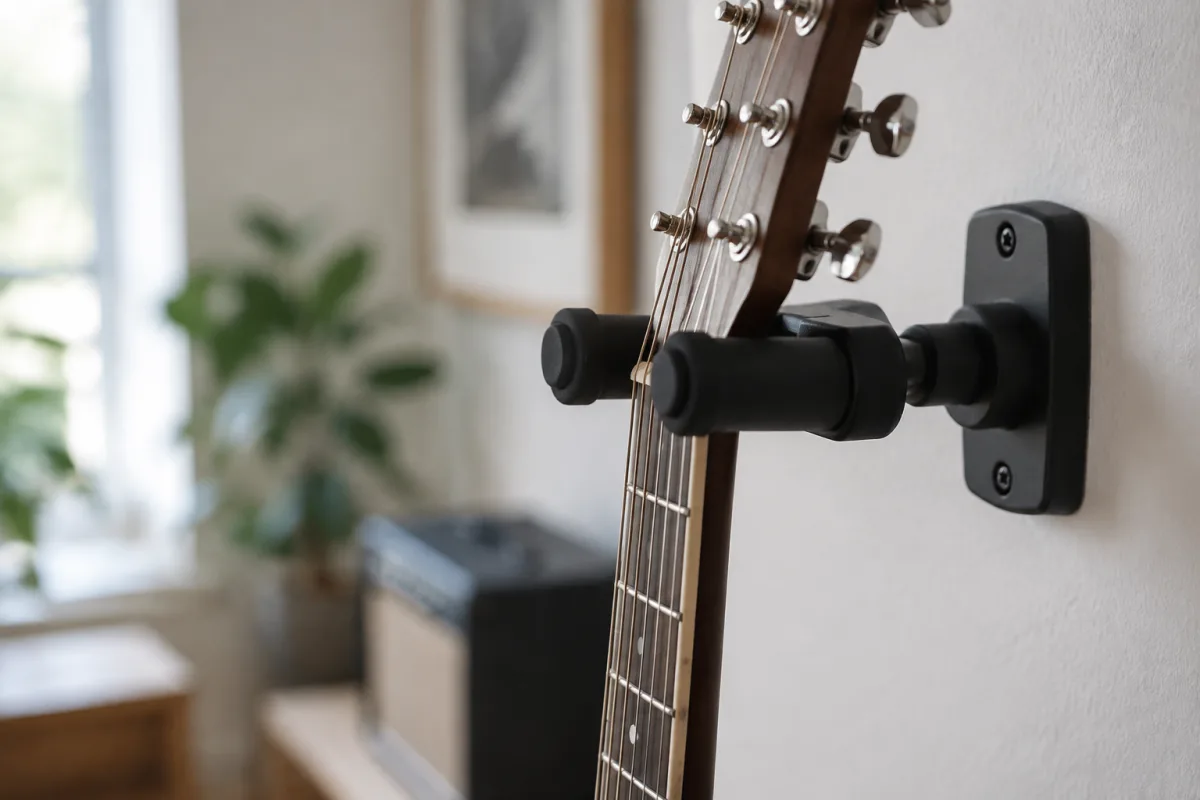
You've just bought your first guitar, and now you face a practical question: where do you keep it? Tossing it in a corner or leaving it lying down risks damage. A good guitar hanger solves this elegantly—your guitar stays visible and accessible, inspiring daily practice. Hercules makes some of the most trusted wall hangers available, and for beginners, they're an excellent choice. This guide explains what makes guitar hangers important, why Hercules stands out, and how to choose and install the right one for your space and guitar.
Why a Guitar Hanger Matters for Beginners
A guitar hanger does more than store your instrument—it changes how you relate to your guitar. When your guitar hangs at eye level on your wall, you see it constantly. This visual reminder encourages playing. You're more likely to practise if your guitar is ready to grab, not buried in a case or corner. Psychologically, a wall-mounted guitar becomes part of your space, not something tucked away.
Functionally, a hanger keeps your guitar safe. Lying guitars can get stepped on or rolled over. Cases hide them but require opening and retrieving, creating friction. A hanger provides the best of both worlds: secure, accessible, visible storage that protects your investment and encourages learning.
Understanding Hercules Guitar Hangers
Hercules is owned by K&M, a German company specializing in music equipment stands since 1912. Hercules hangers are engineered specifically for guitars, designed with padding to prevent damage. They're found in homes, studios, and music shops worldwide because they work reliably. For beginners, this reliability is worth its weight—you're not gambling on unknown brands.
Hercules offers several hanger designs, each suited to different scenarios. Understanding the lineup helps you pick the right one.
Types of Hercules Guitar Hangers
Wall Hangers (Standard): Mount directly to your wall. The most common type. Examples include the Hercules GSP39WB (wall mount with adjustable arms). Simple, clean, reliable. Ideal for permanent home display.
Auto-Grip Hangers: Clamp the headstock automatically when you hang the guitar. No fiddling with straps. The guitar hangs securely and releases easily. Examples: Hercules GSP39 Plus. Convenient for players who grab and replace their guitar frequently.
Locking Hangers: Include a lock mechanism preventing accidental removal. Useful if you have curious pets or children. Examples: Hercules GSP40L. Adds security without looking bulky.
Travel-Portable Hangers: Lightweight, compact designs for players who move frequently. Examples: Hercules Travlite (desktop or door mount). Great for students or gigging musicians.
Stand-Based Hangers: Don't require wall mounting. Free-standing floor stands. Examples: Hercules GSP39 Stand. Perfect for renters who can't drill into walls. Flexible but require floor space.
Key Features to Understand
Padding and Material: All Hercules hangers feature soft padding (usually velvet or foam) protecting guitar finishes. Avoid cheap hangers with hard plastic—they scratch finishes. Hercules's padding is the standard and it works.
Auto-Grip Technology: This Hercules innovation grips the headstock automatically when you place the guitar. No manual adjustment needed. Convenient but slightly more expensive. Worth it if you move your guitar frequently; unnecessary if it stays mounted permanently.
Adjustability: Many Hercules models feature adjustable arms and angles. This flexibility accommodates various guitar body shapes and wall configurations. Look for this feature if you own multiple guitars or unusual body shapes (12-strings, oddly contoured basses).
Weight Capacity: Most Hercules hangers safely hold 3–4kg (typical guitar weight). Bass guitars are heavier (5–6kg)—check specs if hanging a bass. Wall anchors and mounting hardware supplied with Hercules products are rated for typical loads; follow manufacturer guidance for safety.
Choosing Your First Hercules Hanger
Here's a practical decision matrix:
| Scenario | Recommended Model | Why |
|---|---|---|
| Renting or can't drill walls | Hercules Stand-Based (GSP39) | No installation, moves with you, takes floor space |
| Permanent home setup, one guitar | Hercules Wall Mount (GSP39WB) | Simple, clean, costs less, perfectly reliable |
| Multiple guitars | Hercules Auto-Grip Plus (multiple units) | Flexibility to adjust for different shapes, convenience of auto-grip |
| Frequent travel/portable | Hercules Travlite | Compact, lightweight, door-mount option |
Installation Basics for Beginners
Hercules wall hangers require basic installation. Here's what to expect:
- Locate wall studs using a stud finder (£10–£20). Studs provide solid mounting.
- Mark mounting holes on the wall at stud locations. Use the included template or measure carefully.
- Drill pilot holes slightly smaller than mounting screws.
- Screw the hanger bracket securely to the wall using provided hardware.
- Test with hand pressure before hanging your guitar—bracket should not move.
- Gently place your guitar on the hanger, adjusting as needed for comfort and balance.
If you're uncomfortable drilling or renting and can't drill walls, skip wall mounting entirely. Use a stand-based hanger instead—they're equally reliable and require zero installation.
Safety Considerations Every Beginner Should Know
Wall Quality Matters: Drywall alone won't support a guitar hanger safely. Mount into wall studs (solid wood) whenever possible. If studs aren't available, use heavy-duty drywall anchors rated for your guitar's weight. Cheap plastic anchors fail—invest in quality.
Test Before Trusting: After installing, hang your guitar and pull gently on it from multiple angles. The bracket shouldn't shift or creak. If it does, something's wrong. Reinstall or seek professional help before leaving your guitar hanging.
Insurance and Rented Spaces: If renting, check your lease. Some landlords forbid wall mounting. Using a stand-based hanger avoids this issue entirely. You keep your deposit; your guitar stays safe.
Humidity Awareness: A wall-mounted guitar is exposed to room humidity. If you live in a dry climate, monitor humidity (aim for 45–55%). In humid climates, hang the guitar where air circulates around it. Avoid directly above radiators or in bathrooms.
Common Beginner Mistakes to Avoid
Buying a cheap no-name hanger: Tempting but risky. Your guitar represents an investment. A £15 hanger saving might cost you a £200+ guitar if it fails. Hercules costs £30–£80 and will outlast your playing career.
Mounting to drywall alone: This is the main failure mode. Always use studs. If studs aren't available, use a stand-based hanger instead.
Ignoring the template: Hercules supplies mounting templates for a reason. Use them. Precise positioning ensures even weight distribution and safe mounting.
Hanging near heat or direct sunlight: Prolonged sun exposure fades guitar finishes. Heat from radiators or vents can damage finishes and warp wood. Choose a wall away from these hazards.
Never testing the bracket: After installing, physically test the hanger's security before trusting it with your guitar. A simple hand-pull test catches installation errors.
Maintenance and Longevity
Hercules hangers require minimal maintenance:
- Dust the hanger and guitar regularly. A microfiber cloth works perfectly.
- Occasionally check that mounting bolts are still tight. Vibration can loosen them over time.
- If padding becomes worn or compressed, contact Hercules—replacement pads are available.
- In humid climates, wipe condensation from the hanger if it appears overnight.
Budget Considerations
Hercules hangers range from £25 (basic wall mount) to £120 (premium auto-grip or stand-based). For your first hanger, the basic wall mount (£30–£50) is perfectly adequate. You can always upgrade to auto-grip later if you want convenience. Don't overspend on features you don't need yet.
Alternatives to Wall Mounting
If wall mounting isn't suitable, consider alternatives:
Guitar Cases: Safe but inconvenient. Your guitar stays hidden, discouraging practice.
Instrument Stands (Floor): Stable, no installation, portable. Take up floor space and look less elegant than wall hangers. Better than cases but not as visually striking as wall mounts.
Hercules Stand-Based Hangers: The best compromise between wall mount elegance and renter flexibility. Recommended for all beginners in rental properties.
Aesthetic Considerations
Your guitar will be visible, so consider aesthetics. A wall hanger becomes part of your room's look. Hercules hangers come in black and silver finishes. Choose based on your room décor. A beautiful guitar in a quality hanger becomes room art—something you're proud to display.
For a comprehensive overview of guitar storage solutions, wall hanger options beyond Hercules, and professional display techniques, consult the complete guide to guitar hanger Hercules.
Conclusion
A Hercules guitar hanger transforms how you store and enjoy your instrument. It keeps your guitar safe, visible, and inspiring to play. For beginners, choosing Hercules means investing in reliability—you're not gambling on unknown brands. Mount it properly into wall studs, test the installation, and your guitar hangs securely for years. If you can't drill walls, use a stand-based model instead. Either way, getting your guitar off the floor and into a quality hanger immediately improves your practice habits and protects your investment. That's the true value of the right hanger.



Comments