
Guitar Tuner for Ukulele article
The Complete Guide to Guitar Tuner For Ukulele
You can absolutely tune a ukulele with a guitar tuner. Discover how to do it correctly, what types of tuners work best and whether you need a separate ukulele tuner.
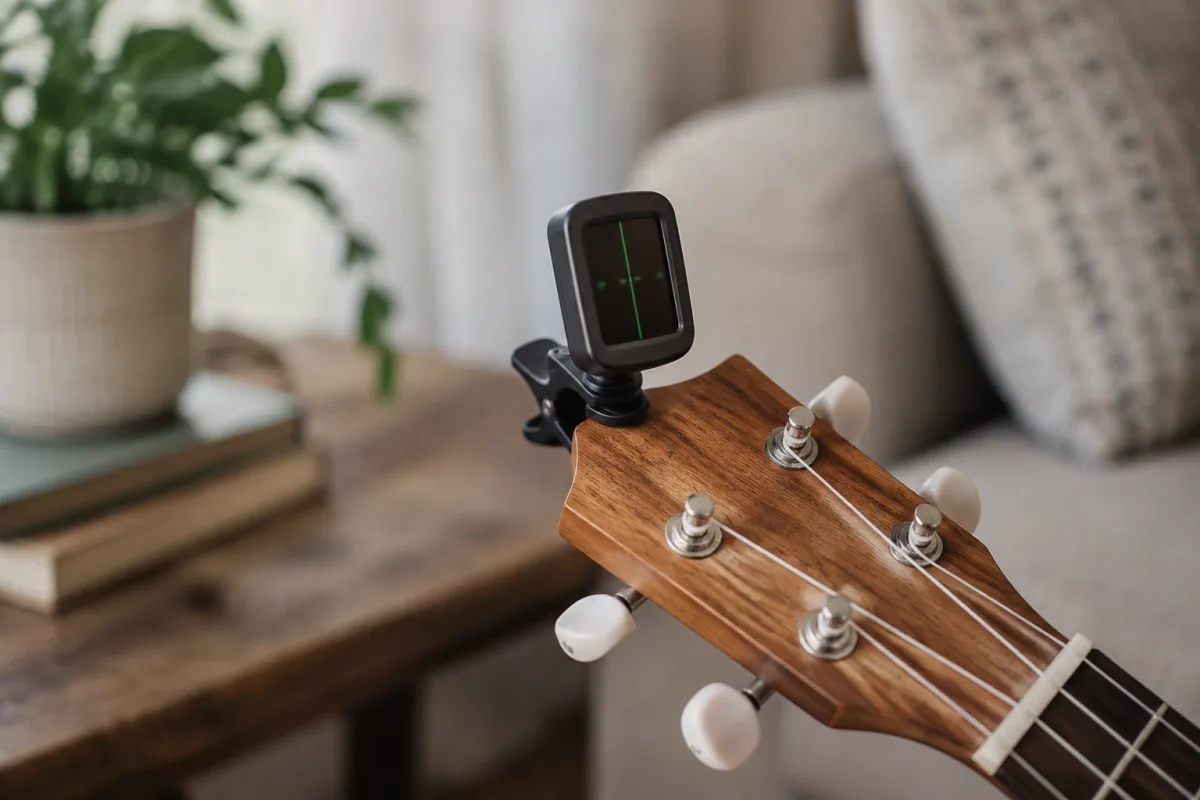
Can a guitar tuner work with a ukulele? The answer is a resounding yes, with an important qualification: a guitar tuner will function with a ukulele, but understanding the string tunings and using the correct tuning mode ensures accuracy. This guide explains how guitar tuners work with ukuleles, what to look for in a universal tuner, and how to tune your ukulele reliably using guitar or multi-instrument tuners.
How Guitar Tuners Work
A guitar tuner uses a microphone or piezoelectric sensor to detect the pitch of vibrating strings, then displays the note name and whether it's sharp (too high), flat (too low) or in tune. Most guitar tuners recognise notes across a wide range of pitches, well beyond just guitar strings. A guitar tuner typically measures from around 30 Hz to 4 kHz, covering the full range of guitar, ukulele, bass and other stringed instruments.
The key question is tuning mode: a guitar tuner set to standard guitar tuning won't help you tune a ukulele to soprano tuning. However, chromatic tuners (which detect any note, not just specific string tunings) work perfectly with ukuleles.
Types of Tuners Suitable for Both Guitar and Ukulele
Chromatic Tuners
A chromatic tuner detects the pitch of any note and displays it on a spectrum. These are universal—use them for guitar, ukulele, bass, mandolin, violin or any pitched instrument. Just pluck a string, watch the display and adjust until it shows the correct note. A chromatic tuner is the most flexible option for musicians who play multiple instruments.
Multi-Instrument Tuners
Some tuners have preset modes for different instruments—guitar, ukulele, bass, violin, etc. When you select ukulele mode, the tuner displays the correct standard tuning notes for soprano ukulele (G, C, E, A). These are convenient because they show note names specific to your instrument, reducing guesswork.
Guitar-Only Tuners with Chromatic Backup
Many guitar tuners include a chromatic mode alongside standard guitar tuning mode. This hybrid approach lets you tune a guitar normally via preset, then switch to chromatic mode to tune a ukulele or other instruments. These are excellent affordable options.
Popular Tuner Types and Their Suitability
| Tuner Type | Works with Ukulele? | Notes |
|---|---|---|
| Clip-on tuners | Yes (if chromatic or multi-instrument) | Most modern clip-ons are chromatic; check specifications before buying |
| Pedal tuners | Yes (if chromatic) | Professional-grade; often chromatic for versatility |
| Smartphone tuner app | Yes (if chromatic) | Free apps like Tune-O and GuitarTuna include chromatic and ukulele modes |
| Guitar stand tuner | Sometimes | Guitar-specific; check if chromatic mode exists |
| Tuning fork | Yes | Universal; requires good ear training to use effectively |
Standard Ukulele Tunings
Most sopranos use standard tuning: G-C-E-A (often written G4-C4-E4-A4 to specify octaves). Some players prefer re-entrant tuning (the G is higher, creating a "plinky" sound) or low-G tuning (the G is lower, sounding mellower). When using a guitar tuner with a ukulele, knowing which tuning you want is essential. A chromatic tuner simply shows note names; you decide the target pitch.
Using a Guitar Tuner on a Ukulele: Step by Step
First, ensure your tuner is in chromatic mode (not guitar-specific mode). Second, pluck the first (G) ukulele string. Third, watch the tuner display. Fourth, tighten or loosen the tuning peg until the display shows "G" and the needle or LED is centred. Fifth, repeat for the remaining strings (C, E, A). Within minutes, your ukulele is accurately tuned.
Advantages of Chromatic Tuners for Ukulele Players
A chromatic guitar tuner or universal tuner offers flexibility. Use it on guitar, ukulele, bass and any other instrument in your collection. It's faster and more accurate than relying on your ear alone. A quality clip-on chromatic tuner costs £10–£30 and lasts years. Smartphone apps are free or cheap. Either approach beats buying a separate ukulele-specific tuner if you already own a guitar tuner.
Common Mistakes to Avoid
Don't use a guitar-specific tuner without checking if it has chromatic mode—you'll struggle to tune a ukulele correctly. Don't assume your tuner is chromatic; verify in the product specifications or manual. Don't forget to account for re-entrant versus low-G tuning; a standard tuner doesn't know your preference—you must know what pitch you're aiming for.
Conclusion
A guitar tuner absolutely works for tuning a ukulele, provided it's chromatic or has a multi-instrument mode. If you already own a guitar tuner, check if it includes chromatic functionality. If so, you're ready to tune your ukulele today. If not, consider upgrading to a modern chromatic clip-on tuner—one device handles your entire instrument collection reliably and affordably.


Comments