


Cool Guitar Tuner Buying guide
Cool Guitar Tuner: A Complete Buyer's Guide
Choosing a cool guitar tuner means balancing response speed, display readability, and form factor against your budget and playing situation. Find out what matters when comparing tuners.
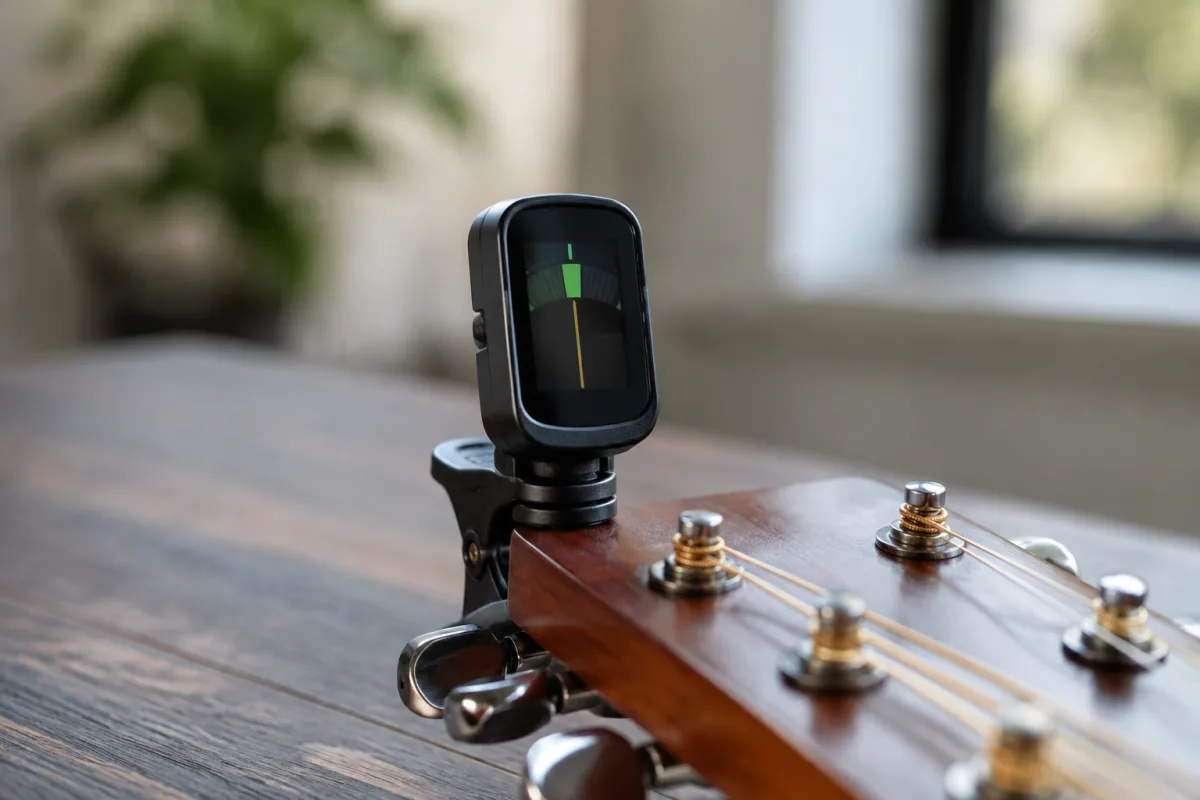
A cool guitar tuner is as much about finding reliable tuning technology that matches your playing style as it is about personal preference. Modern tuners come in surprisingly different forms—chromatic pedals, clip-ons, smartphone apps, and polyphonic models—each with distinct strengths depending on whether you play live, record, or practice in isolation.
Tuning Speed and Response Time
Fast response is the first thing to check when buying a cool guitar tuner. Budget tuners often lag by half a second or more, forcing you to adjust your pick pressure or hold a note longer than feels natural. Quality guitar tuners lock onto pitch within 100–200 milliseconds. Polyphonic models that detect all six strings simultaneously are faster still, though they're also pricier. If you play live, a sluggish tuner becomes noticeable and irritating; for home practice, it matters less but still affects your feel for in-tune pitch.
Accuracy and Cent Precision
Entry-level cool guitar tuners typically claim ±1 cent accuracy. In practice, this means they're close enough for standard tuning and casual playing. Professional-grade models offer ±0.1 cent accuracy, which is genuinely useful only if you're doing precision microtonality or very exacting studio work. For most players, ±1 cent is perfectly adequate. The real difference is whether the display is large enough and responsive enough to see small adjustments clearly. A cool guitar tuner with a tiny, slow-to-update display will feel imprecise even if the electronics are accurate.
Display Type and Brightness
Tuners fall into three display categories: LED lights, LCD/digital screens, and modern full-colour displays. LED lights are simple and fast but offer minimal feedback—you mainly see whether you're sharp or flat. LCD screens show cent deviation and are readable in daylight. Full-colour displays (increasingly common on polyphonic and strobe tuners) are easier to glance at and often include tuning modes, history, and other features. If you play outdoors or on a bright stage, test the specific model in similar light before buying; some screens wash out badly.
Tuning Modes and Flexibility
Chromatic tuning (all notes, all strings) is the standard and sufficient for 99% of players. Some cool guitar tuners add alternate modes: alternate tunings (drop D, open G, etc.), bass tuning, ukulele, and even violin. These are rarely essential for a guitar player but can add value if you occasionally play other instruments or experiment with alternate tunings. Check whether mode-switching is intuitive on the model you're considering; a tuner buried under five menu levels is annoying in a live setting.
Polyphonic vs. Chromatic Tuning
Polyphonic tuners detect all six strings simultaneously, which is genuinely convenient—you strum your open strings and see all six on the display at once. They're more expensive and generally used in studio or live rig settings where speed and hands-free operation matter. Chromatic tuners require you to pluck each string individually but are smaller, cheaper, and nearly as fast in practice. For live use, a clip-on chromatic tuner is actually faster than fumbling with a polyphonic display, so the upgrade isn't as straightforward as it seems.
Form Factor and Convenience
Clip-on tuners attach to your headstock and cost £15–£40. They're quick to grab and visible on stage, though slightly awkward in a crowded green room. Pedal tuners (£60–£200) sit on your pedalboard and often include other features; they're the default for live gigging. Handheld tuners (£20–£100) are portable and versatile but require a free hand. Smartphone apps are free but drain your battery and require setting up audio routing, which is fiddly in a live setting. For a cool guitar tuner that works for multiple scenarios, a clip-on plus a free app covers most bases without spending much.
Budget Tiers: What You Actually Get
Under £20, you get basic chromatic tuning, often with a small display and sluggish response. They work for home practice but feel slow and imprecise on stage. The £20–£50 range is where most working musicians live: reliable clip-ons, pocket-sized handhelds, and basic pedals with decent displays and snappy response. £50–£150 adds polyphonic tuning, larger displays, alternate tuning modes, and better build quality. Over £150, you're paying for premium brands (Korg, Boss), specialist features (strobe tuning), or all-in-one pedalboard integration. Unless you're a full-time touring player, spending more than £80 rarely adds proportional value.
Build Quality and Durability
Battery life and weatherproofing matter more than you'd expect. Tuners left on accidentally drain batteries in hours; look for auto-shutoff. If you play outdoors regularly, IP54 water resistance or better is worth the extra cost. Headstock clip-ons take knocks; reinforced hinge joints and rubberised grips reduce snapping. Check user reviews for specific models—a cheap tuner with poor battery endurance will be more frustrating than a slightly dearer one that lasts a full week of sessions on two batteries.
Strobe Tuning and Niche Features
High-end cool guitar tuners sometimes add strobe displays or multi-instrument profiles. Strobe tuning is genuinely precise but overkill unless you're doing microtonal work or extremely critical studio recording. Multi-instrument profiles (for ukulele, violin, mandolin) are a nice bonus if you're a multi-instrumentalist, but not a selling point for a pure guitar tuner. Most "premium" features are marketing; the core job—fast, accurate tuning—is solved by any tuner in the £30–£60 range.
Testing Before You Buy
If possible, try a tuner in person. Borrow a friend's clip-on for a rehearsal and notice how its response feels. Read reviews from gigging musicians, not just studio reviewers—live use exposes frustrations that lab reviews miss. Check return policies; some tuners feel wrong only after you've used them for a few hours. Online reviews from players in your genre (metal, folk, jazz) often spot issues relevant to your actual playing style.
Brand Considerations and Warranty
Korg, Boss, TC Electronic, and Snark are the reliable names. They back their products with warranties and release firmware updates for digital models. Cheaper unbranded tuners from online marketplaces often vanish, leaving you without support if something breaks. A tuner from a known brand at £40 is better value than an unknown model at £25 because you can actually contact someone if it fails.
For more about what cool guitar tuners are and how they work, see the complete guide to cool guitar tuner. When choosing a cool guitar tuner, prioritise response speed and display readability over novelty features; a fast, reliable tuner you actually use beats a feature-rich one you find frustrating.
Frequently Asked Questions
What should I look for when buying a cool guitar tuner?
Start with response time—aim for 100–200 milliseconds lock-on speed. Check the display brightness and readability in daylight. Accuracy to ±1 cent is sufficient for most playing. Choose a form factor that suits your situation: clip-on for live gigs, handheld for practise, or a pedal if you already have a rig. Test one if you can before committing to the purchase.
Are expensive cool guitar tuners worth the cost?
Not always. A £40 clip-on from a reputable brand does the same core job as a £150 pedal. You're paying for convenience features (polyphonic tuning, larger display, pedalboard integration), not necessarily better tuning. Unless you're touring or recording in studios, the mid-range options provide better value than premium models.
Is a polyphonic tuner worth buying?
Only if you value speed and hands-free operation. Polyphonic tuners detect all six strings at once, which is convenient in a studio or on a crowded stage. However, a good chromatic tuner is nearly as fast in practice and much cheaper. For home players and gigging musicians, chromatic tuning is the practical choice.
Can I just use my smartphone to tune?
Free tuning apps work reasonably well for practise, but they drain your battery, require audio routing setup, and are slow in a live setting. A tuner app is a useful backup but not a replacement for a dedicated device. The convenience premium of a physical tuner pays for itself within months if you play regularly.
What battery life should a cool guitar tuner have?
Look for at least 20 hours per battery set. Many modern tuners achieve 40–100 hours with auto-shutoff. Always check the actual spec for the model you're buying; cheap tuners drain batteries rapidly and will frustrate you mid-session.
Should I buy a cool guitar tuner online or try one in person?
Try in person if you can—feel the clip pressure on your headstock, test the display in daylight, and see how responsive the needle or LED feels. If buying online, ensure there's a return window of at least two weeks. Return policies matter more for tuners than most gear because feel and response are subjective.


Comments