
Electric Bass Guitar Strap article
The Complete Guide to Electric Bass Guitar Strap
A quality bass guitar strap distributes weight evenly across your shoulder, prevents slipping, and transforms comfort during rehearsals and performances — a practical accessory worth choosing carefully.
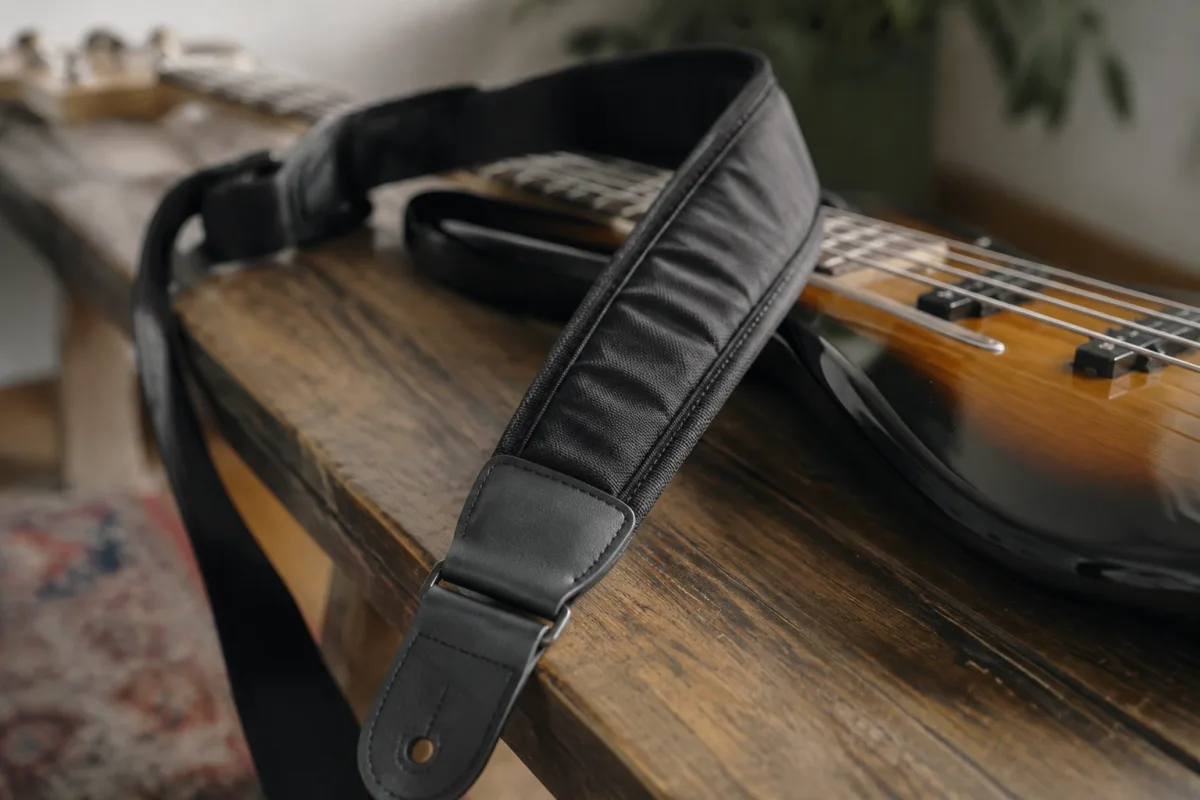
An electric bass guitar strap is often overlooked, treated as an afterthought rather than a practical tool that profoundly affects comfort and performance. A good bass strap distributes weight evenly, prevents slipping during playing, and sits comfortably for hours. Whether you're rehearsing, gigging, or playing casually, choosing the right strap transforms how the instrument feels in your hands and on your body.
Why Strap Quality Matters
Bass guitars are heavier than electric guitars — often 8–11 pounds depending on the instrument. That weight sits on your strap for every moment you play standing up. A poorly designed strap concentrates pressure on a narrow shoulder area, creating discomfort within minutes. A good strap distributes the weight across your shoulder and back, making long sets feel effortless. It's a straightforward ergonomic principle: more surface area equals lower pressure and greater comfort.
Beyond comfort, a quality strap prevents the instrument from slipping during play. A slippery or overstretched strap introduces tension and distraction; a secure strap lets you forget the mechanics and focus on playing.
Strap Width and Padding
Width is the primary comfort variable. Narrow straps (under 2 inches) concentrate pressure and feel uncomfortable on long gigs. Wide straps (3–4 inches) distribute weight across a larger area, significantly improving comfort. The trade-off is that wider straps are more visible and less aesthetically minimal.
Padding is the second crucial feature. Thin, unpadded straps cut into your shoulder within a few minutes. Padded straps — usually memory foam or neoprene — absorb impact and conform to your body. Good padding is thick (half an inch or more) and dense enough to resist compressing fully under weight, yet soft enough to feel comfortable against your skin.
Materials and Durability
Leather straps are traditional, look professional, and age beautifully, developing character over time. Genuine leather is durable and comfortable but requires occasional conditioning to prevent cracking. Leather straps usually lack padding, so comfort depends on width and shoulder conditioning.
Synthetic materials — nylon, polyester, neoprene blends — offer padding, washability, and durability without the maintenance leather requires. They're typically more affordable and often feature bold patterns or colours. The downside: synthetic materials can look cheaper and sometimes feel plasticky against skin.
Cotton blends offer a middle ground: natural feel, reasonable durability, and often include padding. Hemp and other natural fibres are growing in popularity among conscious consumers, though they're less common and typically more expensive.
Attachment Methods
Most bass straps attach via two standard methods. Pin-type attachments (a metal post screwed into the bass) are fast to detach and re-attach, essential for quick strap changes during gigs. Button-hole straps loop over a button-like attachment, are more difficult to change quickly but are less likely to slip off accidentally.
Some vintage and boutique bass guitars use alternative attachment points — strap pegs screwed into the neck heel, for example. Check your bass before purchasing a strap; the attachment method must match your instrument.
Strap Length and Adjustment
Bass straps need greater length than guitar straps because bass players typically wear the instrument lower for visual and ergonomic reasons. Most quality straps adjust from roughly 40 to 60 inches; some extend longer for larger players or distinctive playing positions.
Adjustment mechanism matters. Sliding hardware (a length-adjusting knob or slide) lets you quickly change position without removing the strap. Notch-based systems are fixed at predetermined lengths — less flexible but simpler and often more affordable.
Design and Aesthetics
Straps range from minimalist black leather to elaborate jacquard, embroidered, or psychedelic designs. Aesthetics matter; you'll wear this accessory for hours during performance. Some players prioritise blending with their instrument and stage presence; others choose bold colours or patterns for statement value. Both approaches are valid.
Consider your bass colour and your typical performance context. A bright neon strap might not suit a serious jazz setting but could be perfect for rock or funk. Choose something you'll enjoy looking at and wearing.
Specialised Features
Some straps include specialised features worth considering. A tie-down loop (a small loop at the bottom of the strap) prevents the bass from swinging away from your body during active play. A contoured design may feature extra padding where your shoulder sits. Some straps include small pockets for picks or leads — practical if you're a working musician juggling multiple gigs.
These features add cost but can genuinely improve functionality if they suit your playing style and needs.
Budget Considerations
You can find serviceable bass straps for £15–30, adequate padded straps for £30–60, and quality leather or boutique designs from £60 upwards. The value threshold is around £40–50, where you get reliable padding, good width, adjustability, and decent materials without premium pricing.
Spending more than £100 on a strap is purely for aesthetics or luxury materials; performance and comfort plateau well below that price point.
Strap Care and Maintenance
Leather straps benefit from occasional conditioning to prevent drying and cracking. Synthetic straps are usually machine-washable — check the manufacturer's instructions. All straps should be inspected periodically for wear at the attachment points; fraying or tearing at these stress points can cause the strap to fail during performance.
A quality strap, well cared for, lasts many years. It's an accessory worth treating seriously.
Conclusion
A quality electric bass guitar strap is a practical investment that transforms comfort and performance. Width, padding, material, and attachment method are the key considerations. Choose a strap that distributes weight evenly, secures your instrument safely, and looks right on stage. Your shoulder and your musicianship will thank you.


Comments