


Wooden Guitar Stand article
Wooden Guitar Stand for Beginners: A Complete Guide
As a beginner guitarist, choosing your first wooden guitar stand feels daunting. This guide walks you through what to look for, common mistakes to avoid, and budget-friendly options that actually work—so you can protect your instrument with confidence.
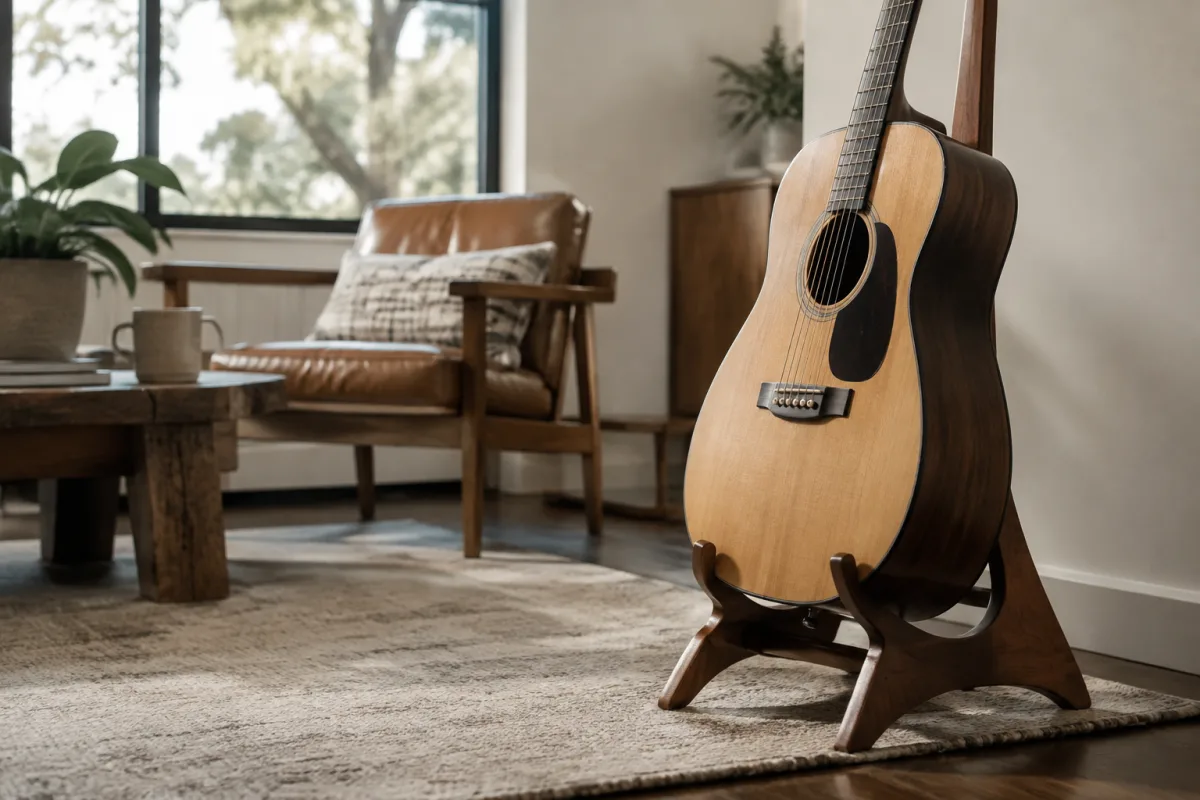
Buying your first wooden guitar stand feels like a big decision when you're new to guitar. You're not sure what to look for, whether wood is really better than metal, or if you're about to waste money on something your guitar will quickly outgrow. Take a breath—choosing a wooden guitar stand is actually simpler than you think, and we're here to walk you through it so you feel confident in your purchase.
Why Beginners Often Feel Uncertain About Wooden Guitar Stands
As a new guitarist, you're juggling so many new things: learning chords, building finger strength, figuring out if your instrument is decent quality. Adding a guitar stand to the mix can feel overwhelming, especially with all the options out there. Many beginners worry they'll buy the wrong thing, spend too much, or invest in something they won't actually need. These concerns are completely valid—but they're often based on overthinking rather than real problems.
The truth is, a wooden guitar stand for beginners serves one simple purpose: safely holding your guitar when you're not playing. You don't need fancy features. You don't need the most expensive model. What you need is something sturdy, gentle on your instrument, and easy to use. That's exactly what this guide is for.
The First Step: Understanding What a Wooden Guitar Stand Actually Does
Before you buy anything, let's clear up the main misconception. A wooden guitar stand isn't special or complicated. It's a frame that cradles your guitar's neck and body, keeping your instrument upright and stable. Wooden stands are popular with beginners because wood is naturally soft—it won't scratch, dent, or damage your guitar's finish the way metal might. For a beginner guitar, this peace of mind is worth it.
When your guitar sits on a stand, it stays in one place, safe from being accidentally kicked or stepped on. You can practice more frequently because your guitar is right there, ready to go, rather than locked away in a hard case. This accessibility is one reason why wooden stands help beginners stay motivated.
What to Check Before You Buy: The Beginner's Checklist
You don't need to be an expert to find a good wooden guitar stand. Focus on these key areas:
- Base stability: The stand should feel solid when you rock it gently. No wobbling. A wide base (at least 20 inches across) prevents tipping when your guitar is resting on it.
- Neck support: There should be a padded or velvet-lined area where the neck sits. This padding is crucial—it protects your instrument's finish. Run your finger across it; it should feel soft, not rough.
- Body cradle: The part that holds your guitar's body should be smoothly curved, not sharp or angular. Again, padding or velvet is your friend.
- Wood quality: Look for stands made from oak, beech, or similar hardwoods. These are durable and won't easily dent or splinter. Softer woods like pine are cheaper but more prone to damage.
- Weight capacity: Most wooden stands safely hold guitars up to 14 pounds, which covers standard acoustic and electric guitars. If you're using an oversized or heavier guitar, check the specifications.
- Portability: As a beginner, you might want to take your guitar to lessons or a friend's house. Some wooden stands fold or break down. Others are permanent fixtures. Choose based on your lifestyle.
The Easiest Path: What to Avoid So You Don't Get Stuck
Beginners often make these common mistakes when choosing a wooden guitar stand. Knowing what to avoid will save you money and frustration:
- Buying unpadded stands: A bare wooden frame might seem cheaper, but it will scratch your guitar. The padding costs very little; choose it every time.
- Choosing stands with tiny bases: If the base is too narrow, the whole thing feels tippy. Your guitar (and your confidence) will suffer.
- Assuming all wood is the same: Plywood and particle board are much cheaper than solid hardwood, but they warp and break more easily. Spend a few extra pounds for solid wood.
- Forgetting to check guitar fit: Some stands are designed for specific body shapes. If you have a jumbo acoustic, a stand made for classical guitars might not work. Measure your guitar's body width and check the stand's specifications.
- Buying the cheapest option: The absolute budget stands often have poor padding and unstable bases. You don't need the most expensive model, but the cheapest ones usually aren't worth the risk to your guitar.
Finding Your Starting Point: Budget-Friendly Options That Actually Work
Good news: you can find a solid wooden guitar stand for £30 to £60. Here's what you get in different price ranges:
- £20–£35: Basic wooden stands with essential padding. These work fine for beginners, though the wood might be less premium. Perfect if you're testing whether you'll actually use a stand.
- £35–£60: Mid-range stands with better wood quality, more padding, and sturdier bases. This is where most beginners find excellent value—the sweet spot between cost and reliability.
- £60+: Premium stands with superior wood, thicker padding, and often folding capability. Only choose this if you're planning to gig or need portability.
Start in the £35–£50 range. You'll get a stand that feels solid, protects your guitar, and will last years as you progress.
Getting Comfortable: First Steps After You Bring It Home
Once your wooden stand arrives, here's how to get the most from it without any stress:
- Before placing your guitar on it for the first time, clean the velvet padding. Use a soft cloth to remove any dust from manufacturing.
- Place your stand on a flat, hard floor—not on carpet, which reduces stability.
- Gently rest your guitar on the stand, supporting the body with one hand while the neck settles into the cradle. Don't just drop it on.
- Adjust the position so your guitar feels balanced and secure. If it slides or feels precarious, reposition it slightly.
- Keep the stand in a consistent location where it won't get knocked over.
Common First-Timer Worries (And Why You Can Relax)
As a beginner, you might worry about things that aren't actually problems. Here's the reassurance you need:
Will my guitar get damaged if I leave it on the stand all the time? No. Wooden stands are designed for long-term use. Many guitarists leave their instruments on stands for months. It's actually better than storing your guitar in a case all the time, because cases can trap moisture.
Is a wooden stand better than the guitar leaning against the wall? Absolutely. Leaning a guitar against the wall risks the instrument falling and breaking. A stand keeps it secure, protected, and visible—you're more likely to pick it up and practise.
Will the padding wear out? Velvet padding is durable. With normal use, it will last years before showing any wear. Most stands won't need replacing during your first few years of playing.
Making Your Decision: You've Got This
Choosing your first wooden guitar stand doesn't require expertise. Look for solid wood, good padding, a stable wide base, and a price that feels reasonable to you. That's genuinely all you need. If you'd like even more detailed guidance, our complete guide to wooden guitar stands covers every aspect in depth at your own pace.
The beauty of a wooden stand is that it's a simple, low-risk purchase. A good one costs about what you'd spend on two decent guitar strings, and it'll give you years of reliable use. You're not making a permanent commitment—you're just creating a home for your guitar that keeps it safe and encourages you to play more often. That's exactly what you need right now as a beginner. Go ahead and get one. You're making the right choice.


Comments