


Guitar Stand Floor article
Guitar Stand Floor for Beginners: A Complete Guide
If you're picking up a guitar for the first time, a floor guitar stand is the easiest solution. It's affordable, requires no installation, and keeps your guitar safe and ready to play. Here's what beginners need to know.
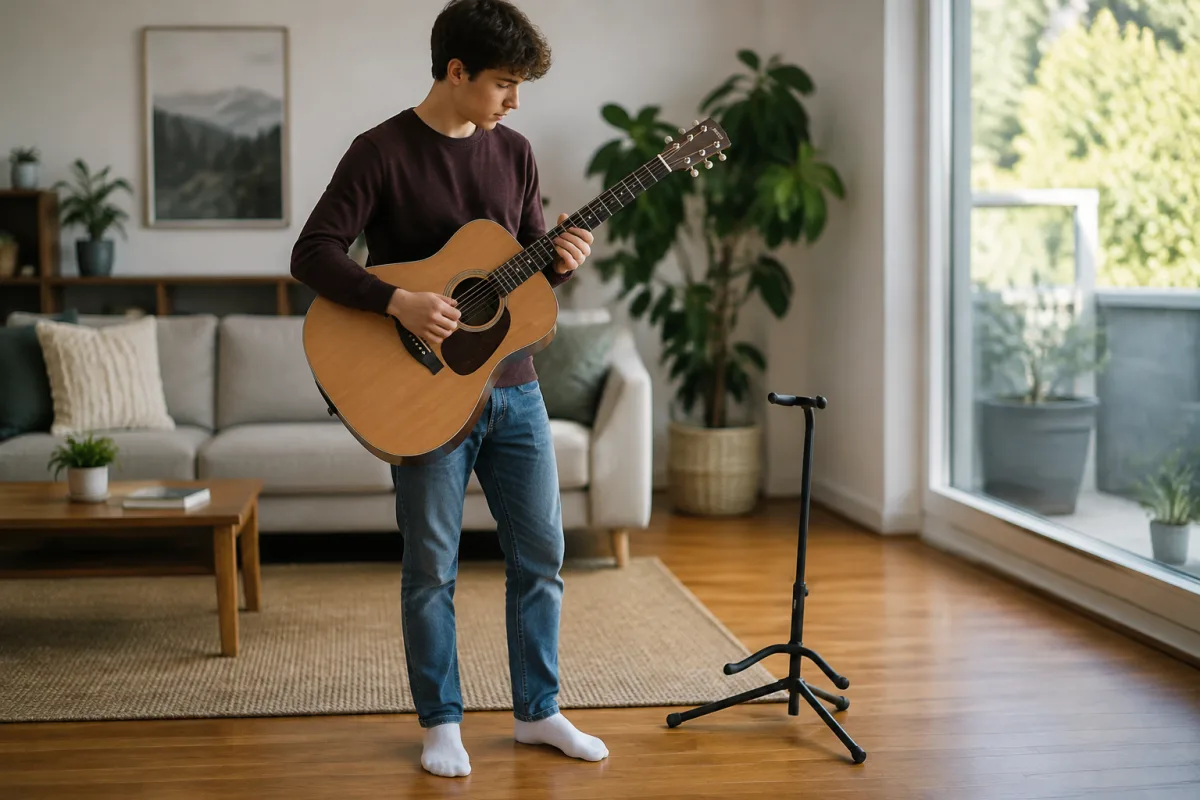
If you're picking up a guitar for the first time, you probably wonder where to put it when you're not playing. Leaning it against the wall? Leaving it on your bed? Neither feels quite right. That's where a guitar stand floor comes in. Unlike wall mounts or dedicated stands that might feel fussy or expensive, a floor-based stand is straightforward, affordable, and exactly what most beginners need. Here's what you need to know to pick one and use it properly.
Why a Guitar Stand Floor Makes Sense for Beginners
A guitar stand floor is the easiest entry point into proper instrument storage. You don't need to drill holes, install anything permanent, or worry about damaging your walls. You just place it down, pop your guitar in, and you're done. It keeps your guitar safe, accessible, and ready to grab when inspiration strikes.
For beginners, this matters because you're still building your practice routine. Having your guitar visible and easily reachable means you'll actually pick it up more often. A guitar stand floor does exactly that—it makes playing convenient and turns guitar care into a simple habit rather than an afterthought.
What to Look For: Beginner Essentials Only
When you start searching for a guitar stand floor, you'll find hundreds of options. Don't let that overwhelm you. As a beginner, ignore the fancy features and focus on three simple things:
- Stability – Your stand should feel rock-solid when you put weight on it. Pick it up, give it a gentle shake. Does it wobble? Bad sign. Is it solid? Perfect.
- Comfort for your guitar – The stand should have soft padding or rubber where it contacts your guitar's body and neck. Look for gentle curves, not hard edges or wire.
- Footprint that fits your space – Measure your bedroom, living room, or practice space. A compact stand is easier to live with than something sprawling, but make sure it's actually stable (bigger bases are more stable).
That's truly all you need to consider. Ignore the websites talking about "professional-grade construction" or "premium materials." A basic guitar stand floor costs £15 to £35 and does everything a beginner needs. You're not making a life investment; you're solving a practical problem.
Setting Up Your Guitar Stand Floor
Once you've bought a guitar stand floor, using it correctly takes about 30 seconds. Here's the process:
Step 1: Find Your Spot
Choose a flat, clear area where you won't accidentally kick it or trip over it. Somewhere warm and dry is ideal (no damp corners or direct sunlight, which can warp wood). Ideally, somewhere you pass regularly, so you're reminded to play.
Step 2: Check the Pads
Look at where the stand contacts the floor. Make sure the rubber feet or pads are in place and not damaged. If they're missing, your guitar stand floor can scratch floors and is more likely to slide around.
Step 3: Position Your Guitar
Most guitar stand floor models have two support points: one for the headstock and one for the body. Gently place your guitar in position. The neck should rest in the headstock support (not clamped, just resting), and the body sits on the lower support. If it feels at all precarious, adjust until it feels secure.
Step 4: Step Back and Look
Does your guitar look stable and properly supported? Great. Is anything twisted or at an odd angle? Adjust. Five seconds of checking saves heartache.
That's all the setup you need. Your guitar stand floor is ready to use.
Common Beginner Mistakes
Learning how to use a guitar stand floor properly means avoiding a few simple traps:
- Forgetting to check stability after moving it – If you move your stand or rearrange your space, double-check it's still solid. Accidental bumps can shift things.
- Placing it somewhere too open to traffic – A guitar stand floor in a busy hallway is asking for someone to walk into it. Keep it in a quieter spot.
- Ignoring the pads and feet – Damaged rubber means your guitar stand floor can slip, slide, or scratch floors. Keep those pads in good condition.
- Overcomplicated positioning – If your guitar feels awkward in the stand, most problems come from twisting the neck or forcing the body in wrong. Simple adjustments fix this.
- Leaving it in direct sunlight for hours – This won't destroy your guitar, but it can cause uneven heating and isn't ideal. Use common sense about where you place your stand.
Avoid these, and your guitar stand floor will serve you reliably for years.
When a Guitar Stand Floor Isn't Quite Right
Occasionally, a beginner finds that a standard guitar stand floor isn't perfect for their situation. Maybe you live somewhere cramped, or you have a larger guitar that needs different support. That's fine. Just know your options: wall mounts for tiny spaces, multiple guitar stands if you need to store several, or heavy-duty models if stability is an ongoing concern.
For 95% of beginners, though, a simple guitar stand floor solves everything. It keeps your guitar safe, visible, and ready to play. What more do you actually need?
Making It a Habit
The real power of a guitar stand floor isn't the stand itself—it's how it changes your behaviour. With your guitar always visible and ready to go, you practise more. With a dedicated space for your instrument, you start treating it with more respect. These habits compound into real progress.
If you want to dig deeper into guitar storage, support options, and the science behind protecting your instrument, our complete guide to guitar stand floor options covers all the details. But honestly, if you follow the straightforward advice here, you already know everything you need to make a good choice and keep your guitar safe and accessible.
Your guitar deserves better than a corner of your bedroom. Your guitar stand floor gives it a home, keeps it safe, and reminds you to play every time you see it. That's a small choice with a big impact on your progress as a guitarist.


Comments