


Electric Bass Guitar Stand Buying guide
Electric Bass Guitar Stand: A Complete Buyer's Guide
An electric bass guitar stand seems simple—it holds your bass when you're not playing. But the wrong stand can damage your instrument, and the right one keeps your bass safe.
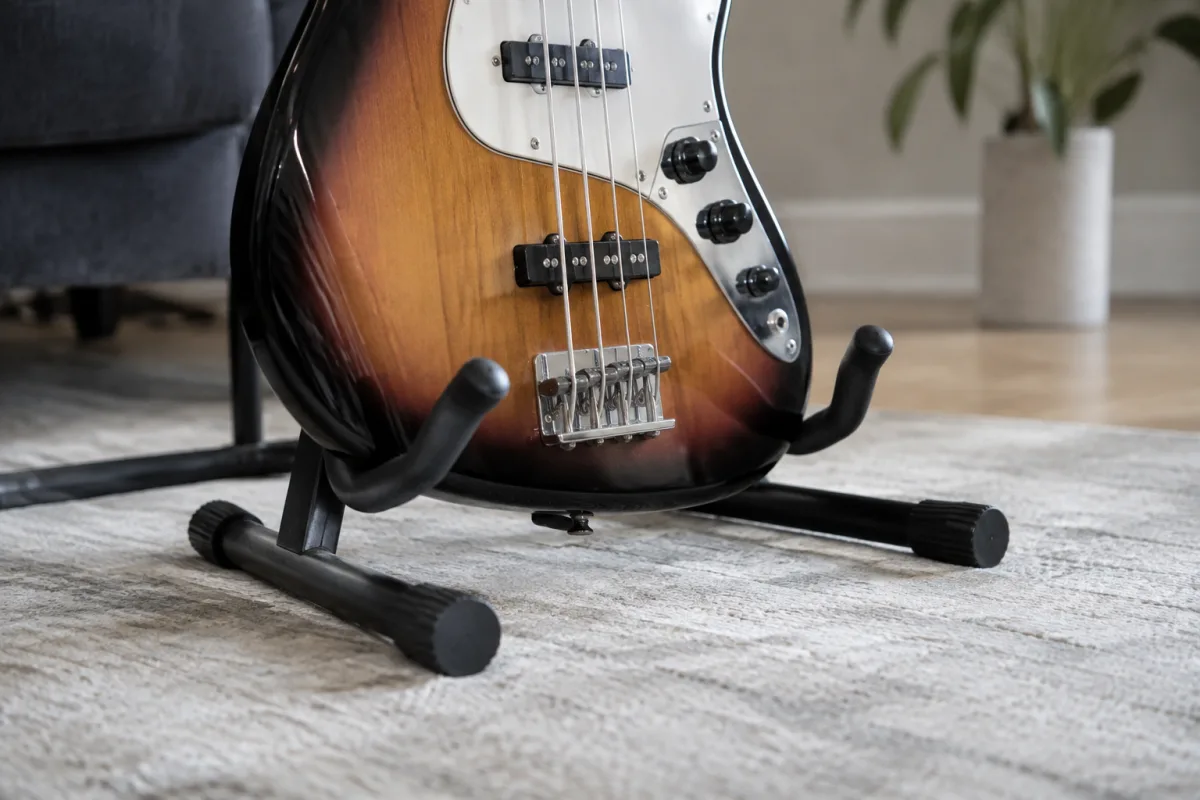
An electric bass guitar stand seems simple—it holds your bass when you're not playing. But the wrong stand can damage your instrument, and the right one keeps your bass safe, accessible, and displaying beautifully in your studio or home. This guide cuts through the options and tells you what actually matters when choosing an electric bass guitar stand.
Why the Stand You Choose Matters
An electric bass leans against or rests on something roughly 8-10 hours a day when you're not actively playing. Over months and years, a poorly designed stand can:
- Create dents or marks on your bass body where contact points dig in
- Damage your finish with cheap synthetic materials that absorb moisture
- Tip over if unstable, dropping your bass and causing serious damage
- Scratch or mar the neck if the stand's contact surfaces are harsh
A good stand prevents all of these. It's a small investment that protects an instrument worth hundreds or thousands of pounds.
Price Tiers and What You're Investing In
Electric bass guitar stands range from around £15 to £120+. Each price bracket tells a story:
| Price Range | Stand Type | Best For | Typical Lifespan |
|---|---|---|---|
| £15-35 | Budget stands with plastic or foam contact surfaces | Beginners, temporary storage, lightweight basses | 2-3 years before degradation |
| £35-70 | Mid-range stands with quality padding and stable frames | Regular players, home studios, valuable instruments | 5-10 years with care |
| £70-120+ | Premium stands with reinforced construction and premium materials | Collectors, professional studios, high-end instruments | 10-20+ years |
Stand Types: Which Design Fits Your Bass
Electric bass stands come in several configurations. Choose the one that matches your bass type and space:
A-Frame Stands (Traditional)
The classic design: two legs forming an "A" shape with bass resting in the middle.
- Pros: Compact, affordable, universally compatible with any bass, excellent stability.
- Cons: Body rests directly against two contact points; improper padding can leave marks.
- Best for: Beginners and players with limited floor space. Most forgiving for budget-conscious buyers.
Yoke or Cradling Stands
Yoke stands cradle the bass body in a padded frame that distributes weight across a wider contact area.
- Pros: Superior weight distribution, protective design, leaves minimal marks on finish.
- Cons: Slightly larger footprint, typically more expensive than A-frames.
- Best for: Valuable or high-end basses that deserve maximum protection.
Stand with Neck Support
Some stands include a separate neck cradle along with body support.
- Pros: Maximum protection for both body and neck, prevents neck stress or warping.
- Cons: More complex, higher cost, less portable.
- Best for: Instruments worth £1,000+, collector's pieces, professional studios.
Wall Mounts
Horizontal or angled wall-mounted holders designed for display.
- Pros: Saves floor space, looks professional, excellent for display.
- Cons: Requires wall installation (drilling holes), less forgiving if padding is minimal.
- Best for: Players with limited floor space or those wanting to display their bass prominently.
Critical Specifications to Evaluate
When comparing electric bass guitar stands, check these details:
Contact Surface Material
This is what touches your expensive bass:
- Rubber or silicone: Superior. Durable, non-slip, won't damage finishes even over years. Industry standard for quality stands.
- Foam padding: Acceptable. Soft and protective initially, but degrades, absorbs moisture, and can leave impressions in finish over time.
- Vinyl or synthetic cloth: Budget option. Often absorbs oils and moisture from your bass, potentially degrading the finish. Acceptable temporarily but not ideal long-term.
- Bare plastic or metal: Avoid completely. Scratches and marks are inevitable.
Stability and Weight Capacity
Your stand must support your bass reliably:
- Base width and weight: A wider, heavier base resists tipping. Look for stands with at least 8-inch leg spread (for A-frames) or substantial cradling support.
- Stated weight capacity: Most should handle 8-12 pounds. Electric basses typically weigh 8-10 pounds, so capacity should exceed your specific bass's weight.
- Center of gravity: The stand should balance your bass without it sliding forward or tilting. Test this if possible before purchasing.
Adjustability and Fit
Your stand should work with your specific bass:
- Adjustable width: Some stands have narrower or wider contact points. Check that the stand opens or closes enough to cradle your bass securely.
- Neck angle: The headstock should rest comfortably without unusual stress or angling.
- Body clearance: Ensure the stand doesn't have sharp edges that contact decorative elements like pickguards or bridge covers awkwardly.
Portability
If you transport your bass regularly:
- Folding stands: Collapse for transport, ideal for gigs or lessons.
- Fixed stands: Sturdier but bulkier. Better for permanent studio setups.
- Weight: Lighter is more portable, but don't sacrifice stability for weight savings.
Common Mistakes When Buying an Electric Bass Stand
Avoid these purchasing pitfalls:
- Choosing based on price alone: A £15 stand might damage a £600 bass. Invest proportionally to your instrument's value.
- Ignoring contact surface quality: Cheap padding degrades within months. Always check what material touches your bass.
- Buying a stand too small or narrow: If the stand's contact points are too close together, they concentrate pressure on specific body areas and leave marks.
- Assuming all stands fit all basses: Basses with unusual body shapes (offset designs, extremely deep basses) sometimes don't fit standard stands. Check compatibility.
- Neglecting stability in favour of compact size: A wobbly stand that takes up less floor space is useless if it tips over. Stability comes first.
- Buying without checking reviews of that specific model: Some stands look good but have cheap materials or poor balance. Read what other bass players report.
- Forgetting about aesthetic fit: Your stand will be visible in your space every day. A stand that looks out of place bothers you over time. Consider appearance alongside function.
Best Practices When Using Your Stand
Once you've chosen a stand, using it correctly extends your bass's lifespan:
- Place the stand on a flat, stable surface: Carpet is fine; sloped floors are not.
- Adjust the stand to your bass shape first: Don't force your bass into a stand that's too narrow. Adjust the stand's width if possible.
- Ensure the headstock is supported: The headstock should rest securely without stress on the neck joint.
- Keep the stand away from direct sunlight: Prolonged UV exposure can degrade padding materials and finish.
- Clean contact surfaces periodically: Dust accumulation on padding can degrade it. Gently wipe clean every few months.
- Inspect the stand regularly: Check that contact surfaces aren't wearing thin, that folding mechanisms still work smoothly, and that no damage has occurred.
Stand Price vs. Bass Value: Finding Your Balance
A simple rule: your stand should cost at least 3-5% of your bass's value. For example:
- £400 bass: Spend £12-20 minimum (acceptable with quality padding)
- £800 bass: Budget £40-60 for a mid-range stand
- £1,500+ bass: Invest £80-150 in a premium stand with exceptional protection
This isn't arbitrary—it reflects the reality that a damaged bass finish or stress-fractured neck costs far more to repair than a quality stand.
New vs. Used Stands
Buying a used stand is fine if:
- Contact surfaces (padding, rubber) show no signs of wear or degradation
- The stand is stable and doesn't wobble
- Folding mechanisms (if applicable) operate smoothly
- There's no damage to the frame or legs
Used stands from a few years ago often work perfectly. Very old stands might have deteriorating padding that needs replacement.
For comprehensive technical information about bass stand designs, recommendations for specific instruments, and maintenance guidance, visit the complete guide to electric bass guitar stands. It covers specialty stands, wall-mounting considerations, and comparisons of popular models.
Making Your Purchase Decision
Your electric bass guitar stand is the unsung protector of an instrument you love. Invest in one with quality contact surfaces, proven stability, and a design that matches your bass's shape. A stand that costs £50-70 and lasts a decade is far better value than a £15 stand that damages your bass after a year. Choose wisely, and your bass will rest safely until the moment you pick it up to play.


Comments