


Digital Metronome article
Digital Metronome for Beginners: A Complete Guide
A digital metronome transforms how you practise. This beginner's guide shows you why one matters, how to choose one, and how to use it from day one.
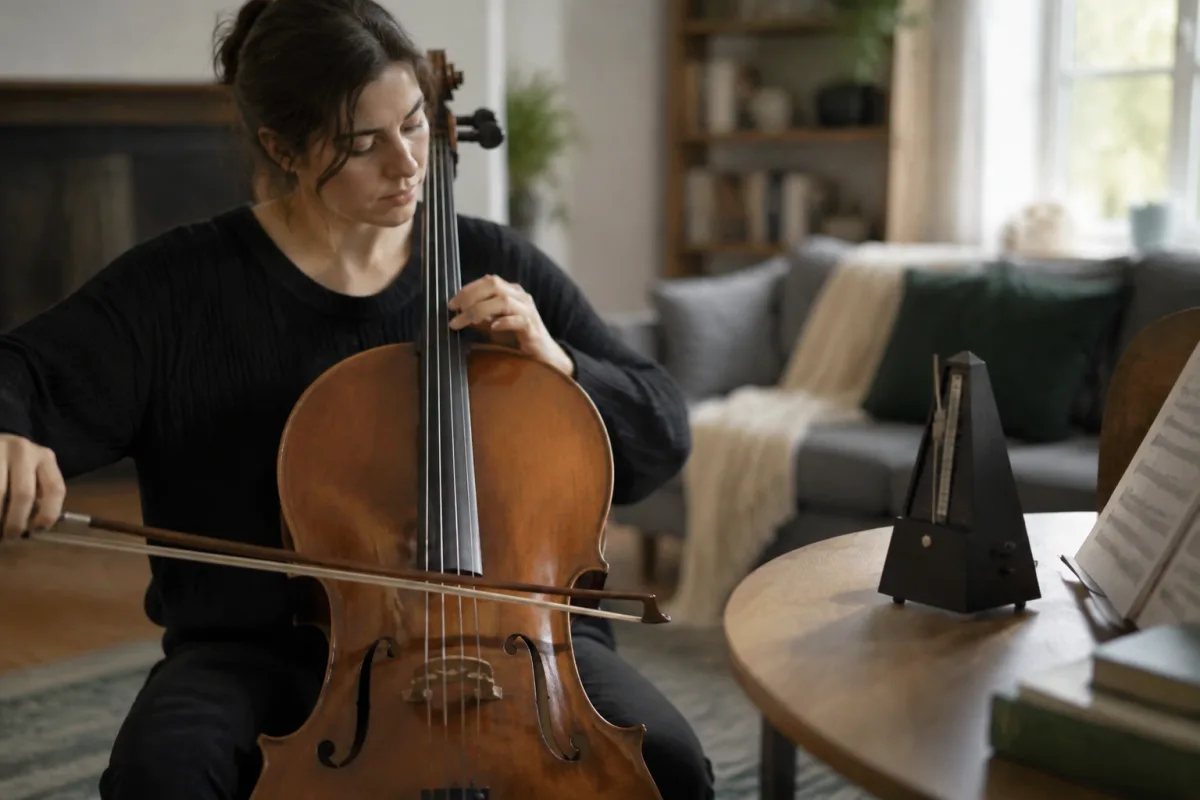
If you're picking up an instrument and hearing about metronomes for the first time, you might wonder what the fuss is about. A digital metronome might sound like a serious, technical tool, but it's actually dead simple—and it will transform your practice faster than almost anything else. I'm going to show you why a digital metronome matters, how to use it without overthinking it, and how to build the habit of practicing to time instead of against it.
Why Every Beginner Needs One
Your sense of rhythm sits at the core of everything you play. Most beginners rush when they're concentrating and slow down when they're working something tricky. You don't hear yourself doing it, but this tool hears everything. It's like having a band that plays at exactly the same tempo every single note, no variations, no mercy.
That might sound harsh, but it's actually brilliant. Practicing to a steady click forces your brain to build muscle memory at a consistent pulse. After a few weeks of this, you'll notice your playing locks in better, your timing feels more solid, and you stop wobbling around like a ship in rough water. This happens for every instrument—guitar, piano, drums, voice, everything. It's the shortest path to sounding confident.
What This Tool Actually Does
It clicks at a steady tempo you choose. That's it. You set a beats-per-minute speed—let's say 60 BPM (beats per minute)—and it goes click, click, click, click, one click per second, forever. You play along to that beat. When you rush, you hear yourself ahead of the pulse. When you drag, you hear it catching you. It's incredibly clear feedback.
Modern versions come with features like adjustable volume, different sound options (a piano note instead of a click, for example), visual displays, and the ability to change time signatures for jazz or unusual metres. Don't worry about any of that right now. A basic system that clicks steadily is all you need to start.
Choosing Your First Digital Metronome
You have three options: a dedicated device (small, battery-powered), a smartphone app, or a music software tool on your computer. For a beginner, an app is perfect. It's free or very cheap, you always have it with you, and it does exactly what you need.
Popular apps include Metronome Max, Pro Metronome, and Simple Metronome. Most music teachers recommend these because they're straightforward and reliable. If you want a dedicated device instead, Seiko and Boss make pocket-sized, rugged versions that are reasonably priced—they're brilliant if you gig live or teach lessons where you need something separate from your phone.
For practice at home, the app wins. It's instant, it costs nothing to try different options until you find one you like, and you can carry it everywhere.
Your First Sessions: How to Use It Effectively
Start slow—and I mean genuinely slow. If you're learning guitar and working on a song at 120 BPM, begin at 60 BPM. Half speed. Play the section you're working on along to that steady pulse. It might feel stupidly slow and boring. Good. That's actually the point.
Play just the part where you usually stumble. Don't play the whole song; that's wasting time. Do ten repetitions at 60 BPM. Then move to 65 BPM. Do ten more. Keep going until you reach 120 BPM or however fast you want to eventually play it.
This takes patience, but here's the magic: when you reach full speed, it feels easy. You've trained your hands and your brain to nail it perfectly at every single step. Compare that to playing at full speed from the start—you'll rush, make mistakes, and have no idea why.
Common Beginner Mistakes (and How to Avoid Them)
Mistake one: starting too fast. If you're frustrated within the first thirty seconds, the tempo is too high. Back it down. This tool is meant to feel stable and supportive, not stressful.
Mistake two: playing sloppily because you're rushing ahead to keep up. Slow it down even more. Your goal is to play every note cleanly and in time. Speed comes later.
Mistake three: quitting after a week. The first few sessions feel awkward and tedious. By week two, it clicks. By week three, you'll notice your timing has genuinely improved. Stick with it.
Mistake four: practising entire songs. Pick one small section—maybe eight bars, maybe just the tricky bit—and nail it. Boring repetition of tiny sections builds confidence way faster than sloppy run-throughs of whole pieces.
Building the Digital Metronome Habit
Your digital metronome works best when it's part of every practice session. Dedicate the first ten minutes of practice to working with the digital metronome click—whatever you're learning. Spend the next twenty minutes on exercises or pieces without it if you want, but always warm up this way.
After a few weeks, you'll stop thinking about your digital metronome. It becomes normal, like tuning your instrument or stretching before exercise. Musicians who practice seriously—session players, orchestra members, jazz improvisers—use one nearly every day. It's not training wheels; it's professional practice.
What You'll Notice After a Month With Your Digital Metronome
Your sense of time will improve dramatically. You'll hear yourself when you rush or drag, even without your digital metronome running. Your hands will feel steadier. If you're singing, your timing will lock in instead of wavering around. If you're playing drums, your kick and hi-hat will sit where they're supposed to instead of wandering.
This is real, measurable progress—not a vague sense that you're getting better, but actual improvement you can hear and feel. That's why your teacher or every YouTube lesson recommends a digital metronome. It actually works.
For much deeper guidance on building your practice routine, check out our complete guide to digital metronomes, which covers all the options and advanced techniques.
Conclusion
This tool is one of the cheapest, most effective practice aids you'll ever use. Download a free app today, set it to a comfortable slow tempo, and spend ten minutes practising something you're learning. You'll feel the difference immediately and hear it in your playing within weeks. Using this approach is one of the best decisions a beginner can make for their musical development.


Comments