


Capo Classical Guitar article
Everything You Need to Know About Guitar Capo Classical
Capos allow classical guitarists to transpose songs to different keys. This guide covers types, selection, and proper technique for classical guitar capos.
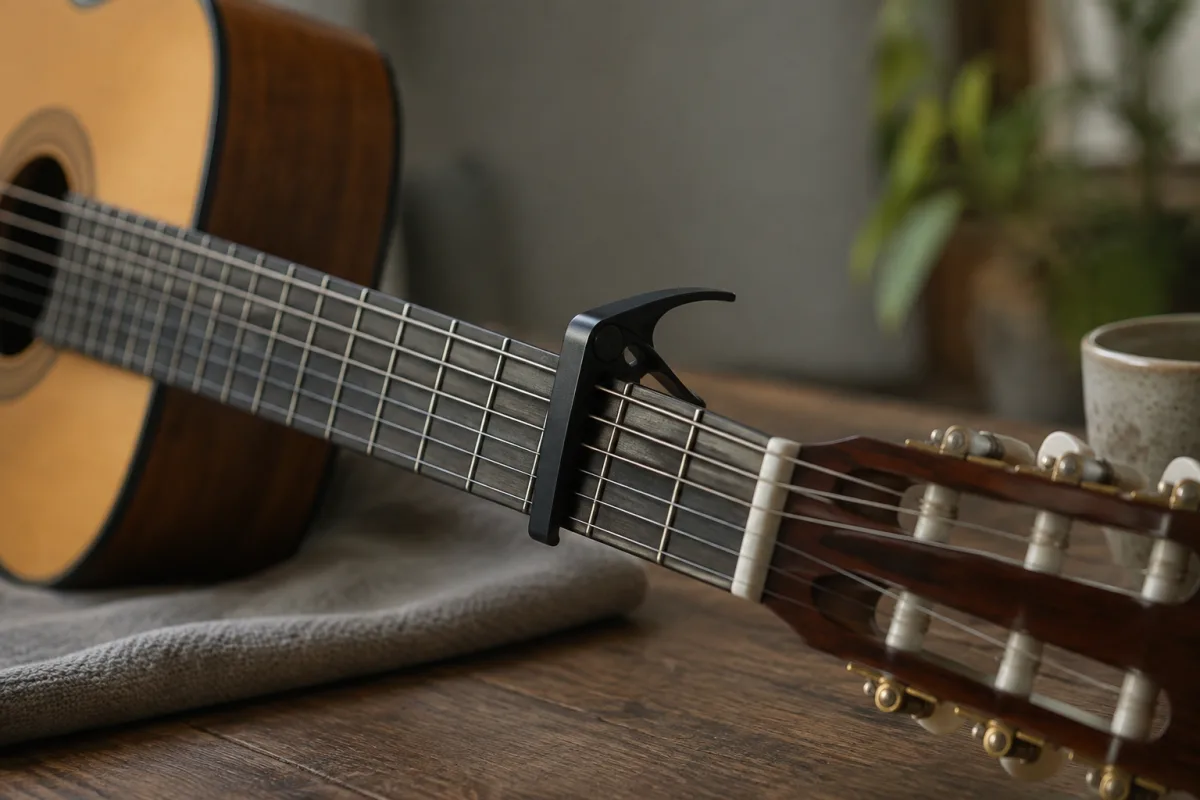
Capo Classical Guitar: A Complete Guide
The capo is an essential accessory for guitarists wanting to transpose songs to different keys whilst maintaining open string tuning. For classical guitar players, choosing the right capo makes the difference between clear, resonant sound and muted strings and intonation problems. Understanding capos, how they work, and what to look for ensures you make informed choices when selecting one for your classical guitar.
Understanding the Capo
A capo is a mechanical device clamped across the fretboard that shortens the vibrating length of the strings. Placing a capo on the third fret, for example, makes the open strings sound as if you've tuned them three semitones higher. This allows you to play songs in different keys whilst fingering the same chord shapes.
Without a capo, playing a song in a key unsuitable for open-string positions requires barring chords across multiple frets—a technique requiring significant hand strength and skill. The capo democratises guitar playing by allowing players of any hand strength to access songs in any key using simple fingerings.
Why Capos Are Different for Classical Guitars
Classical guitars have wider necks, nylon strings, and curved fretboards requiring different capo designs than electric or acoustic steel-string guitars. A standard electric guitar capo often doesn't clamp evenly across a classical guitar fretboard, leading to muted or buzzing strings.
Classical guitar capos use different pressure mechanisms and clamp designs accommodating the wider neck and different string materials. Selecting a capo designed specifically for classical guitars ensures proper string contact and clear tone.
Types of Classical Guitar Capos
Trigger capos use a lever mechanism requiring minimal hand strength. You place the capo on the fretboard and squeeze the trigger lever—simple and fast. Screw capos use a threaded screw mechanism providing fine pressure control. Turning a small screw gradually increases clamping pressure. Elastic capos use tension from stretched rubber or elastic material. They're simple but pressure adjustment is crude.
For classical guitar, trigger capos designed for nylon strings work best. They distribute pressure evenly across the wider neck and don't require calibration before each use.
Placement and Technique
Position the capo just behind the fret wire (toward the headstock), not directly on the fret or far from it. Placing it behind the fret ensures proper string contact without excessive fret buzz. Too much pressure mutes strings and causes intonation problems. Too little pressure allows strings to buzz.
The ideal capo pressure is just enough to stop strings from buzzing against unfretted frets. Excessive pressure stresses the strings and neck unnecessarily. Learning the right pressure through experimentation ensures quality tone.
How Capos Affect Tone
A properly positioned capo should be tonally transparent—it shouldn't colour the sound or create unwanted resonance. Poor capo placement introduces buzzing, muted strings, or a dull tone. Strings beyond the capo's clamping area lose some resonance because they're shortened.
Quality capos minimise these effects through careful design and proper manufacturing. Budget capos often create noticeable tone changes you'll hear immediately when comparing with quality alternatives.
Build Quality and Materials
Quality classical guitar capos use precision-machined metal components and carefully engineered clamp designs. They last decades with proper care. Budget capos use crude manufacturing and cheap materials—they often fail or create poor tone.
Investing in a quality capo saves money long-term. A £20-40 quality capo outlasts multiple cheap alternatives costing £5-10 each. Professional classical guitarists often own several high-quality capos for backup.
Capo Brands for Classical Guitar
Shubb capos are renowned for quality and precision. They're the choice of many professional classical guitarists. Kyser makes quality capos in different styles. Dunlop manufactures reliable capos at moderate prices. Planet Waves offers budget options that work adequately despite less precision than premium alternatives.
For classical guitar specifically, research which brands manufacture models designed for nylon strings and wider necks. Not all capos work equally well on classical guitars.
Capo Fret Placement Strategy
| Transpose By | Capo Position | Example |
|---|---|---|
| 1 semitone | 1st fret | C chord sounds C# |
| 2 semitones (whole step) | 2nd fret | C chord sounds D |
| 5 semitones (perfect 4th) | 5th fret | C chord sounds F |
| 7 semitones (perfect 5th) | 7th fret | C chord sounds G |
Alternatives to Capos
Barring is a fundamental guitar technique where you press one finger across multiple strings on one fret. Learning to bar properly gives you freedom to transpose any song without a capo. However, barring requires significant hand strength and skill—many players struggle with it initially.
Many classical guitarists use capos and barring together—using capos for difficult transpositions whilst barring for simpler ones. This hybrid approach balances ease with developing technical skill.
Maintenance and Care
Clean the capo regularly with a soft cloth to prevent dirt and corrosion. Keep the clamp mechanism clean and free of debris. Store capos in dry environments—humidity and moisture cause corrosion. A capo lasting decades with proper care justifies the initial investment.
Troubleshooting Common Issues
Buzzing strings usually indicate improper capo placement or pressure. Move the capo slightly or adjust pressure gradually until buzzing stops. Muted strings suggest excessive pressure—reduce it incrementally. Intonation problems often indicate the capo isn't seated properly behind the fret wire—reposition it slightly.
Conclusion
A quality capo for classical guitar is an essential accessory that opens up countless songs and transpositions. Choose a capo designed specifically for classical guitars, invest in quality construction, and learn proper technique. A quality capo will serve you reliably for years of playing, making it one of the best investments you can make in your guitar setup.




Comments